A Quiet Pause That Shifts the Rhythm of Mornings
Repeated hesitation after breakfast signals friction slowing routines; moving a bowl cleared the path and restored smoother transitions for dog and owner.
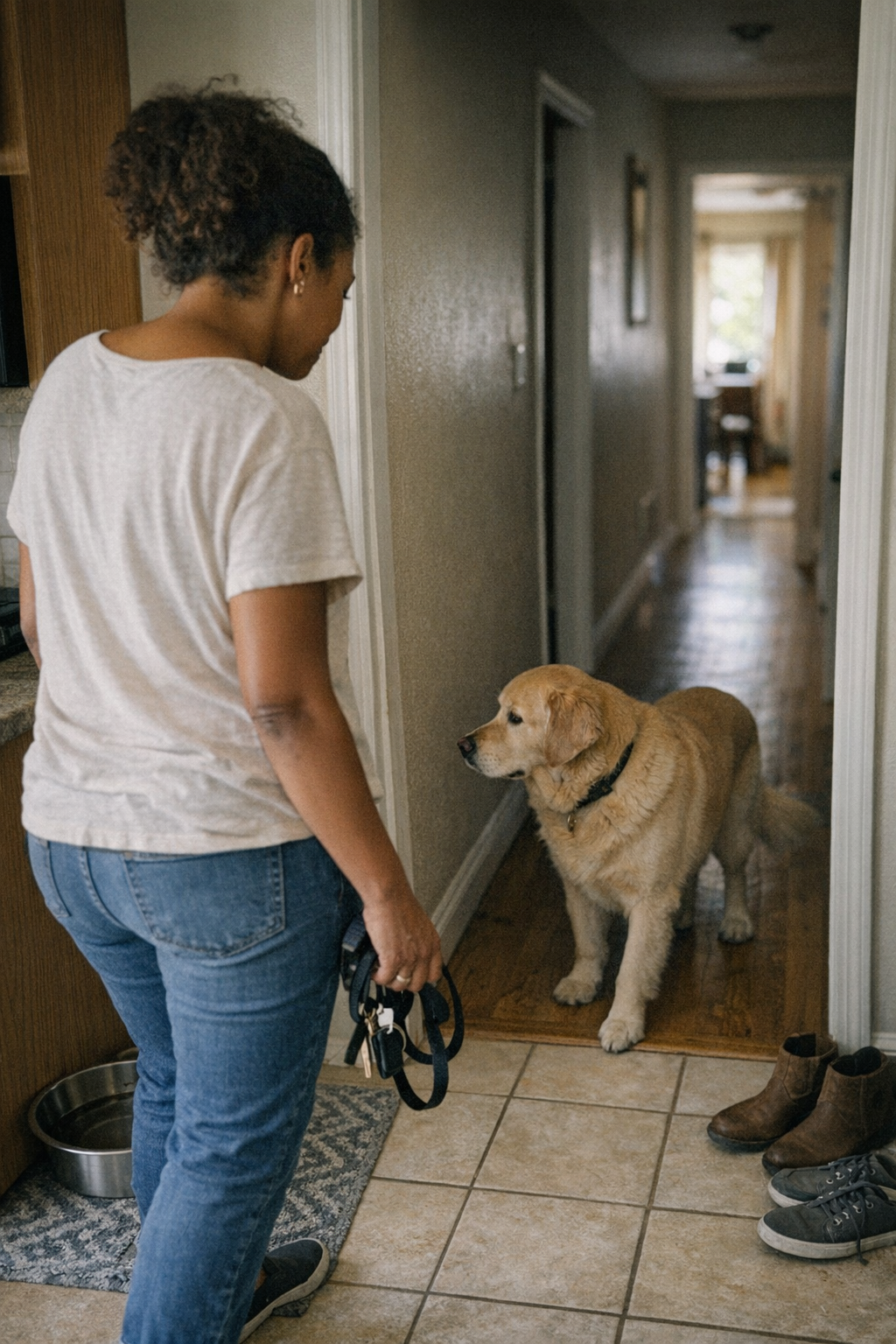
There’s a moment most mornings—breakfast finished, leash ready, a quiet pause near the kitchen doorway. At first, I thought it was just me moving too slowly or the dog deciding his next step. But over the weeks, this pause kept appearing. Same spot, same hesitation, one paw lifted as if testing whether the day could really start.
You notice it after a few mornings. The routine doesn’t stop, but something subtle feels off: the rhythm, the way the dog moves with you, the flow between feeding, waiting, and walking. Everything looks fine—bowls cleaned up, shoes by the door, the hallway open. Still, the pause grows a little, not enough to cause alarm but enough to be felt.
Sometimes there’s no big standoff—just time slowly stacking at edges. And the biggest change comes from noticing when that pause finally disappears.
Where the Routine Actually Slows Down
Older mornings blend together: bowl scraping, quick licks, then quiet waiting for the next cue. The first week, I thought it was just the dog’s polite habit of waiting. But a repeated hesitation isn’t politeness; it’s friction showing up in everyday motion.
It’s tempting to blame mood or stubbornness. I did at first. But by the third or fourth breakfast where movement stalled just after eating, I saw the root: the bowl pushed too close to the doorway, half-blocking the path and forcing awkward sidesteps. That quiet and consistent obstruction was where the morning tempo slipped. There simply wasn’t enough space for my feet and his next step at the same time.
There’s a difference between a tidy setup and a routine that flows freely. The kitchen looked organized, but the grab for the leash felt awkward, the dog’s clear pathway interrupted. These aren’t big obstacles, but the kind that quietly pile up and slow down the whole day.
The Invisible Toll of Repeated Hesitation
This kind of change doesn’t happen instantly. One small hiccup at a transition shifts how everything fits. You end up repositioning the bowl, coaxing the dog, fumbling for keys mid-move, and feeling rushed without adjusting the clock. Your head falls behind the flow before the time does.
By Friday, the tension creeps into other parts of the routine. The walk starts with a little more impatience, leash clicks on quickly, and halfway down the block you feel like you’re catching up. You really only notice when the pause vanishes for a day or two. That smoothness reappeared whenever the path was clear again.
Evenings offer the clearest contrast: a straightforward return from outside, the bowl shifted away from the threshold, no hesitation at the pause point. That silence made it obvious how much noise the small snag had added to daily life.
The Gentle Fix That Actually Matters
I moved the bowl. Not far, just enough so the route out the door was clear—wide enough for him to step through with no sidestepping needed.
The change showed up in smaller ways than expected. The leash went on with less fuss, keys landed smoothly in my pocket, and we were outside before the usual scramble. The pause disappeared. Morning routines felt less pressed, and the dog’s focus shifted from looking back at the bowl to watching me.
What began as an unremarkable pause became a clear sign that something real was shifting. It wasn’t about perfection or a fancy spot for the dog; it was about moving together without silent delays building up. The adjustment was easy to maintain—so much that by next week, I forgot there’d ever been a slow spot.
Some routines fix themselves simply by clearing the path where a small pause used to live. Maybe nothing looks very different, but the day starts in sync again—and most mornings, that’s exactly what matters.