A Small Step That Keeps Home Lighting Steady
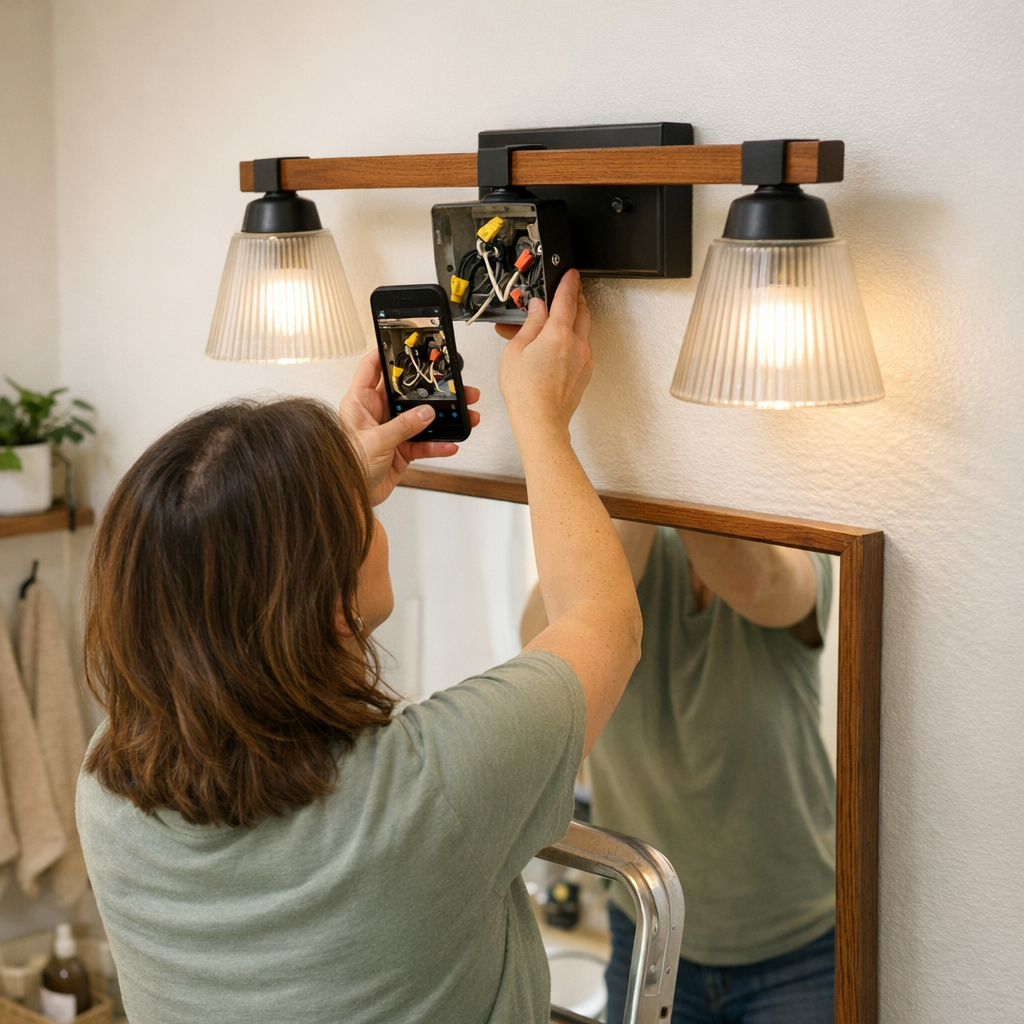
Taking a photo of indoor lighting wires before disconnecting prevents errors that cause unresponsive switches and uneven lighting.
There’s a quiet confidence tucked into routines: the press of a hallway switch, the soft bloom of a laundry ceiling light, the evenness of mirror glow in the morning. These everyday moments blend together—until, almost suddenly, one of them stutters. A bulb flickers, a switch answers with silence, or a once-balanced room dims unexpectedly along the edges. I used to think these mistakes would stand out immediately, but often they don’t. It wasn’t until I stood on a stepladder, hands inside a ceiling fixture, that I realized how a subtle wiring decision can affect every light I turn on after.
After the First Test, Truth Sneaks In Slowly
The initial flip of the switch rarely reveals any problems.
It feels satisfying—this new flush-mount or wall sconce suddenly lighting up again. Yet the real signals come later, woven into daily habit. Stairs that once glowed evenly top to bottom now hold a lingering shadow near the landing. A mirror’s edge shifts from clarity to uneven glare, but only on one side. It isn’t immediately noticeable.
But you feel it.
Over the following days, I began catching the small mismatches. The hallway switch that only half-responded. The laundry room light that hesitated before fully brightening, as if unsure of the task. What failed in these moments wasn’t the brightness itself, but the underlying certainty that every click and flick would reliably deliver the same light each time. The pattern became increasingly difficult to ignore.
Quiet Glitches: Unseen Wiring, Visible Routine
It was the hallway lighting that made things clear—on one early winter evening, arms full, fumbling for a switch that had lost its usual rhythm after the last fixture change.
Living with these subtle errors indoors means constant adjustments. Taking a different path through the corridor. Squinting at a vanity light that casts uneven shadows across just one side of the face. The fixtures are technical—damp-rated and hardwired for durability—but the experience is lived; imperfect and quietly shaped by wiring no one sees once it’s covered. That was the part I kept returning to.
A fixture feels correct because it’s bright, but the wiring underneath controls how that brightness fills the space, how each surface and task feels steady or unpredictable. You learn this gradually: in a kitchen counter that stays just a shade too dim along its edge, a stair turn that feels ever so slightly uncertain at midnight, or a laundry corner that hesitates to really light up.
One Photo, Fewer Questions
The click of the camera was almost an afterthought.
Just a quick picture of the wires before unscrewing a sconce or loosening a ceiling light—nothing fancy, just a clear angle snapped inside the tight ceiling box. Later, faced with a confusing tangle of identical-looking connections, I returned to that moment. The hesitation was gone. Each wire went back to where it belonged—not as a guess, but with certainty. The difference was subtle in daily life, but deeply steadying. More evenings passed without surprises or complications from the lighting overhead. The routines held quietly, as if nothing had changed at all.
If you ever want to see how others approach these quiet fixes, you’ll find a few ideas here: http://www.lighthelper.myshopify.com