Dust and Quiet Battles in Everyday Remodel Spaces
A temporary ventilation fan’s effectiveness depends on sealing and fit; loose seals cause dust, uneven finishes, and extra cleanup.
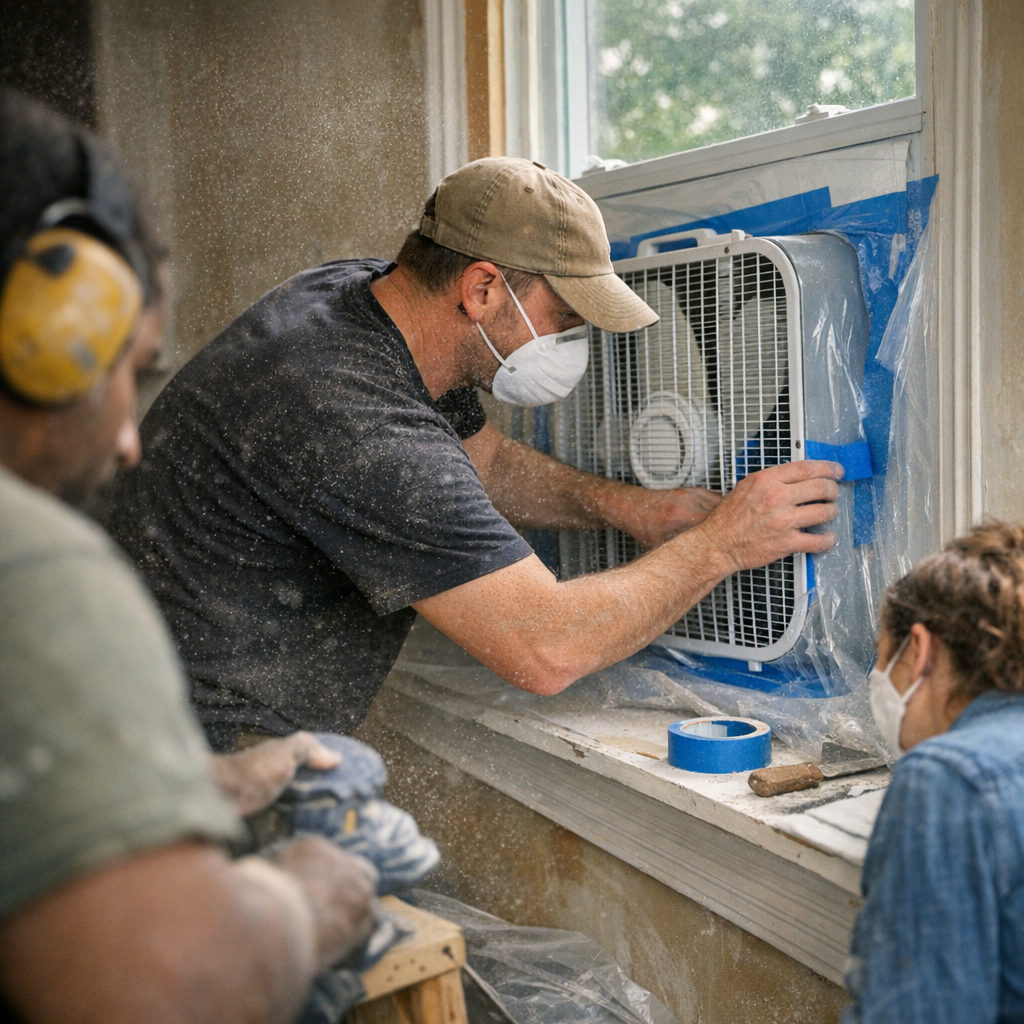
There’s a quiet frustration that sets in during home renovations, the kind you only notice once the dust settles. At first, those early passes with sandpaper or paint feel productive and hopeful. But later, as you pause to catch your breath, you notice dust halos on your windowsills and a faint haze clinging to the air. That’s when the heart of the problem reveals itself: your temporary ventilation setup isn’t working as well as you hoped.
Most of us don’t give much thought to the fan taped into a window during a remodel. The logic seems simple—move air out, keep the dust away. The reality, though, is more complicated. Tiny particles drift right back in through gaps you didn’t see, clinging to trim and settling on fresh paint. You might not see it immediately, but you feel it.
Where Dust Finds a Way Back
After a morning spent sanding, it’s easy to believe you’ve contained the mess, but in practice, dust gathers in corners. Late in the afternoon, you spot fine grit along thresholds—a trail of what escaped. It creeps along window frames too, marking the places your fan's seal isn’t tight enough to block swirling particles.
Sometimes it feels like the work never truly ends. Especially in remodels of old houses with irregular frames, even the strongest fan struggles if air can sneak around it. You clean, and the dust returns. A dull, tiring routine.
What Specs Leave Out
On the surface, every ventilation fan seems up to the task. But looking closer, the differences become clear. Focusing on ratings—those official numbers—gives a sense of power, but not actual performance. A box fan versus a scrubber, plastic sheeting taped loosely or tightly, a small gap ignored: these details decide if you’ll spend your evenings wiping down surfaces or moving ahead.
You don’t notice the leaks right away. But the soft haze, the subtle silt on painted sills—those are signs the fan alone isn’t enough. What matters most is how well you’ve sealed the edges. The fit shapes the result.
A Small Adjustment, A Quieter Outcome
Not long ago, after growing tired of endless touch-up cleaning, I tried something more careful. Doubling up the plastic around the fan and sealing every gap with painter’s tape felt excessive at first—until I ran my hand across a freshly painted white stool that evening and didn’t leave a mark. The difference was instant, the room calmer, the work less urgent.
There’s a simple clarity that comes when cleanup doesn’t outweigh progress. Sometimes, it’s the little bit of extra attention during setup that changes everything. It’s not always about using a stronger fan, but about making sure what you have is truly sealed—especially as the days go on and the job shifts.
When the rhythm of your work is uninterrupted, you hardly notice the fan at all. But the relief of fewer hours spent cleaning and a finish that stays clean? That lingers.
These reflections found their shape while piecing together the next project over at Shopify’s Builder’s Blog.