Empty Hooks and the Quiet Frustration of Lost Tools
Pegboards highlight missing tools, easing spotting disorganization but require strict returns; grouping tools and adding bins helps maintain smooth flow.
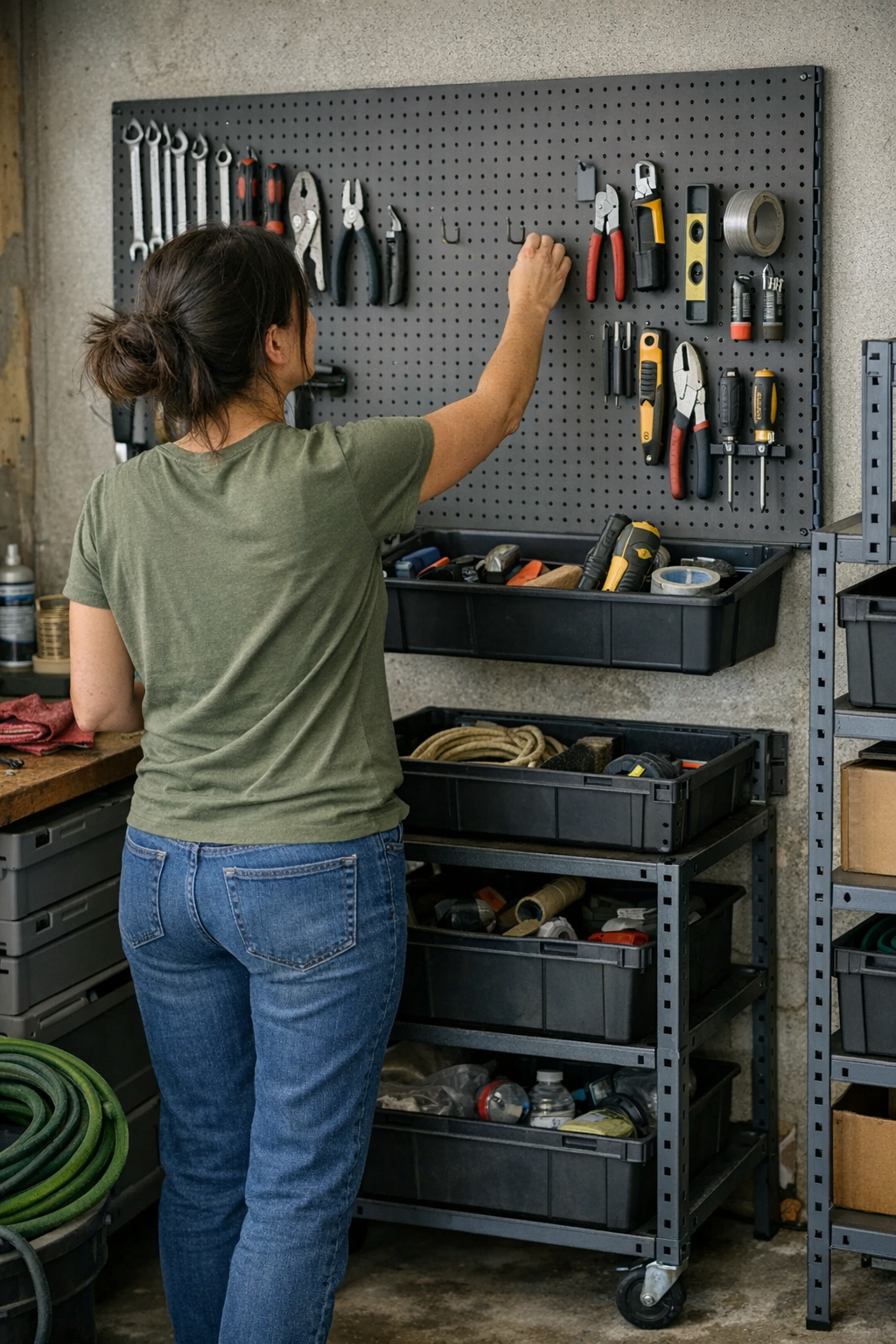
It’s easy to believe that arranging your workspace will fix everything. Last month, I installed a fresh pegboard above the workbench—rows of gleaming hooks creating an open map of order and ease. But now, standing at the bench with my hand hovering over an empty hook, I can’t help noticing what’s missing.
Pegboards are meant to simplify workshop setups and garage organization. Every tool visible at a glance, every space clearly accounted for. In theory, it means never fumbling for the right wrench or losing the tape measure in a cluttered drawer. But little by little, I’ve noticed that this kind of open clarity can be as unforgiving as it is helpful.
The Subtle Weight of an Empty Hook
You don’t notice it immediately.
One day a screwdriver is borrowed and not returned. The next, the pliers join it—left on a shelf or in someone’s hand. Those gaps grow obvious in a way closed cabinets or floor-based storage never reveal.
Instead of seeing all that’s ready to go, your eyes settle on what’s missing. An absence that quietly nags, even while everything else is in place. You feel it—how a missing tool doesn’t just create disorder, it disrupts the gentle return flow that made the pegboard seem perfect in the first place.
Real Life Isn’t Always Neat
It’s strange how quickly tidy systems show their weakness when real life intervenes.
Any shared workshop or garage setup becomes a study in habits. A busy week passes, someone’s in a hurry, routines slip, and the reset cycle breaks down. That pegboard, with all its exposed utility, becomes a visible record of every interruption—every tool left out, every missed return.
I’ve caught myself circling the garage, mentally tracing who last used the knife or where I might have set down the pliers. Each extra trip is a low-stakes lost minute, but it adds up. Small breaks in return habits quietly snowball—clutter spilling onto worktops, into mobile storage bins, or filling odd corners of the room.
Pause for a second. Notice the pattern.
Making Room for What Actually Happens
Here’s what shifted my frustration:
After one too many pegboard scavenger hunts, I added a shallow bin beneath the board. Not a new rule—but a soft place for tools in flux. A practical little buffer zone that doesn’t interrupt the wall’s overall flow.
Soon, I worried less about perfect resets. The tools still missing from their hooks were at least easy to find. I could grab what I needed right there, then, and the wall didn’t glare with gaps or nag with reminders of broken routines.
Looking over now, I realize: organization needs to bend, not just snap into place. The pegboard works best when it allows for return trips, busy distractions, even a little disarray. There’s relief in making peace with that—small flex zones turning a rigid system into something you can actually use, whether mounted on the wall or floor-based in your garage or workshop.
Maybe the emptiness means more than a missing tool. It’s a gentle nudge toward storage and organizational systems that are forgiving—systems that leave room for the fact that life rarely moves perfectly.
These thoughts came together while reorganizing the garage after a few long Saturday afternoons.