Even Light and Quiet Corners After Dark
Linear and panel ceiling lights reduce shadow, glare, and heaviness at night, but gains depend on precise alignment and support.
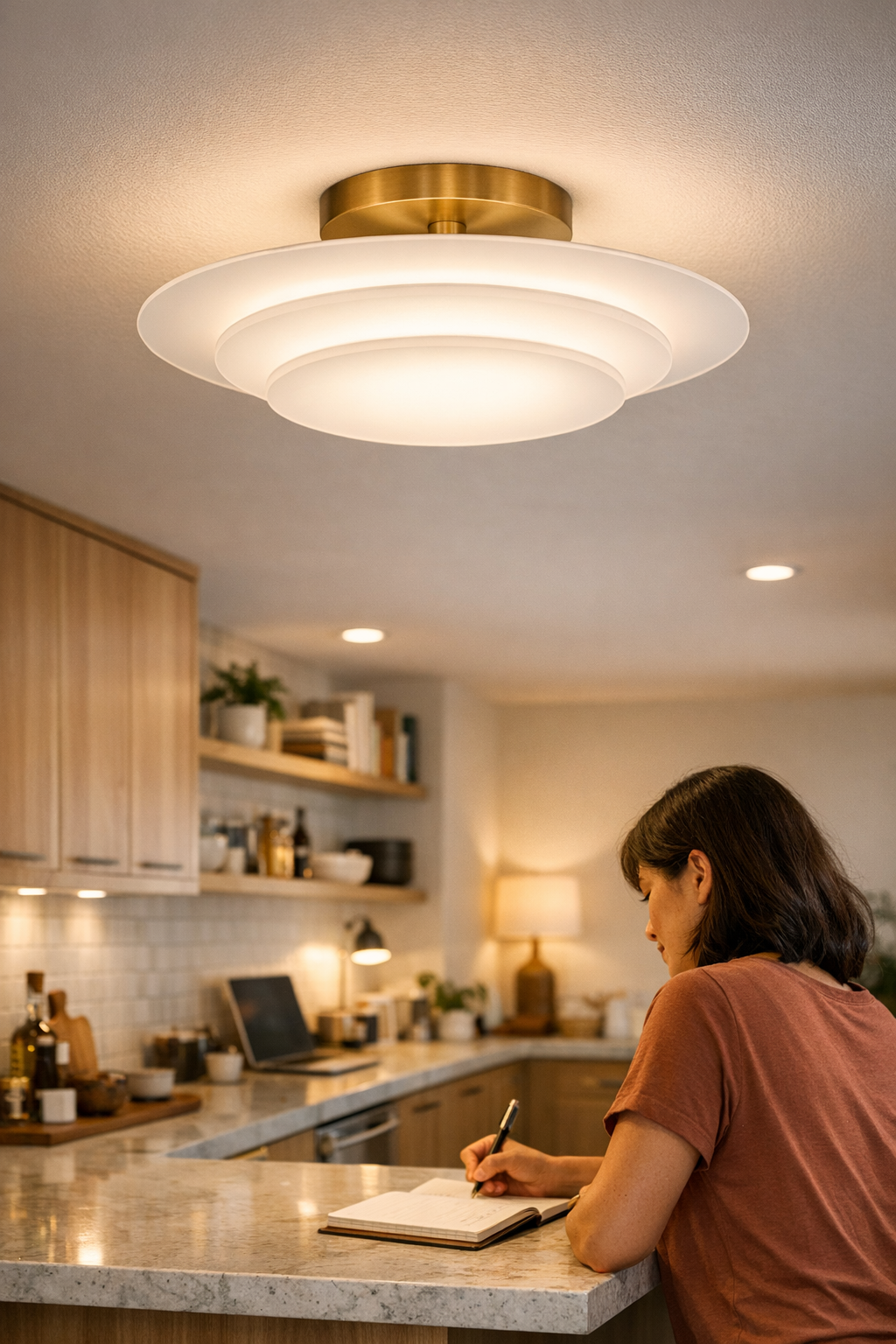
Some evenings, the light in a room can feel strangely heavy—one of those details that’s easy to overlook until you’re living with it. Whenever I sat at my usual desk after dark, I started noticing how the ceiling fixture focused its brightness in one spot, while the edges of the room slipped into gloom. Over time, I’ve realized how much these small lighting patterns shape how a space actually works, not just how it looks.
Shadows That Linger in Routine Places
Light tested by regular use is different from light meant for show. After a few days spent working at the same table, stretching to plug in a charger, or reaching for the last glass behind the kitchen sink, small frustrations come into focus. Single-point ceiling lights, regardless of how clean their design, tend to cast slumping shadows at the edges. This forces constant adjustments—a moved notepad, a shifted chair—over and over.
The impact isn’t obvious at first. But you feel it.
I noticed how the glare off a central bulb made one side of my workspace uncomfortably bright, while the other side faded into formless dark. There was a sense that light—and, by extension, attention—kept pooling in the center and ignoring everywhere else.
When Support Finally Matches the Room
Something shifted the first night I switched to a linear ceiling light with well-aligned support—brackets set just so, cable managed neatly beside the beam. Suddenly light spread evenly from one end of the surface to the other, so I wasn’t chasing well-lit patches just to read a line or finish a late dinner note. The difference wasn’t dramatic, but it was real: the “task zone” on the counter stopped being the only workable place after sundown.
That was the part I kept coming back to.
What had felt clean and minimal when the light fixture was off felt cluttered in use—wires crossing the line of sight, brackets awkwardly placed and slightly out of sync. Once the supports aligned with how the room was actually used, cable distractions and glare mostly disappeared. I no longer needed to think through where to stand or squint to find the right edge.
Evenness Becomes an Everyday Relief
After a few evenings, the change became routine. The back of the counter stayed visible. I stopped hunting for a better-lit spot or needing a backup lamp. Corners stopped fading out of use just because the day got late.
It’s a quiet relief, one that accumulates in the background. There’s less dodging, less workaround, less invisible strain. The most useful setups are the ones you forget to notice, simply because nothing asks for extra effort.
These thoughts still return when the room goes quiet at night—especially while walking across a floor that feels evenly awake at last.
If you want to see how others have worked through similar problems, here’s where I started looking: http://www.lightsupport.myshopify.com