Even Light for Quiet Nights Together
Wall sconces provide even, indirect light in shared rooms, reducing glare and shadows, making shared nighttime routines easier and more comfortable.
Evening routines settle in quietly, but the details of shared spaces don’t always keep up. There’s a kind of irritation that grows from something as small as sitting down to read, only to squint through glare on a glossy page or sidestep a cable stretched across the rug. A desk lamp helps, but only so much. Ceiling lights can make a space look finished—organized, even generous with light—until two people actually begin to use the room at once. Comfort is counted in small, unspoken ways: where you reach, if you need to shield your eyes, or whether that corner is always a little too shadowy. I didn’t notice it the first week. But I felt it.
The Limits of Ceiling Light
Overhead fixtures have a logic I kept relying on, mostly because they’re what every room offers first. Switch them on, and everything is visible. But visibility is not the same as comfort.
The harshness crept up: awkward reflections off the coffee table, shadows where I wanted to sit, that metallic brightness above. Someone’s spot always felt better; someone’s always felt a little off. You don’t notice it immediately. But you start curtailing old habits—giving up the good seat, moving tasks elsewhere. That was the part I kept coming back to.
When Little Adjustments Pile Up
It’s hard to tally the small workarounds until they repeat. My routine became a pattern of nudging a lamp, turning a paperback away from a cold streak of glare, and watching a roommate block the bulb with their hand just to finish an email. The cords began to annoy me more than I’d expected. Tables drifted outward. Sometimes we gave up on the entire end of the sofa.
I kept thinking the setup was almost right: the desk lamp was sleek, the overhead bright, everything neat on paper. Yet the feeling lagged behind the appearance. The gap between looking resolved and feeling comfortable was hard to ignore once I recognized it.
What Changed When Light Matched Use
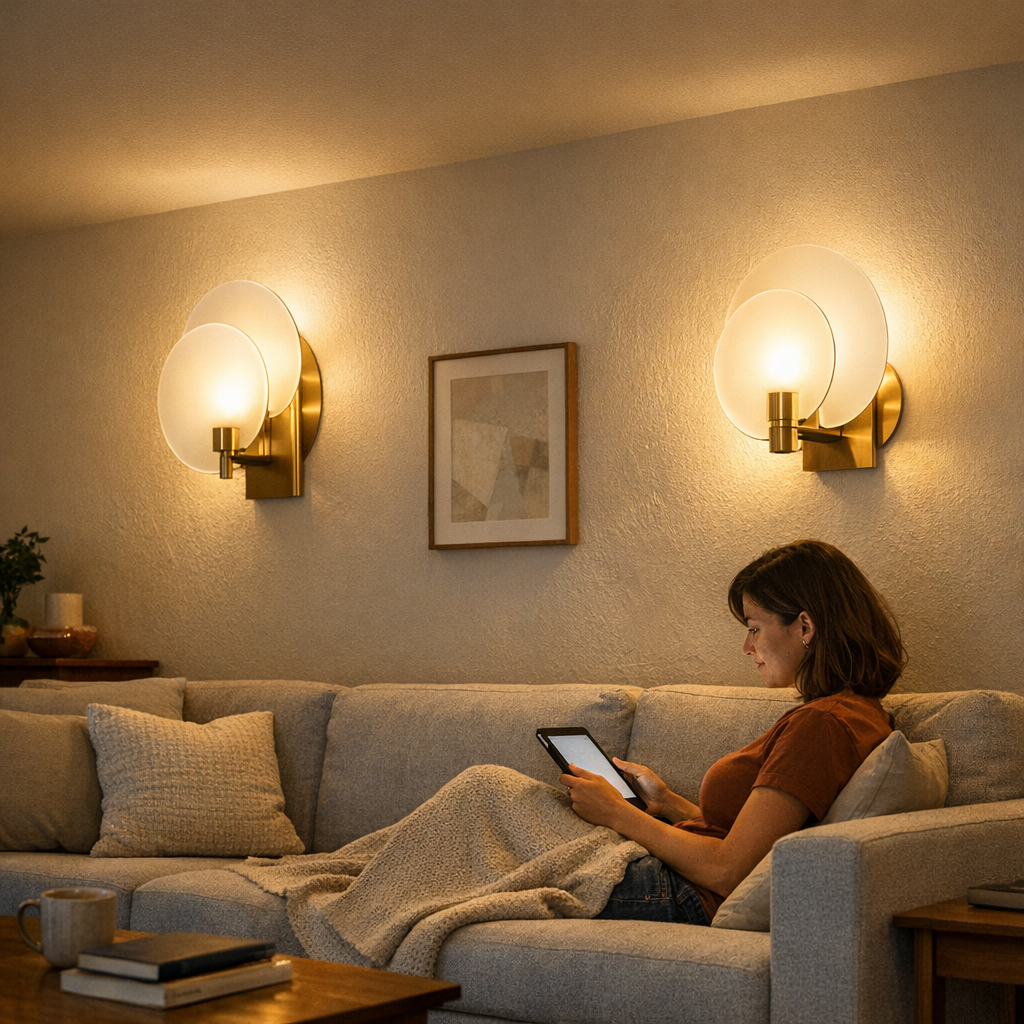
It wasn’t a renovation. Just two wall sconces—with slim, low-profile brackets—mounted above the ends of the sofa, set at a height that felt settled when we sat down together. The result was immediate, but not dramatic. The entire field of view softened. There were no hard shadows left, no glare bouncing up from a screen. Both of us found ourselves lingering, sometimes trading places, without needing to shift anything else.
Light at the right angle, with barely a visible cable, changed what the space made possible. It’s odd how something so practical can become quietly generous: reliable, shared, unspoken support. Now, the room holds up to whatever shape the week takes.
More of these small adjustments are tucked away here: http://www.lightsupport.myshopify.com