Evening Walks That Feel Calm, Not Chaotic
Night walk safety depends on making essentials instantly reachable at every exit, reducing slowdowns and reshuffling for reliable routine use.
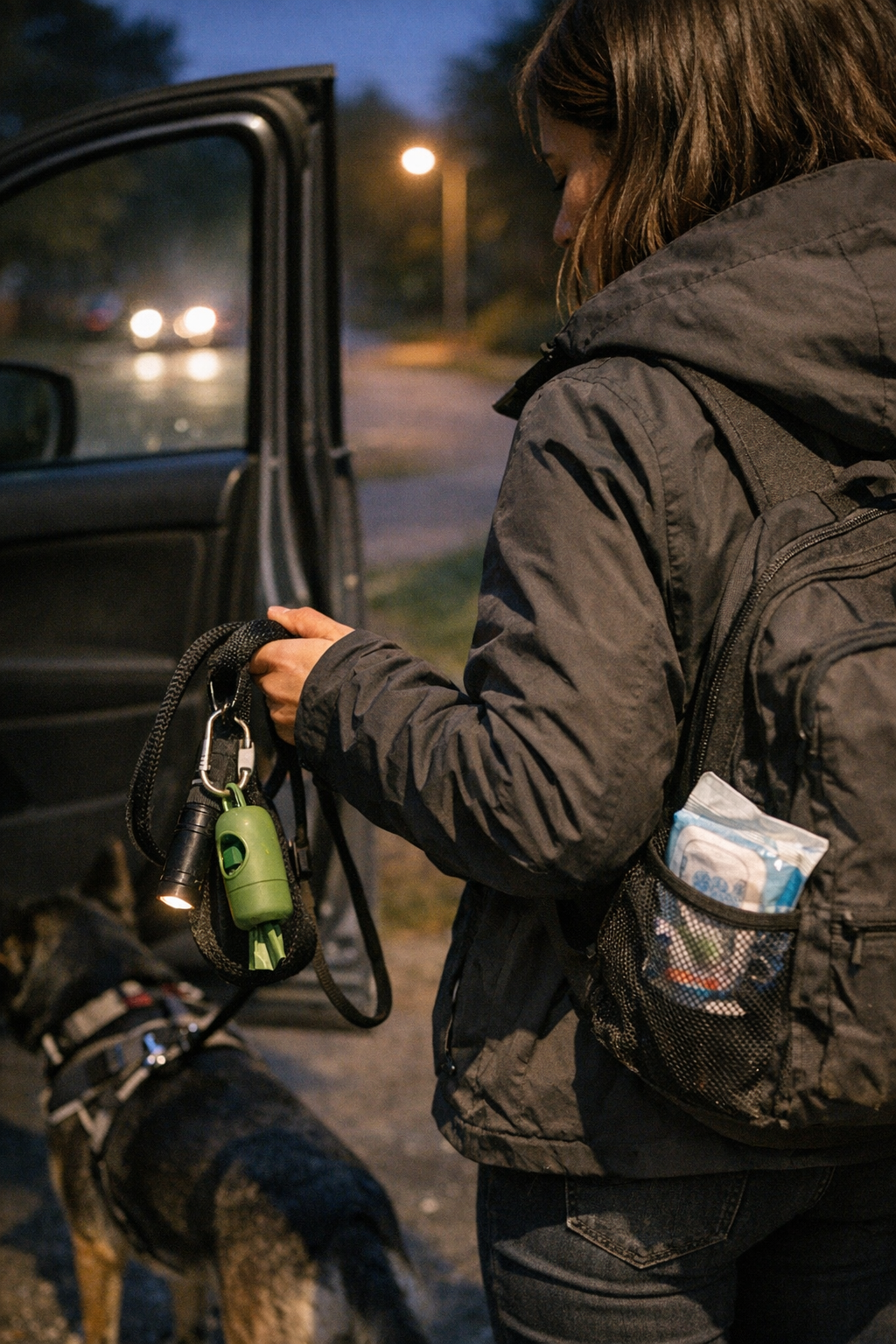
There’s a certain feeling at the car door, when your dog nudges forward, and you realize the next few steps will depend on whether you can reach what you need—not just if it’s technically packed. Night walks with your pet always seem simple until you’re balancing a leash, keys, and hoping that all the compartments in your travel bag behave like a system. Every few nights, that friction of getting out—the feel of the bag, the warmth of your coat, the quiet need for one more light—comes back around. At first, I didn’t pay much attention, but then I noticed: the difference between being prepared and really staying ready shows up in small, stubborn ways.
When Getting Out Made Me Rethink Everything
You start to notice it after a few trips. The setup that worked fine in the driveway begins to fall apart in the dark, on repeated stops.
A leash neatly looped, a flashlight buried deep in a side pocket, cleanup bags rattling somewhere beneath an extra water bowl. On paper, it’s all tidy. But standing at the roadside, fumbling with a zipper while your dog circles close to traffic, even a few seconds waiting feel wrong. The organization blocks what you really need to do—move quickly and safely, in sync with your pet. That buried flashlight stayed buried. More than once, I wished I’d kept it somewhere else.
The Stall That Kept Showing Up
After four or five nights, my routine kept bringing me back to the same place: cold hands, gear too clever for its own good, the car door shadow stretching over more time than expected.
Movement stalls over the smallest things. A bag that slides off the seat, wet wipes hidden beneath something packed “for later.” Even the most organized pouch, when reached for in darkness, asks you to fumble or reshuffle while your dog grows impatient or curious. It’s not a disaster, just constant micro-delays. Easy to miss until it repeats. That was the part that kept coming back.
I started putting the things I use most where my hands were already going. Waste bags clipped right onto the leash, the flashlight hooked to a carabiner on my belt instead of buried in a side pocket. Instead of zipped-up wipes for “neatness,” I shoved them in an outside pocket. One small swap—moving the light from bag to leash—changed every stop. Not everything looked perfect, but nothing kept me waiting on my own setup.
Arrangements That Fit Movement, Not Just Style
The reality is setups made just for show rarely hold up under pressure. It’s not about how things look in the backseat, but whether your hand lands on the right item before your mind even asks for it.
There’s a tradeoff: things might look less tidy, but the night feels easier to handle. Anchor the indispensable items where movement happens, not just where they store well. The comfort you feel isn’t from a clean pouch’s look, but from finding essentials when you can’t see much at all. Even a half-second gained every stop adds up—it turns the whole routine from a stop-start performance into something you slip through smoothly.
Sometimes it really does come down to where you put the flashlight.
There’s more to it here, if you’re curious: www.pawgotravel.myshopify.com