Evenings in the Kitchen: Shadows That Slow Us Down
Under-cabinet lighting eliminates shadows on counters, improving visibility and comfort during detailed kitchen tasks compared to ceiling-only lighting.
It settles in slowly, the way certain frustrations do. There’s a kind of optimism that comes with a fresh ceiling fixture—brighter bulbs, a flush mount that seems to promise order. But the surface below, where hands move over cutting boards and a dozen little things scatter during dinnertime prep, still manages to stay uneven. The room looks lit, but it doesn’t always feel illuminated where it matters. You notice these dim edges almost with your body before your eyes catch on.
It wasn’t just about cooking. It was how I kept shifting from side to side, chasing away my own shadow as it crept across the counter. Something about the light above, blocked by cabinet lips and my own shoulders, kept me moving in these small, unnecessary ways.
The Illusion of “Enough” Light
Most days, overhead lighting—whether flush or semi-flush ceiling fixtures, bright panels, or even linear ceiling lights—looks like it should be enough.
The center of the kitchen glows. But counters close to the wall—the ones framed by cabinets—fall into a kind of dusk. It’s an odd dissonance: you know the wattage is higher, but fingers hover uncertainly as you try to dice onions or read a label. Light in these spaces rarely spreads evenly. Shadows don’t obey open floor plans or updated LEDs.
You don’t notice it immediately.
But you feel it.
No matter how evenly the ceiling light claims the center, those hours spent at the fringe—where dinner is prepared, spills quietly happen, and work surfaces are busiest—stay unevenly lit. That was the part I kept coming back to.
Missing What’s Right in Front
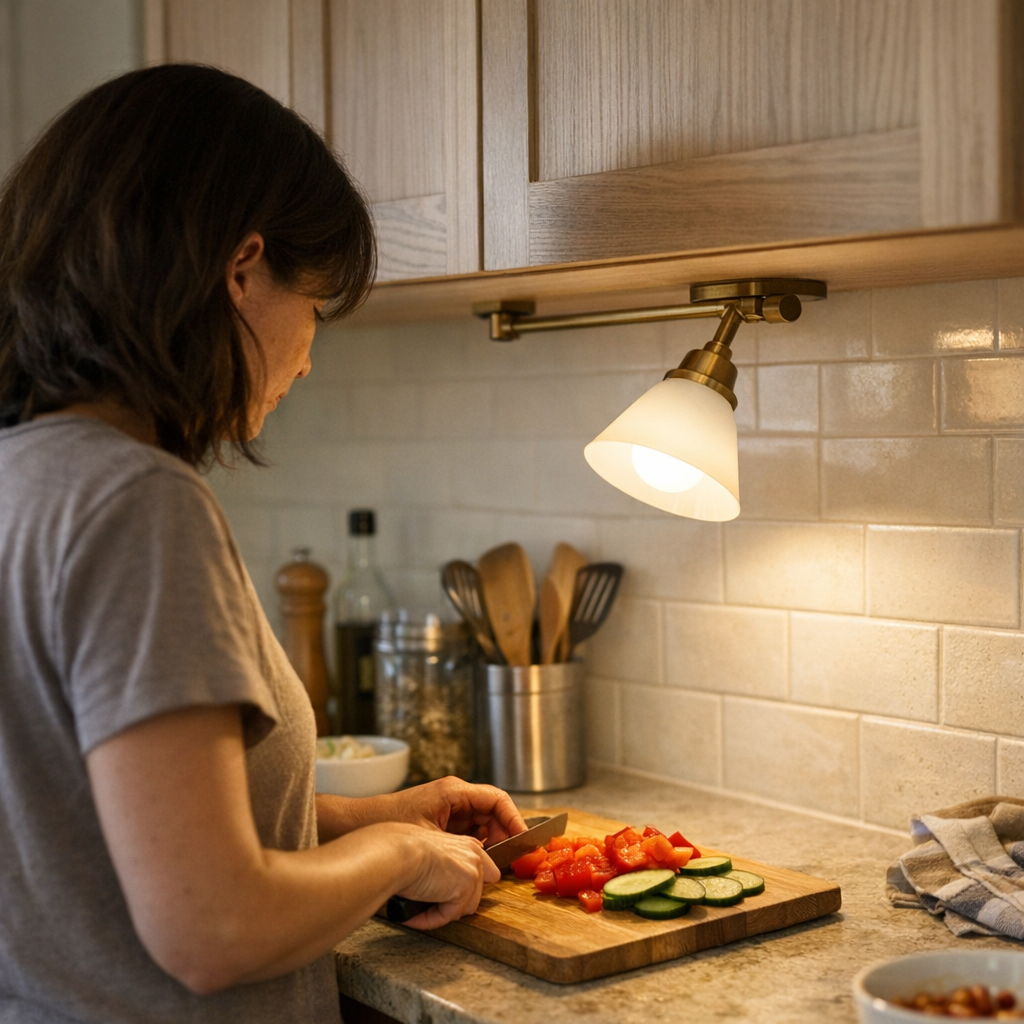
The routine is so familiar: standing close to the backsplash, knife in hand. Every gesture throws a fresh shadow. Some evenings, I found myself stooping or nudging the cutting board further away, squinting and moving in search of clarity. When the only light source is from above, the gap between clear light and shadow isn’t dramatic, just persistent.
Sometimes it’s the little missed things—the fine details you only see at the end, like a sliver of carrot you didn’t quite cut or a puddle left behind because the cloth lost it in the half-light. I realized I was spending as much attention on finding the right angle as on the task itself, and that low-level irritation lingers.
That was when it became obvious, in a way I couldn’t unsee: under-cabinet lighting doesn’t just brighten counters, it changes how the work surface feels to use. The surface sharpens, and the work comes back into focus. Not instantly, but with a kind of growing relief.
What Changes, Quietly
After making space for a continuous line of under-cabinet lights—pressed just inside the cabinet front—something about daily kitchen routines softened. The farthest edge, next to the wall, finally opened up under steady, shadowless light.
It sounds minor, but each time I moved through the kitchen in the evening, the work was easier. Colors on the cutting board held true. I didn’t notice myself shifting or stooping, or worrying about spills hiding and reappearing. The difference wasn’t in what I saw at first, but how little I had to adapt. The work simply fit the way the room was brightened.
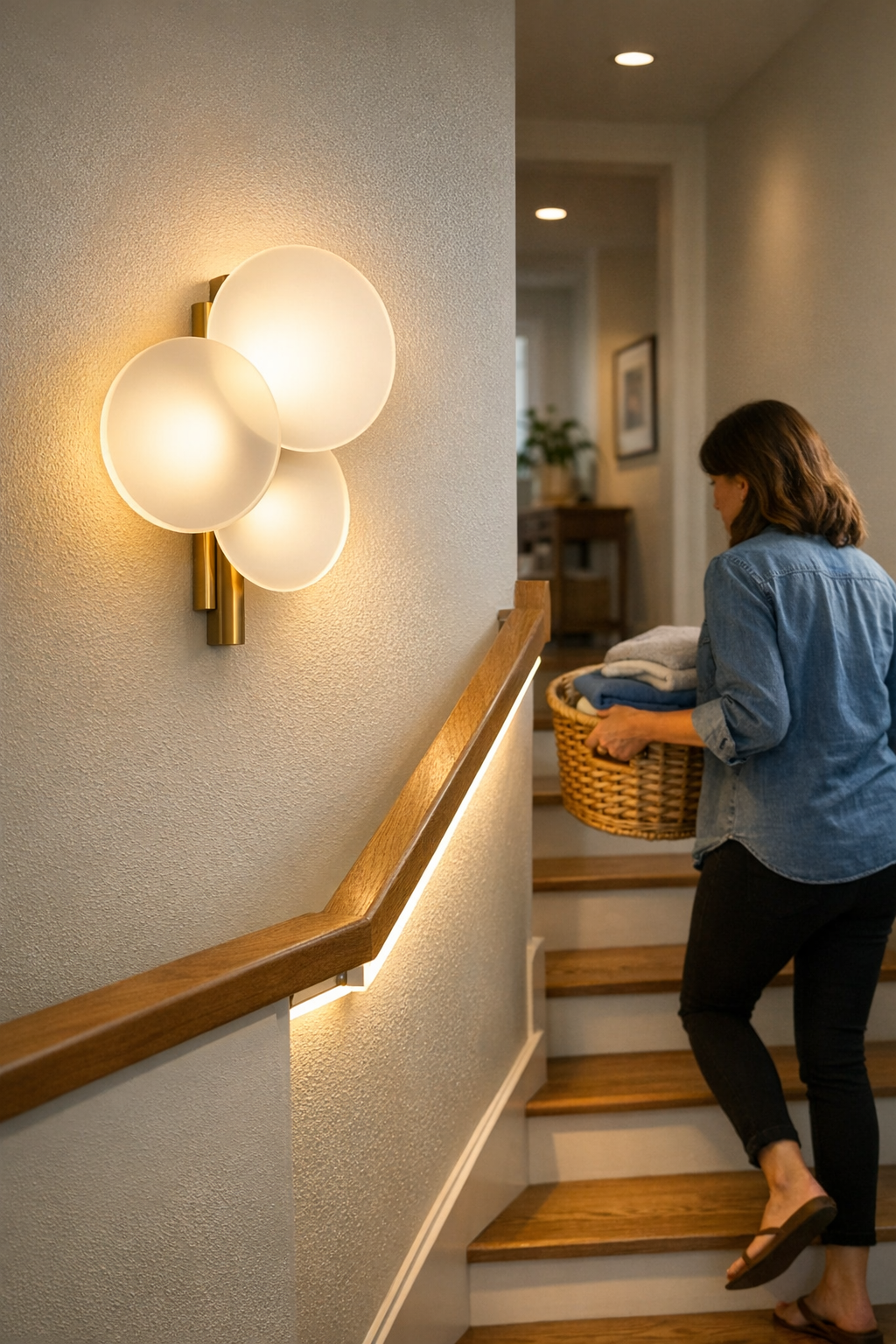
A funny thing about indoor lighting: it quietly sets the rhythm of a space long after any fixture is installed. Some setups quietly frustrate by leaving dark edges and shadows that interfere with repeated-use areas like work surfaces, stair turns, or corridor zones. Others gently recede, making routine moments smoother.
It took a while to notice just how much easier things felt once the shadows stopped collecting out of reach.
Sometimes, the most useful kind of lighting is the one that lets you forget about lighting at all.
There’s a little more to explore here, if you’re curious: http://www.lighthelper.myshopify.com