Evenings Quieted by Simple Changes in Cat Spaces
Creating clear boundaries between a cat’s eating, playing, and resting areas reduces nightly disruptions and makes quiet evenings easier to maintain.
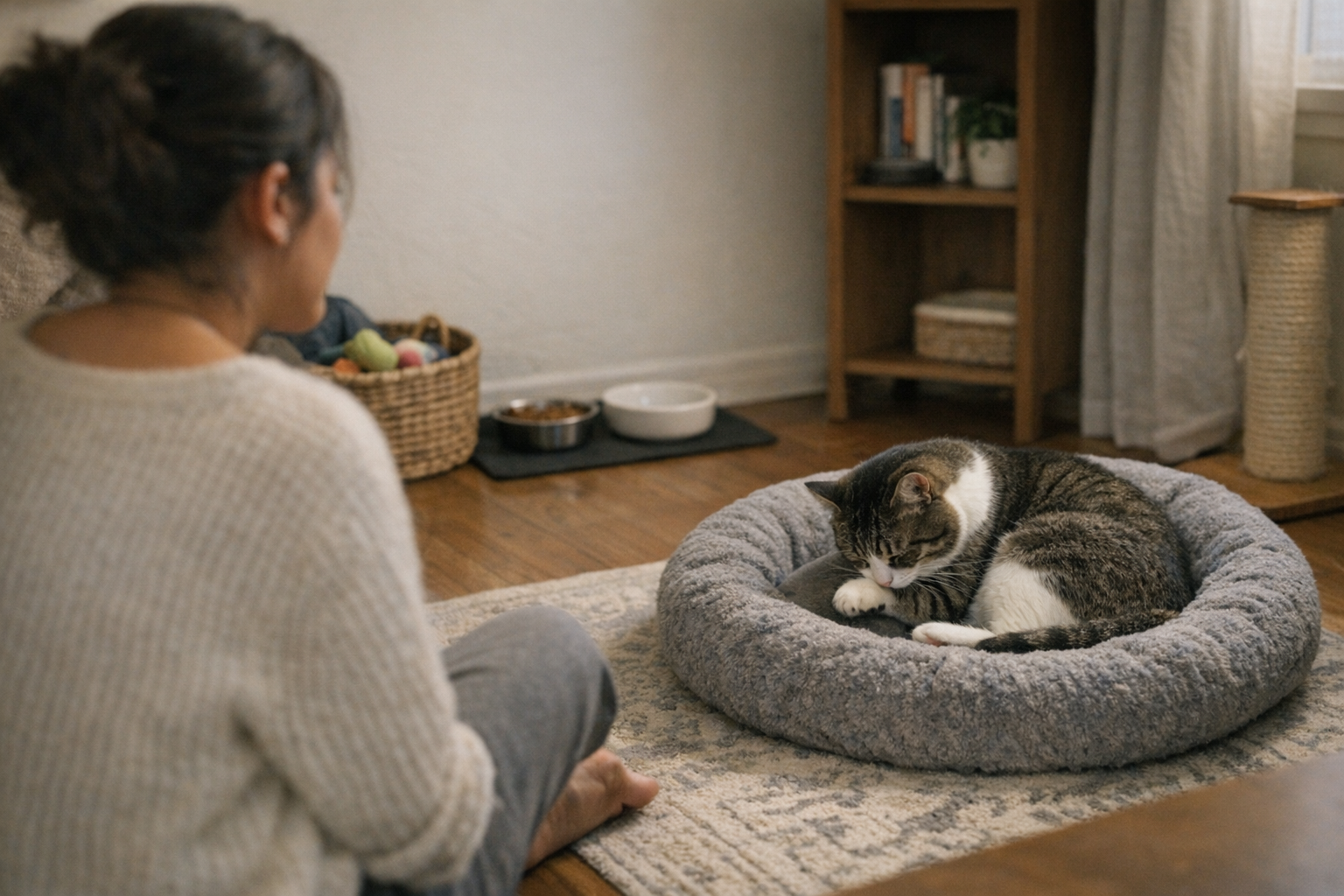
There’s a moment—late in the day, maybe as the sun drops past the blinds—when the living room finally looks still. I catch myself admiring the setup: feeding bowls lined up, toys back in their basket, her resting mat flat in the corner. The order promises an easy evening. But then I hear the scatter of kibble against the floorboards, or see a blur bolt across the carpet, and realize something about this “calm” never lasts as long as it seems it should.
At first, it looked fine. But the longer we lived with it, the more it slowly unraveled. The feeding area drifted too close to her favorite ambush spot, and the toy bin slowly moved toward a patch of sun she likes for post-dinner naps. Each night, resetting took a little longer. I was filling the water, gathering scattered mice, stepping on crumbs, wiping flecks from under her bowl. The difference between surface order and real ease starts small—just a pause here, an extra step there—but stubbornly returns again and again.
Edges That Keep Blurring
You notice it after a few resets. What seemed like one contained area for food and water turns into a zone you cross and re-cross. Crumbs travel out farther. The mat slides, and you find yourself bending down just to nudge it back for the third time that week.
It’s small, almost easy to overlook: toys end up under the same sofa leg, night after night. The bowl’s edge, meant to stay clean, catches half a meal just out of reach. These aren’t disasters, just low-level interruptions. But they quietly shape whether the room feels easy to share or always a little out of sorts.
The Maintenance Loop
Every setup has its own routines, but some demand steadily more upkeep. When her food bowl sits too close to the hallway, one dash means half the evening is spent picking up stray kibble. A toy basket just inside the rest zone turns her nap spot into a launch pad, so every other night ends with me pulling chewed felt from under a bench.
This was the part that kept coming back. Tidy wasn’t the same as easy—not when each reset introduced new friction. On the surface, nothing seemed off; the room looked composed, as if it should work. But actual rest, for both of us, kept slipping just out of reach.
One Separation, Real Relief
It didn’t take a big change, just a bit more space between what’s eaten, what’s chased, and where she sleeps. Moving her toys to a different corner meant the rest mat actually stayed restful. A food mat with a higher lip kept stray crumbs in one spot; most nights now, I clean up with one wipe instead of four.
It’s an odd comfort—the difference between “looks set up” and “works night after night.” A routine that once needed constant correction faded behind a simple barrier, and the quiet that followed finally felt earned.
The details won’t be the same in every home, but some of this carries over. If a room stays calm after a full run of evening routines, something in its structure is easing the work—not just for the cat, but for you.
I find more evenings holding onto that quiet now. These thoughts linger if you want to see how others manage the everyday, too: http://www.stillwhisker.myshopify.com