Evenings Settled by Shifting Cat Play Before Meals
Moving playtime before dinner reduces mess and restlessness in indoor cats, improving cleanup, noise, and nightly maintenance.
It’s usually the small, repeated signs you notice first—scattered bits of litter just beyond the mat, toy mice wedged against table legs, a persistent chorus of meows right as you’re managing dinner. On the surface, everything looks tidy: food bowls lined up, toys tucked into their basket, litter swept around its area. But something about those hours before dinner kept tipping the house off balance. Evening routines started to blend together, and it became clear that neatness alone didn’t mean the setup was working smoothly.
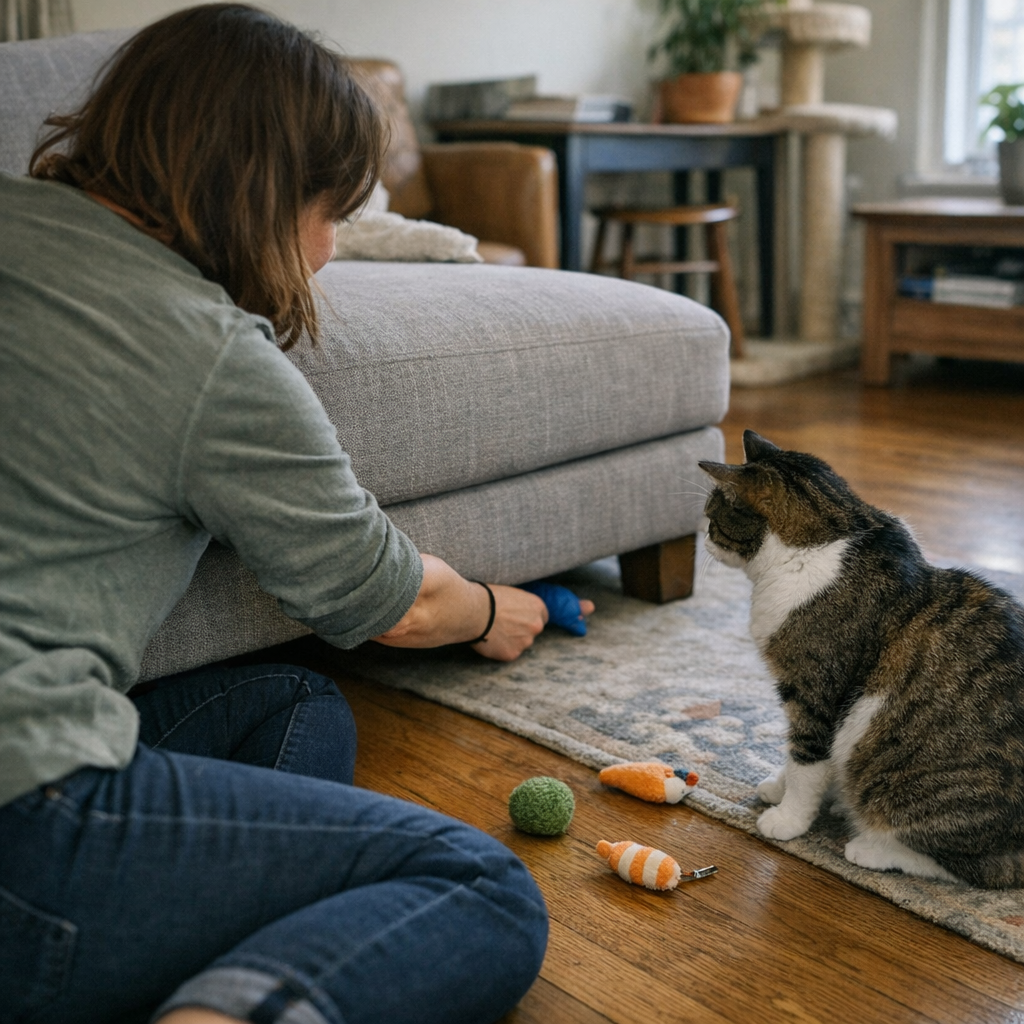
After a few weeks living with the same cycle, the pattern stood out more clearly. Most of the day, the space settled down, but just before meals, a familiar tension arose. One cat hovered near the feeding mat, another dipped a paw into the water bowl, and toys quietly started migrating out of their corner, dropped along my regular walking path. I’d find myself pausing several times to reset things—a quick wipe around the food bowls, a step to move a crumpled foil ball out of my way—always just ahead of the next round of mess. This recurring friction was the part that kept returning.
Shifting the Evening Rhythm
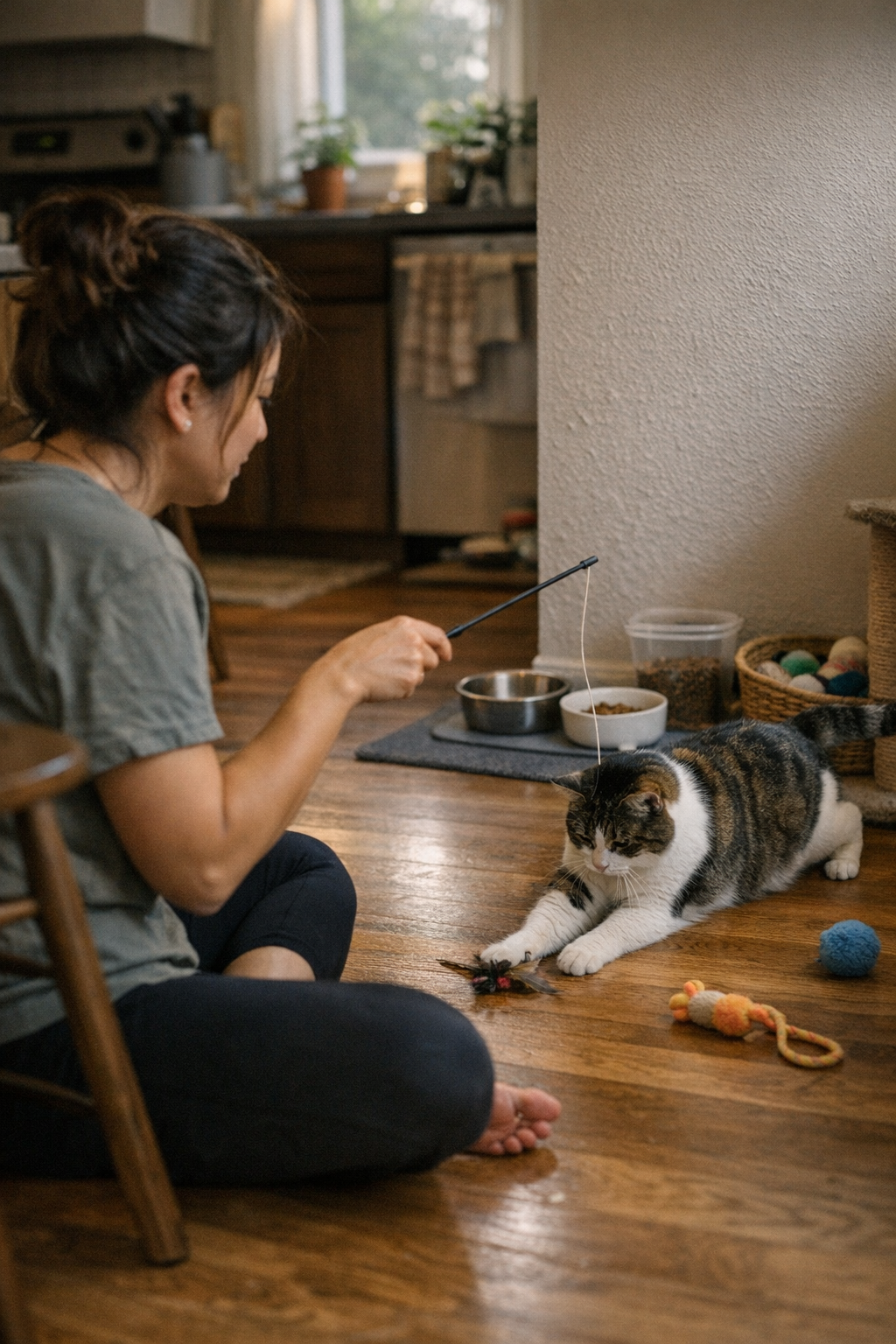
Things changed when I started putting play before food prep. I’d always assumed the order didn’t matter much, but slotting interactive play in first shifted the evenings almost overnight. The cats used up much of their pent-up energy chasing, pouncing, and wrestling with toys all in one place. This left less room for the anticipation of dinner to spill into restless pacing and scattered messes. The difference was consistent: less darting between rooms, fewer meows echoing off the kitchen tile, and toys mostly gathered where play wrapped up. Cleanup shrank from a prolonged task into one small, regular action.
Why Timing Matters More Than Setup
I think the usual setups—feeding corner, water station, litter mat tucked nearby, rest and scratch zones scattered around—don’t fail because they’re unorganized, but because their timing doesn’t match the flow of the evening. Reflecting on it, the quieter house didn’t come from buying another mat or tucking toys in more neatly. It happened when we started playing before meals every evening. That simple shift reduced friction at dinner time and made the shared indoor space feel less crowded.
If you want to see what I mean, you’ll find our usual setups lingering here: http://www.stillwhisker.myshopify.com