Evenings with Cats: Finding Quiet in Everyday Chaos
A well-structured bedtime reset using containment, raised-edge mats, and centralized storage reduces daily mess and repeat work.
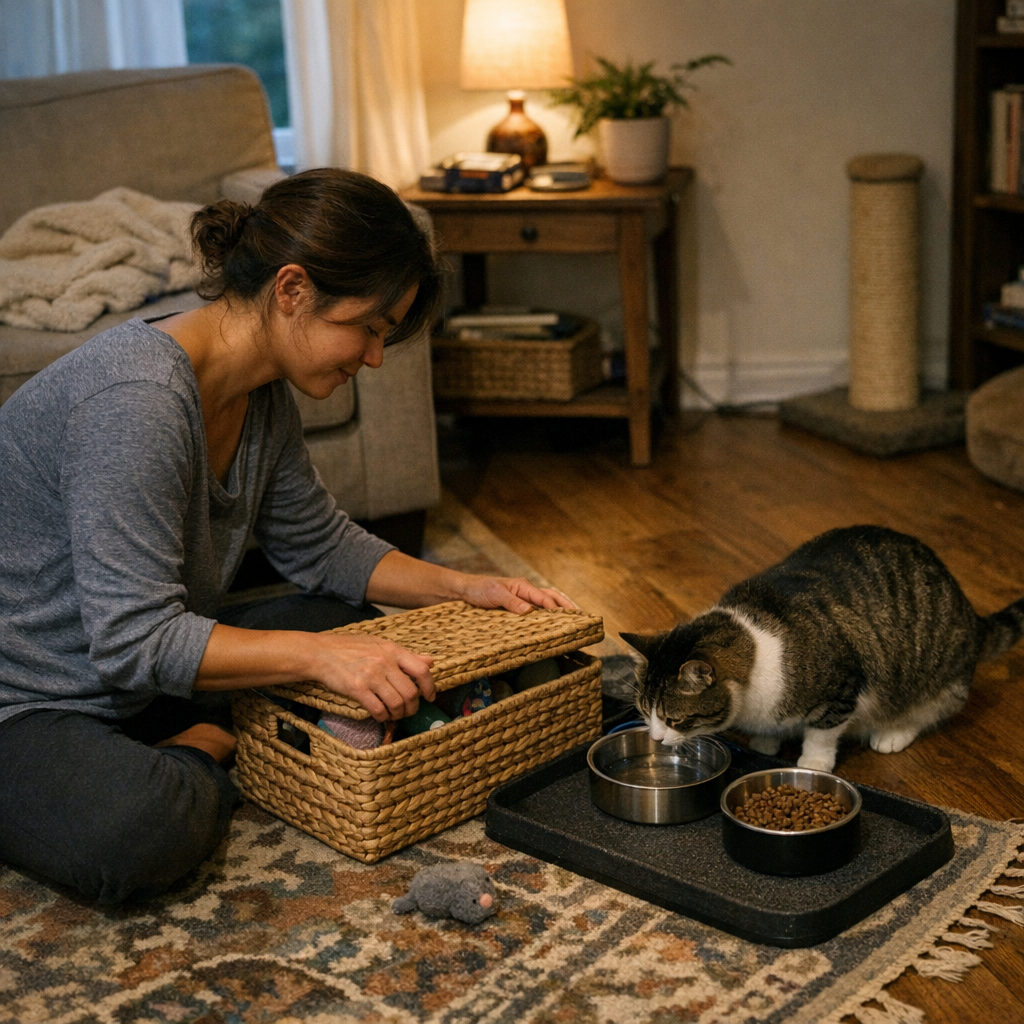
Most days, the room looks fine—edges tucked, bowls aligned, even the water spot just where I meant it. But by night’s end, something quieter sets in. Toys show up beneath the same chair legs again. A mat meant to catch spills curls at one side, and the litter-adjacent spot holds a faint dusting, even after a midday sweep. I didn’t notice how much this friction added up until it repeated, pause after pause, like the house itself asking for the same attention as the cat.
It’s not that the setup falls apart in a big way. More that daily wear collects in corners. Feeding bowls aren’t just emptied; their spots shift a little each time, and water leaves faint smudges that settle into soft outlines on well-worn mats. I catch myself doing small resets—a quick flick of the toy basket to corral felt mice, the quiet slide of a blanket back into place—never quite thinking of these as maintenance, but not ignoring them either. For indoor cats and the people living these routines, this is just how evening settles in.
Patterns That Don’t Announce Themselves
At first, everything looked normal. The food and water tray sat beside a soft mat, and a basket kept most toys in check. But the difference kept appearing. One week in, the water bowl’s edge carried a line of crumbs, despite careful placement. Toys resisted their basket, collecting under the couch no matter how often I cleared them. The litter mat that felt oversized on day one suddenly seemed too small by the weekend.
You only spot these patterns after a few resets. Each evening becomes a light inventory. Skipping it makes the next day feel heavier—a blanket not straightened, toys left scattered, water already needing refilled by morning. It’s not neatness for its own sake but how quickly small things turn the room from working with you into working against you.
The Quiet Work of Placement
What kept coming back was placement outlasting effort. The first real shift wasn’t about fancy storage or “cute” accessories, but setting boundaries that hold. A mat with a raised, textured rim under both bowls contained water and crumbs, cutting daily hardwood wipe-downs. One lidded basket for toys, placed where cleanup paths cross, meant less searching under furniture and fewer midnight scrambles.
I noticed cleanup felt shorter—not because I was doing less, but because things stayed closer to where I left them. The cat adjusted too—resting on the same corner mat, returning toys to the living zone, gravitating to stable spots. It doesn’t solve everything. Litter still escapes, food still migrates, but the resets are lighter, less like maintenance and more like the room quietly remembering its shape.
When Routine Becomes Quiet Support
After a few weeks, you notice the nights when cleanup barely asks for effort, and the mornings that don’t start with retrieving a toy or wiping a puddle. It isn’t dramatic. The change is subtle—a lessening of daily friction. Each small repeated decision—basket location, mat style, where the blanket lands—shifts the balance.
The containment isn’t perfect. But the difference between a tidy-looking space and one that eases your hands every day is real. Over time, you can feel the room itself doing some of the holding, not just you. Sometimes, all it takes is a raised mat edge and one reachable basket to keep ongoing friction at bay.
Sometimes what helps most is barely visible at all—a setup that fits back into itself, night after night.