Finding Calm in a Familiar Walking Loop
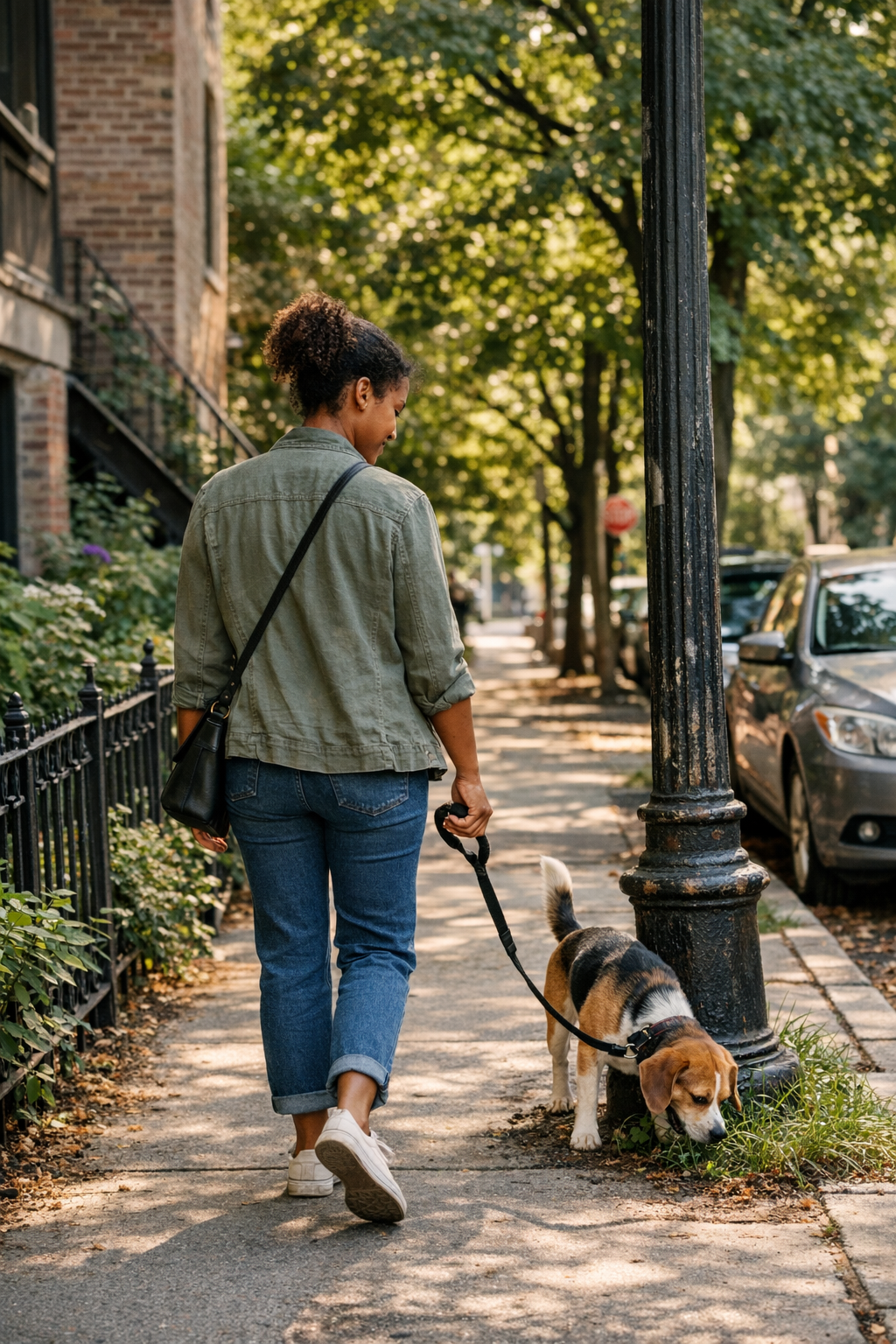
Switching to a consistent, familiar short walking loop reduces leash tangles and restlessness, making daily routines smoother for dogs and owners.
There’s a moment at the center of most days—a pause between activities, or a shuffle past the same bowl in the hallway—when the true shape of a dog routine finally shows itself. This moment isn’t usually loud. Sometimes it’s just the way towels edge further from the crate each afternoon, or how toys—no matter how carefully collected—begin to reappear, one by one, along major walkways. These small patterns become clearer the longer they’re lived with.
A good routine can look perfect at first, every corner reset and each bowl set square, but a morning’s worth of real use reveals what’s actually working. For me, the sticking point was always in the step-between moments: coming in from a walk with wet paws and realizing the towel was out of reach again, or waking up to find toys blocking the door more than expected. The surface-level order didn’t match what it felt like to move through the day. After enough repetitions, you see which details keep buckling under the weight of everyday life.
It’s less about big, dramatic mistakes and more about a slow buildup of micro friction: the water bowl nudged too close to the bed so splashes mix with scattered kibble, a leash tossed not quite back in its spot and missing in the next hurry, a resting corner drifting into the walkway by evening. These little things never seem urgent at the moment, but they quietly rough up the day’s edges. It wasn’t until I started resetting each part—towel within arm’s reach, bowls out of high-traffic spots, toys actually gathered in a real bin instead of just piled—that the home’s rhythm stopped snagging on itself so often.
Walking Through Real Spaces
After a few mornings, you notice the entire main hallway shaped by half-forgotten habits. Shoes gather by the leash, damp towels hang awkwardly off furniture, and the crate’s blanket drags slowly across the floor as the day moves along. None of this is dramatic, but each interruption stacks up until the simplest routine—take the dog out, come back in, settle down—gets tangled.
The strange part is how much difference it makes to shift just one thing. For me, towel placement came first. There’s something quietly reassuring in reaching for it right at the threshold—no hunt required—instead of realizing again, too late, that it was left in another room. That confirmed how much the visible setup wasn’t enough unless its reach matched the need.
Walking the same familiar loop daily, I began catching these repeat hiccups—where the leash got lost, where toy scatter tripped us up, where comfort for the dog didn’t mean comfort for the routine. The changes, when they stuck, were subtle but real: less back-and-forth, fewer small aggravations, more pauses where things just worked.
The Quiet Clutter
At the edges of the day, clutter gathers from nowhere. Toys overflow, bowls shift, or mats bunch underfoot just as you’d rather step by quietly. It’s easy to keep picking up and smoothing down, pretending it’s all handled. But sooner or later, the flow slows—the dog circles for a spot blocked by a toy, or can’t reach the water bowl that’s migrated behind a basket.
If I let things slide, routines drag. Cleanup comes later, with a little more work piled on. Some days feel like the house is permanently one step behind the dog, not quite caught up before the next cycle begins. The difference showed up in smaller ways than I expected.
What finally stuck was noticing cumulative relief from fewer stumbles. Just one evening of coming in, wiping paws with the towel that was where it should be, and stepping over a floor cleared not by forced effort but by an earlier habitual reset. Routines settle into the background when small things align—the bowl doesn’t tip into the walkway, toys stay out from underfoot, and the dog lands in a space made for rest, not navigating around forgotten clutter.
Reset in Practice
Most days, no one else sees the rhythm shift—the quicker move through the kitchen, cleaner reset before bed, the brief pause by the door where neither of us has to work around obstacles. These changes are background but make easier company of everyday life. The hardest part wasn’t the work itself, but admitting where the slowdown kept recurring and then not letting small unlived details linger in the routine.
What I keep returning to is how calm builds from predictable access—a towel quietly within reach, a bin where toys actually stay, bowls set just out of the push zone. When these setups hold through repeated use, days get less interrupted, and sharing space with a dog becomes less about constant cleanup and more about quiet resets.
No grand declarations—just the feeling that the room, and maybe the week, is holding together better. For anyone else living in these cycles, a gentle reset changes more than the surface.
More everyday dog-life thoughts and setups live quietly at DogPile.