Finding Calm in Evening Walks Away From Home
Evening walks in new places expose pet setup flaws; easy access to essentials in outer pockets ensures smoother, calmer walks and steadier pets.
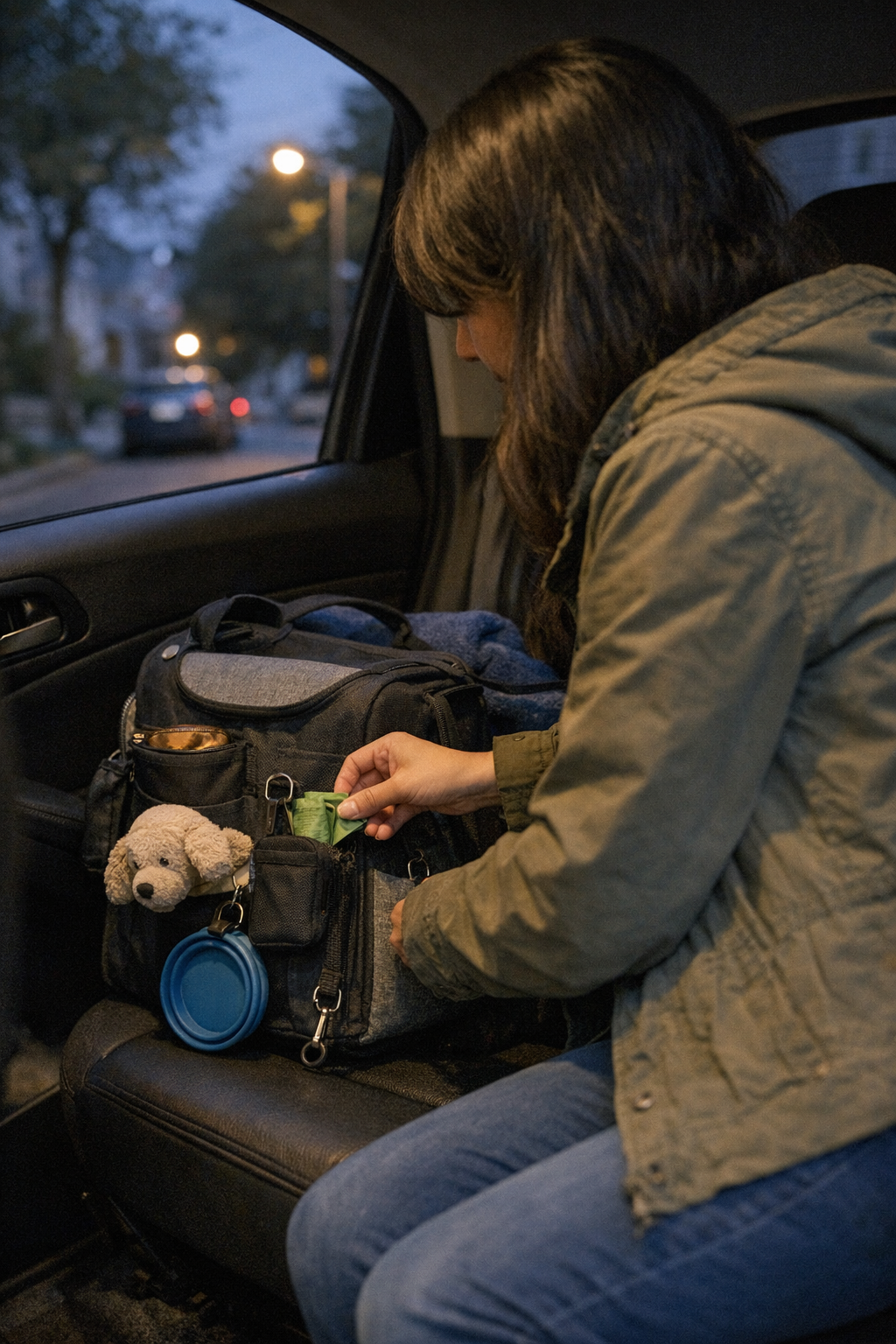
You start to notice it somewhere between the fourth and fifth pause on an evening walk—a half-lit stretch of a new block, leash looping loosely in one hand while the other hunts for a waste bag slipped beneath everything else. It’s not dramatic, just quietly frustrating: a pause stretched out for no good reason, your dog waiting, and the night moving a little slower.
At first glance, a bag or carrier packed with perfectly arranged pockets seems like the solution. Neat slots for each toy, travel wipe, collapsible bowl—lined up in a way that looks reassuring from your car seat or home entryway. It looks ready, until you’re on your third unplanned stop and the treat pouch is wedged beneath three unused things. That’s when the frustration sets in. You feel it most when your pet starts to edge restless, a sign you’ve paused too long, lost in the shuffle for that one item you always seem to miss.
You start to notice it after a few trips. No matter how tidy the structure, if the things you use most often—especially comfort or cleanup gear—aren’t within arm’s reach, the interruption lingers. The road unravels, the walk stalls. It took me a while to put a finger on the problem, but the simple difference was where I kept the basics. Being able to reach for a snack or a calming item without unzipping the main flap made the walk flow smoother in ways I hadn’t expected.
It looked fine before. But the difference kept appearing. Each time I set the bag down—on the car seat or curb—I would pull everything out just to find one cleanup pouch or a misplaced clip. A travel setup that looks complete on the outside can still hold you up on the move, especially if every restart means reshuffling half of your kit. The small delays aren’t huge, but they pull at your focus. Even the dog seems to notice—settling less, looking back more. When essentials live on the outside, not buried deep inside, the whole routine resets faster.
I shifted the gear around without much ceremony. Just clipped what I used most to outer rings or loaded the grabbiest items into side pockets that never needed a second unzip. It was a small adjustment—but what changed most was how the walk moved. Stops broke less often; each pause flowed into the next without a reset dragging at either of us. That was the part that kept coming back: less time restarting, more time moving together.
After a stretch of trips, it’s clearer that the bag that works best isn’t the one that looks most organized at rest—it’s the one that stays light in the hand and simple in motion. The feeling is different: less about perfect arrangement, more about easy, quick access under real travel conditions. The proof comes only in repeated use, when reaching the next step happens almost without thinking.
If you’re curious where all these quiet adjustments lead, there’s a simple place to start looking: http://www.pawgotravel.myshopify.com