Finding Calm in Everyday Cat Grooming Moments
Changing your posture during indoor-cat grooming by sitting lower on a stable surface reduces resistance, stress, and cleaning hassle.
You notice it after a few resets: that quiet tension that lingers when it’s time for another grooming session with your indoor cat. It’s not a problem with the brush or your cat’s personality, but a reluctance woven right into the space itself. At first, the setup seems tidy enough—chair pulled alongside a favorite rest blanket, grooming tools within reach. But the process always ends the same way: with you and your cat both eyeing the nearest exit, ready to move on. It took a few rounds before I traced the root of that growing resistance.
Sometimes, “good enough” quietly costs more
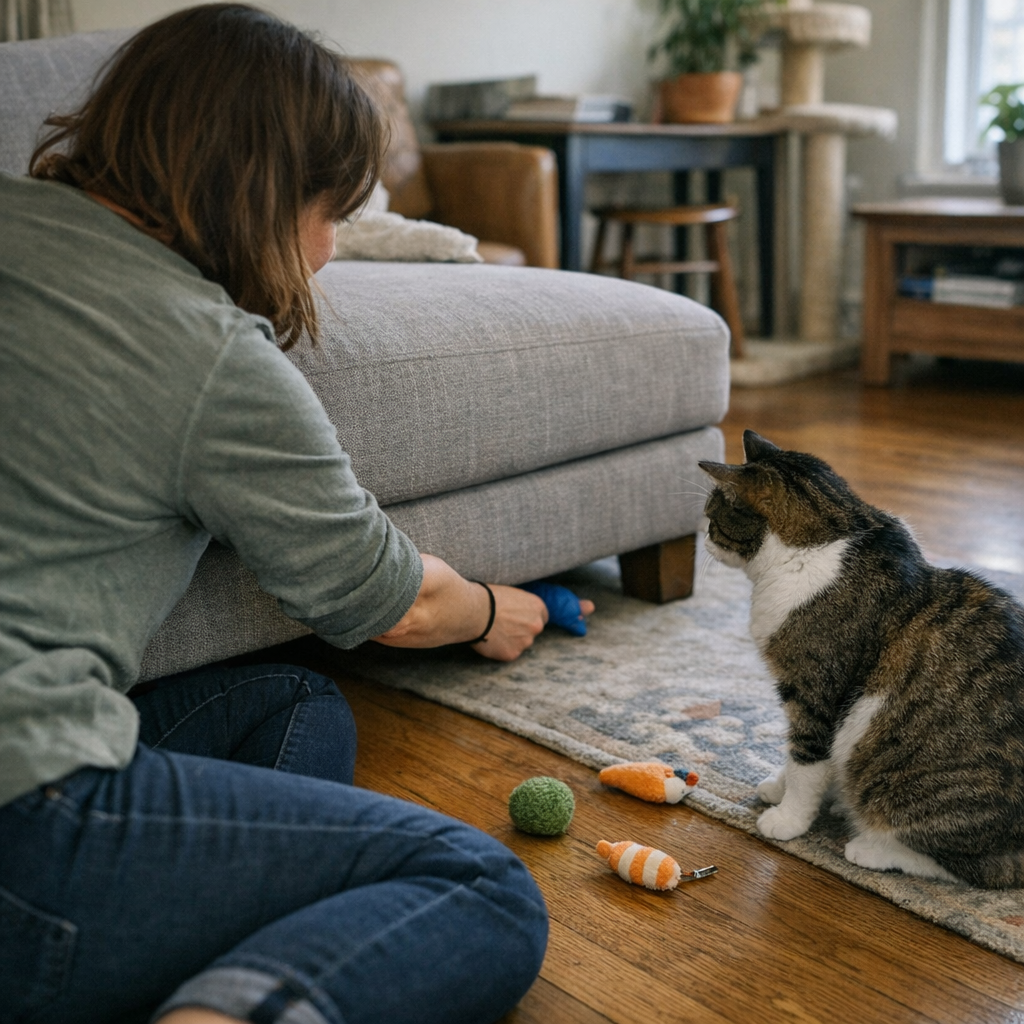
For months, I settled for the obvious setup: pulling a chair near the window patch she liked, draping her favorite blanket on the floor, and gathering the brush and tools nearby. At a glance, it looked organized enough. But once the brushing began, my cat would crouch at the edge of the blanket, ears dipping, body tensing. Static fur floated down, collecting around chair legs and baseboards. I shifted and reached to follow her movements, but none of it made grooming feel easier for either of us.
The scene seemed fine, but the awkwardness repeated every time. Cleanup became a regular hassle—fur stuck under furniture, the calm order the setup promised slipping away by session's end. The spot didn’t hold up to repeated use in practice.
A small reset changed the room’s feeling
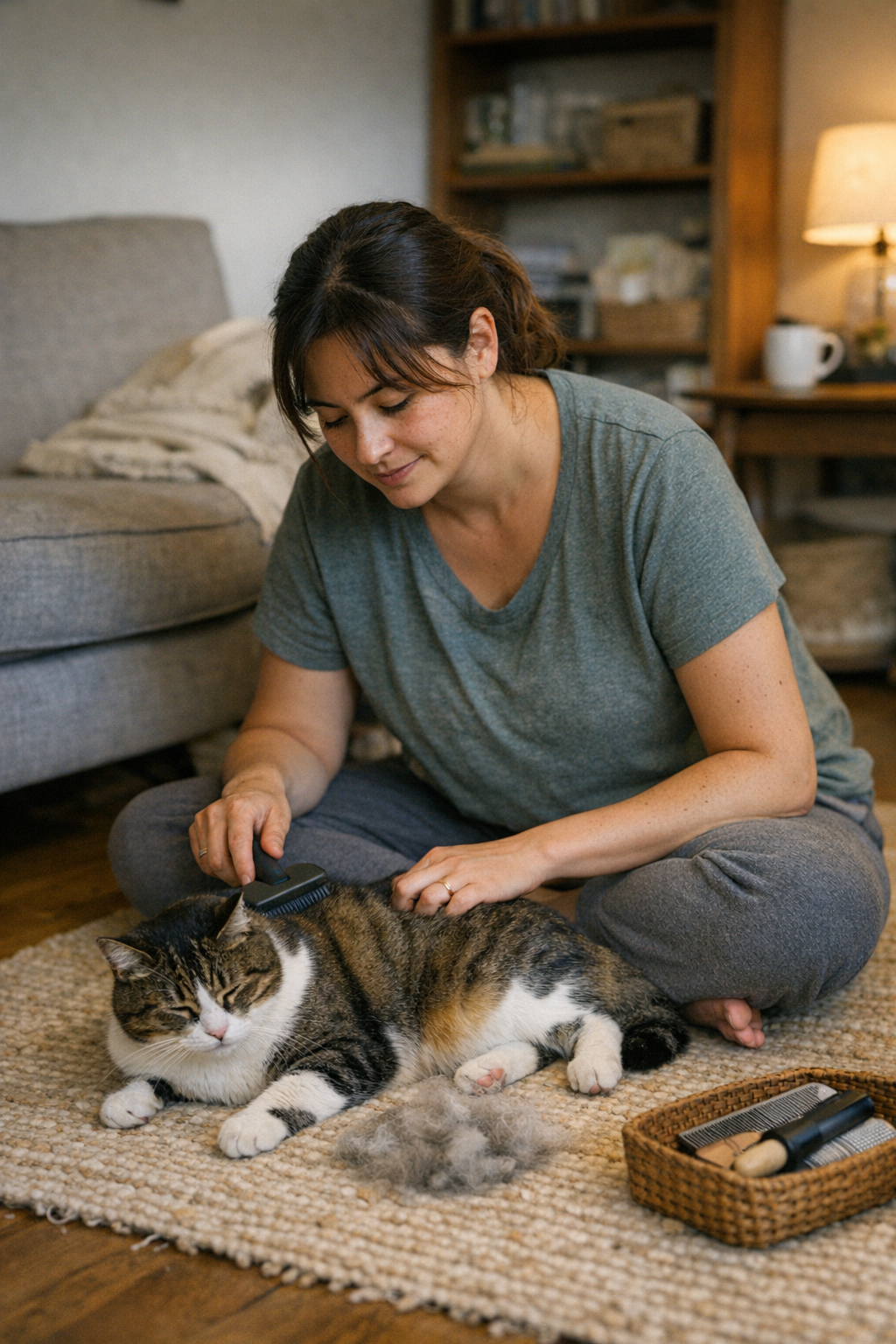
Eventually, I tried lowering myself—knees on the worn blue rug, brush in hand, meeting my cat’s level. Without a looming shadow above her and no uncomfortable lean, her hesitation eased. She sat still longer, watching instead of scanning hallway exits. Loose fur stayed mostly on the rug, reducing the endless chase for fur trapped under furniture and making cleanup simpler.
This subtle shift wasn’t about new tools or a different blanket, just posture and placement. It brought the grooming routine closer to neutral, not a standoff that echoed into the rest of the day.
Patterns start to show in small avoided spots
Over time, I noticed my cat learned to track where the sessions began—sometimes walking away, sometimes leaving tiny clumps of fur pressed into corners I barely noticed before. These quieter signals added up: longer retreats to the next room, more sweeping after each session, and a growing sense that grooming was a “project” that interrupted her normal routine.
By customizing the setup—placing selective rugs to catch shedding, keeping my reach minimal, and adapting the grooming spot to her comfort—the sessions scaled back from something awkward to almost ordinary. Most days now, she waits patiently while I prepare tools instead of wandering off.
The room asks less of me and her each time.
Sometimes, the most practical fix isn’t about fancy accessories but a small change in how I sit or where I place a rug—just enough to make routine care feel part of the shared home space again.
For those interested in more grounded ideas about cat spaces—feeding spots, water setups, litter-adjacent zones, rest corners, scratching areas, toy storage, grooming-adjacent organization, and shared living spaces—you can explore further at stillwhisker.myshopify.com.