Finding Calm in the Chaos of Traveling Walks
A reliable pet walk ritual relies on fast, easy access to essentials, using an outer pocket for key items to keep movement fluid and interruptions minimal.
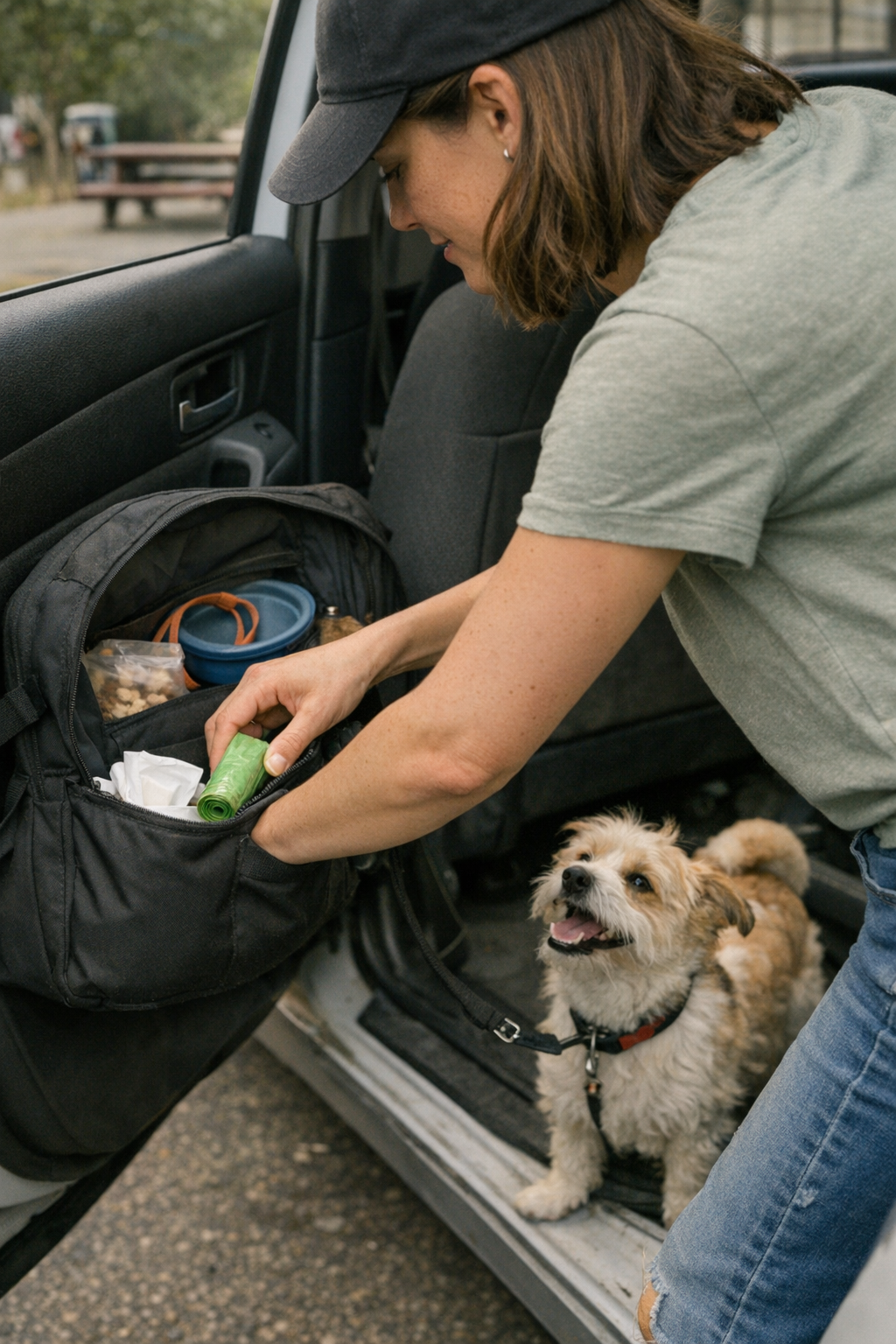
There’s a certain comfort in seeing everything zipped, sorted, and tucked before a trip with your dog—waste bags in their own sleeve, treats packed in, water bowl collapsed just right. For me, that feeling of preparedness always seemed like half the point. But as trips stacked up—short drives, stop-and-go routines, leash out, leash in—I started to notice something: the comfort of all that early sorting fades once those routines play out in real time.
It’s not a dramatic moment. Just the small mess of real movement. The dog pulls at the leash while my hand fumbles inside the carrier for a wipe, waste bags tangled beneath a pocket I thought was clever at home. Those little pauses seem harmless—until repetition turns them into routine friction. After a few trips, it’s clear: organized at home isn’t the same as organized at the edge of your seat, one hand on your dog, the other searching for what suddenly matters.
The Slow Build-Up of Small Interruptions
You notice it after a few trips. The bag that looked perfectly laid out on the kitchen floor becomes awkward when speed is needed. Half-tidy packs, full of carefully planned pockets, don’t offer the fast, one-hand grab your body wants when the car stops and the leash tugs.
That feeling kept coming back. It wasn’t about clutter; it was about reach and repeat. Each slow search for a wipe, each shuffle past a forgotten treat pouch adds up—not by the minute, but by the moment. The more the stops, the more the setup buckles under the real pressure of use.
When “Neat” Stops Working
It looked fine at first. Every item in its pocket, every zipper smooth. Until the move—seat to street, hand to harness—in real time. Each extra step, once reassuring, started to feel like a quiet tax on the flow. Easy-looking arrangements create an illusion of readiness that crumbles on repeated transitions, especially with restless paws shifting by your feet.
After a while, I found myself ignoring the interior organizers entirely—digging instead for a single side pouch, or leaving something half-closed for easier reach. The real need isn’t for perfect separation, but for one predictable checkpoint where essentials always live. Everything else is background noise when the dog already wants out.
The Only Pocket That Matters
One small shift made all the difference: wipes and waste bags, always needed and always late, got bumped to a loose outside pocket near the seat edge. Not tucked away, not hidden under a zipper. Just there at reach level for every pause and every rush.
The effect is quieter than you might expect. Less fumbling, fewer resets, a little less friction between trip and walk. The bag might look less sorted inside, but the part of the ritual you repeat doesn’t slow down anymore. Even if a treat or toy migrates, the checkpoint stays stable—ready again every time the stop repeats.
Reflecting on it, this small proof keeps coming back: pet travel setups that work are the ones easy to grab again, not just proud to pack the first time. Sometimes it’s not tidiness, but the return-to-movement you set up at the edge of the seat that makes the day lighter.