Finding Calm in the Quiet Corners of Home
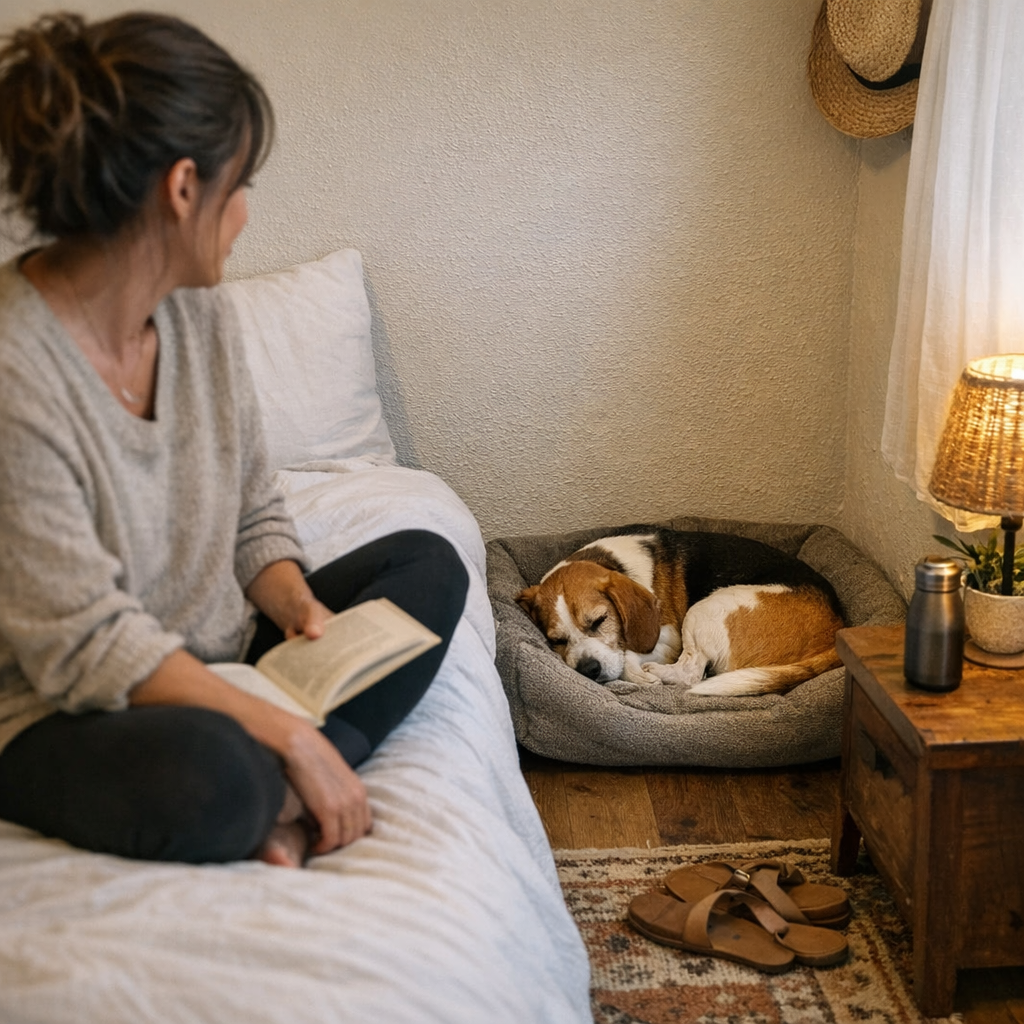
Restless settling signals a poor setup; shifting a dog bed into a sheltered corner eases rest more than extra padding alone.
You only notice it after a week or so—maybe sooner if your mornings repeat the same way each day. For us, it was always a quiet stumble around seven a.m.: coffee half poured, the dog bowl just slightly slid off its patch of floor, water nudged into a shimmering crescent. At first, it seemed trivial, easily fixed with a nudge from a socked foot or returned to its “perfect” spot after breakfast. But that small shift, repeated quietly across days and meals, started to signal something was off.
A dog bowl that looks tidy at rest but shifts out of place as soon as the first lap of water ends up living in the wrong part of the routine. The friction isn’t dramatic. It’s more like a dull edge, turning quick feeding into a slow shuffle—one hand reaching down to scoot metal on tile while the other holds kibble, trying not to tip. You get used to it like a drawer that never closes flush or a rug you adjust every night. A problem so small it feels almost unfixable, because it never seems like enough to focus on—but it comes back every day.
The Difference Between Looking Set and Staying Put
For a long time, I didn’t think about where the bowl sat. It looked clean tucked against the cabinet toe-kick, comfortably close to the wall, out of the way of shoes. It made the kitchen look a little more organized, at least until the first meal. That was the part that kept coming back. Lunches, quick water breaks, late-evening top-offs—the bowl wandered in small, diagonal inches, always traveling farther than expected with each nudge or eager paw.
You notice this eventually: a kind of inversion, where a tidy-looking setup resists the flow of the day, and a “messier” placement actually helps things feel easier. Over time, cleaning up a puddle or kneeling to recenter the bowl signals a friction point—not owner laziness but a built-in design mismatch. The “right” spot, the one you assumed made sense, works against the quick access and reset you need. The effort adds up mostly in minor interruptions, not dramatic messes. But it doesn’t stop.
How Awkward Reach Slows Down an Entire Routine
Most mornings, I tried to make the old setup work by shifting the bowl back each time the dog finished drinking. I started noticing when it happened: after fast drinking post-walk, or during crowded mornings when shoes and feet shared the same lane as the bowl. The cabinet edge caught the rim just enough to tip out water, and if the bowl wasn’t nudged flush after every meal, the loop began: spill, scoot, squat, dry, reset. It looked fine when empty, but the reality in use never matched the calm, tidy appearance I’d set up.
The difference showed in smaller ways than I expected: a little extra water underfoot, sighing while kneeling to clean up between tasks, or apologizing quietly to nobody as the routine stuttered into another slow patch. I began to see that the tidy wall-adjacent placement wasn’t helping reset my day—or the dog’s—just slowing it in increments.
A practical change came almost by accident. On a rushed Sunday, with groceries crowding the floor, I slid the bowl further out—not close to a wall, not fully centered, just far enough to clear the main traffic paths. It looked temporary, a bit sloppy. But for the next few days, nothing slid. The dog ate, drank, walked away; I came back later and the bowl hadn’t moved. Cleanup got simpler. There was one less thing to adjust.
Sometimes, the Best Spot Isn’t Where You Think It Should Be
The routine feels “right” when both of us can walk past the bowl and leave it exactly where it was, even after quick or messy meals. At night, I noticed small relief: no soft slosh under toes, no need to realign the kitchen before bed. The placement didn’t match the photo-ready kitchen idea I clung to at first, but the day worked better for both of us. The bowl and the routine locked into the same rhythm.
The quiet realization was that making the routine easier doesn’t require a big reset—just willingness to let what looks best go, in favor of what stays stable after a dozen different uses. A bowl that doesn’t wander or tip, left where it’s actually used, makes everything after—wiping paws, moving bags, settling in for a meal—feel like part of a routine you can trust to hold.
If the routine keeps pulling your attention to the floor, it might be time to move the bowl, not just clean around it.
That lived-in finding occasionally reminds me to check how the small things in dog life—not just visible messes—nudge routines one way or another. For anyone living with these patterns, there’s relief in noticing what works and quietly letting it stay.