Finding Calm in the Rhythm of Cat Play and Meals
Play before meals and separating play and feeding areas reduce mess, speed resets, and keep indoor spaces calmer with less maintenance.
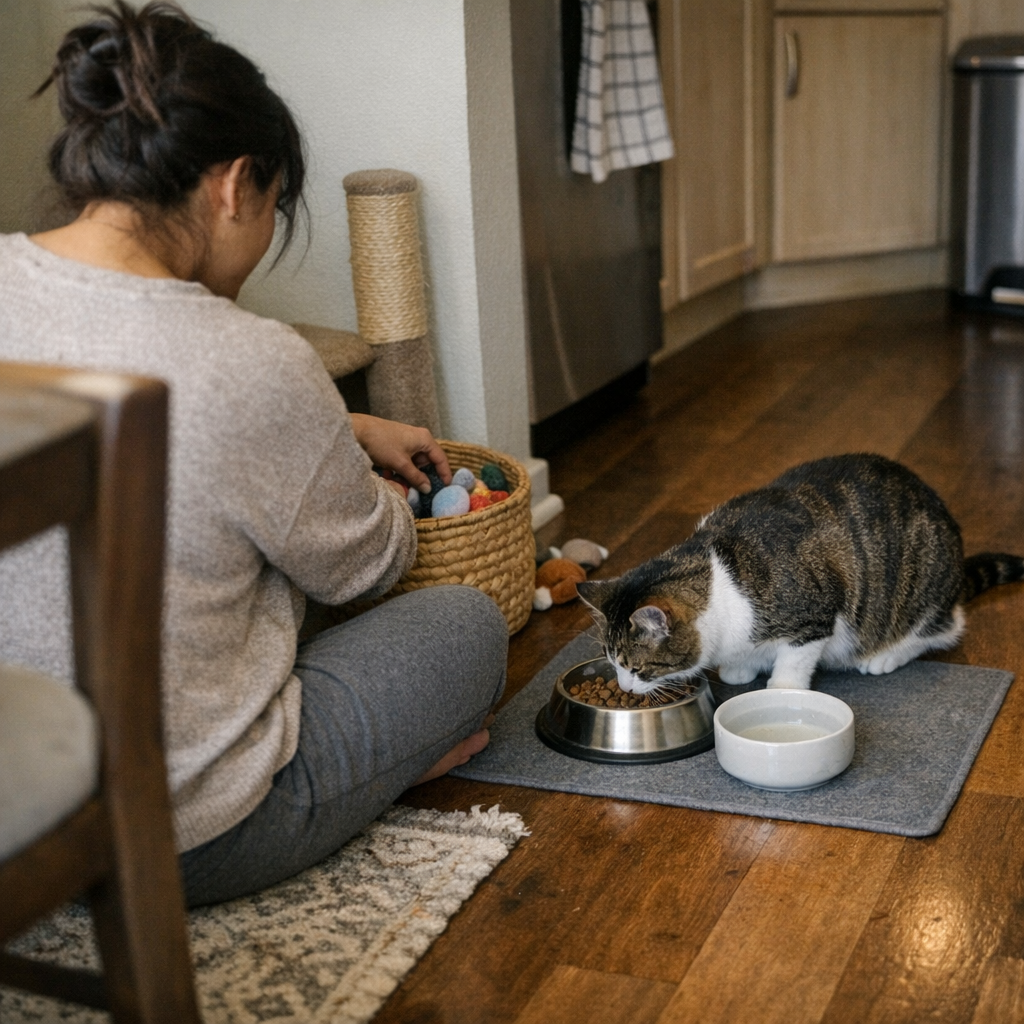
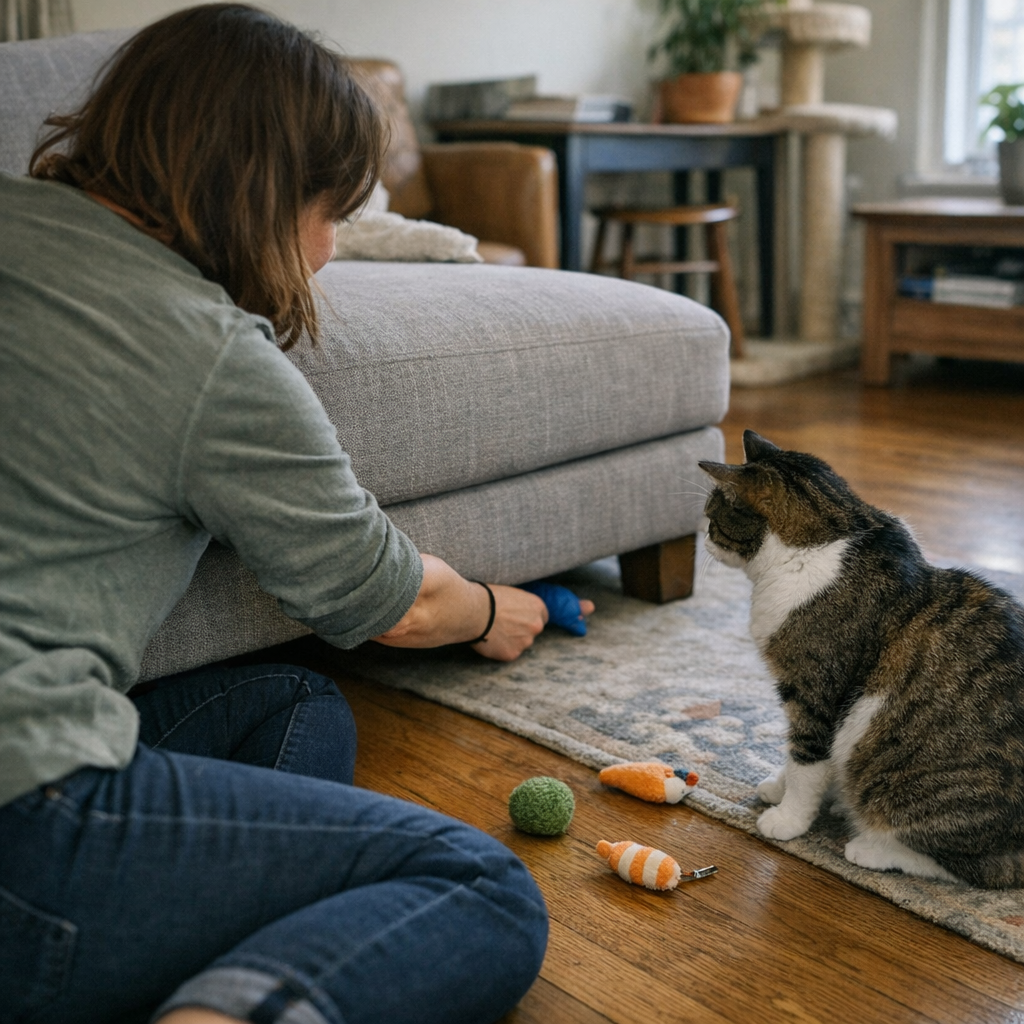
You don’t notice it at first. The feeding mat is laid down, the water bowl fits neatly in its square, and toys fan out just beyond the living room rug—a hopeful setup for peaceful indoor life. But after a couple of weeks, the surface-level order slips. There’s always that same patch beneath the chair needing a wipe, toys gather under the kitchen table, and water quietly seeps beyond the mat’s edges. What looked balanced demands attention again and again.
Only after a few months of navigating an indoor cat’s daily world did I realize how much a small shift in routine—a simple change in timing and placement—can ease cleanup and mental load. Play always felt like a bonus, something that happened only if there was leftover energy. Then one morning, after playing before feeding, the reset felt lighter, the space less churned.
The Difference that Doesn’t Show Up Right Away
At first, the feeding and play areas look fine. Most setups do, for a while. You spend time placing bowls out of the way, picking the right mat, pulling toys back from under chairs. But patterns build up with repeated use.
There’s a persistent low-level frustration: stepping into bits of kibble hours after cleaning, spotting water tracing slow lines along tile seams, or reaching for the same toy in the same dim spot for the third day running. It’s like the setup is quietly working against itself when play and meals overlap or happen in the wrong order.
After a few resets, the nagging signs become clear. Skipping play before meals translates into paw prints tracked further from the feeding mat, toys piling near bowls, and water edging past the intended area. The difference isn’t dramatic. It’s subtle, but constant.
Moving Things Just a Little Makes the Room Work
The changes were simple—almost surprisingly so. Toys corralled in one corner, the feeding mat nudged a hand’s width away from the wall instead of flush, and the box for loose toys shifted from under the dining chair to its far side.
But the effect kept showing. Cat energy spent in play didn’t spill into mealtime messes. The feeding mat stayed more reliably under the water and food bowls instead of sliding sideways after a sudden leap. Scattered messes stuck to smaller zones, and daily resets became quick glances rather than long chores.
It became clear most disruption wasn’t just the cat or the room—it was how play and food blurred together with no clear separation. A simple, repeated structure—with play before meals and a tidy gap between toys and bowls—cut downtime and spillover significantly.
Less Churn, Gentler Upkeep
Some routines only prove their worth after weeks of repeated daily use. Toys mostly stayed put. Water and kibble didn’t stray as far. Refills slowed in becoming messy thanks to that small space adjustment. Resets moved from hassle to habit.
There’s always some proof if you look—a toy forgotten under a side table, a faint water ring on hardwood—but those moments stop taking over the day. The line between a space that’s merely tidy and one that stays practically usable becomes easier to manage.
That’s the quiet relief of indoor cat life: habits combined with intentional layout save more time and frustration than they cost. If you want to see how StillWhisker fits into this everyday flow, you can view the full collection.