Finding Calm in the Rhythm of Daily Dog Walks
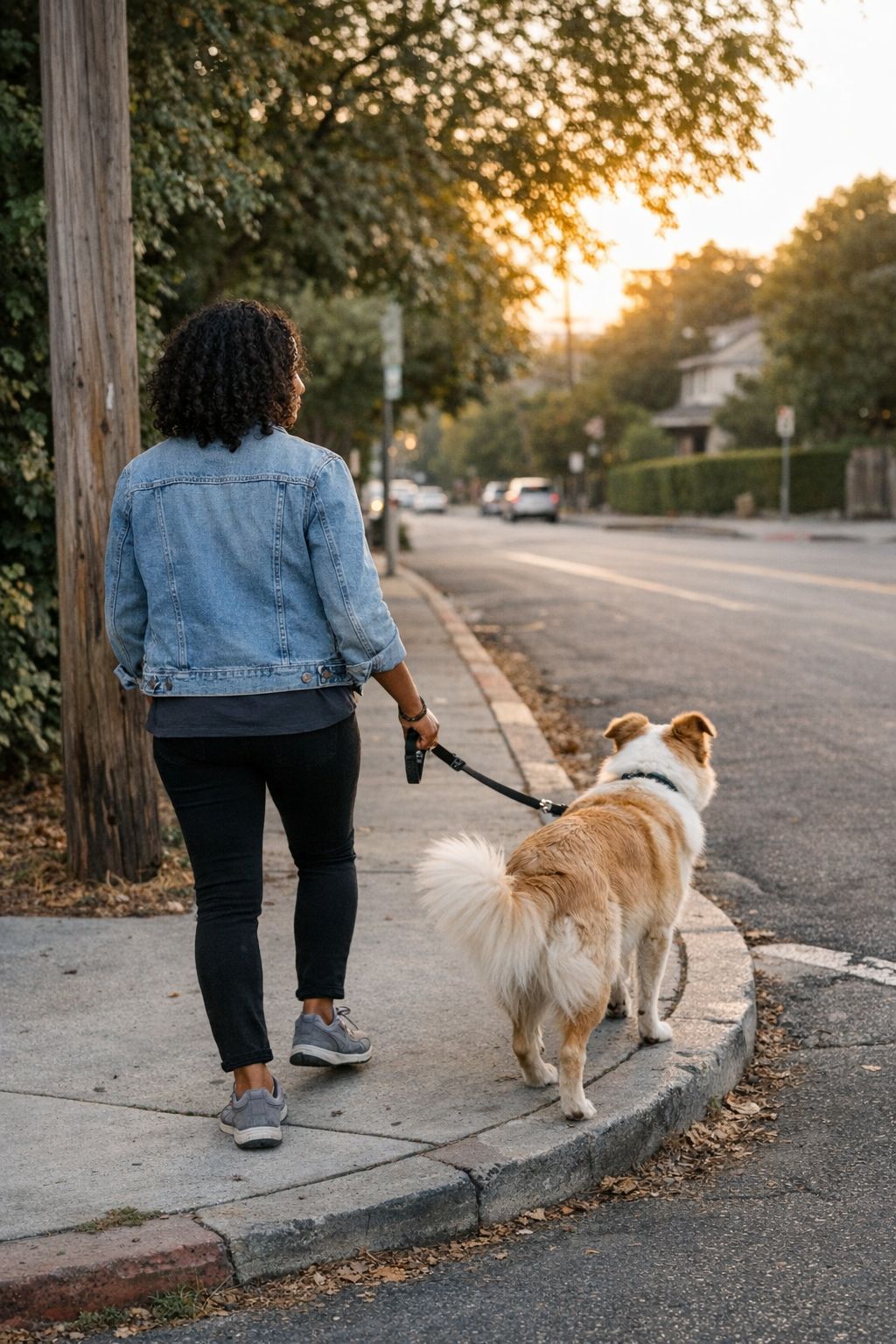
Addressing leash-pulling starts with noticing small routine shifts. Choosing a steady walk pace reduces friction and makes daily dog life smoother.
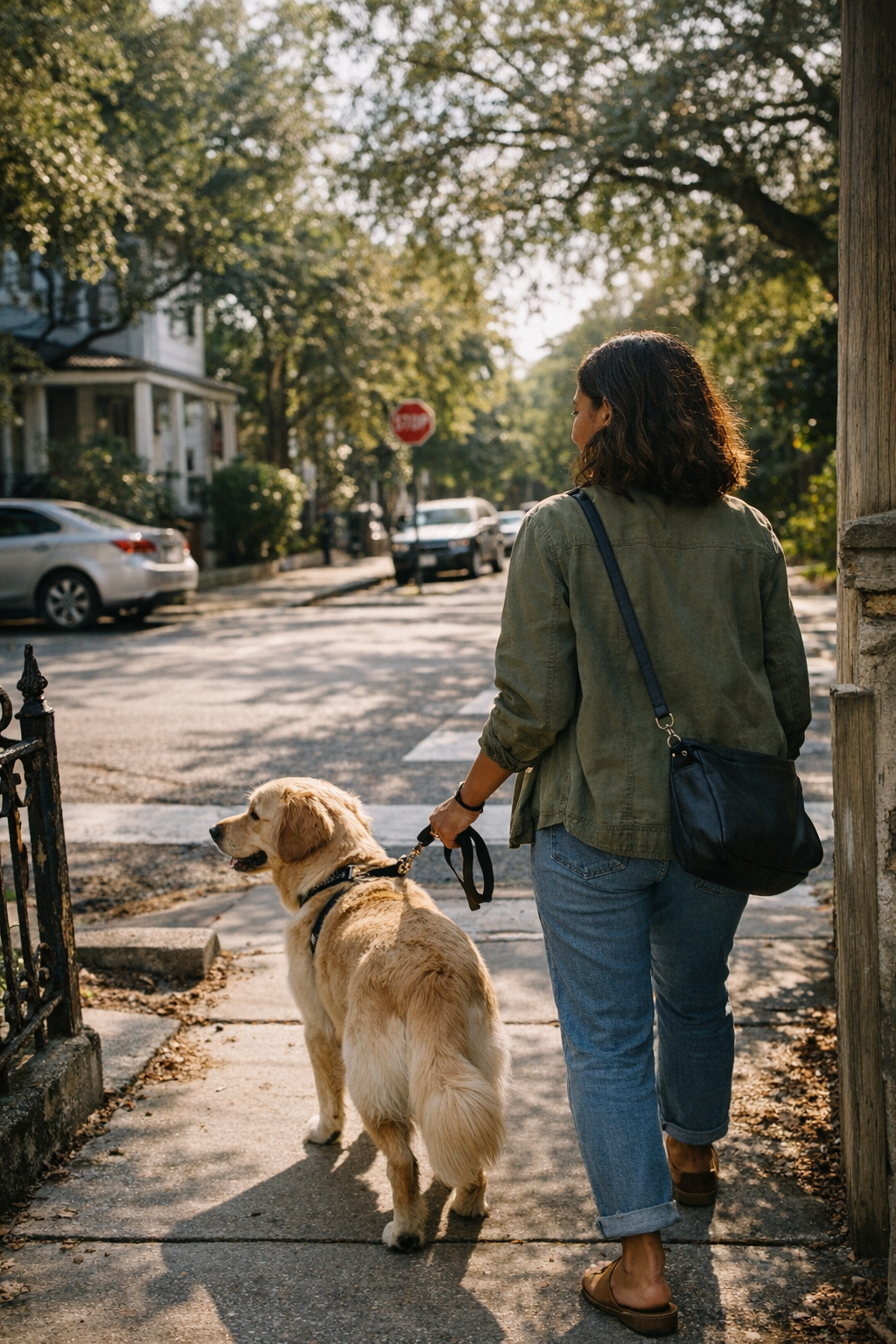
It’s strange what you notice in the middle of repeated routines. One evening, after coming back from the last walk, I knelt down to rearrange the stack of dog towels piled next to the crate. They seemed fine—clean, folded, and stacked—but lately, I found myself delaying grabbing one until after the dog had already shaken off. Water sprayed everywhere, and the corner felt more like a cluttered buffer zone than a rest spot.
Some details reveal themselves slowly. The crate door jammed against the bed, towels shifted just out of arm’s reach, and the pile of toys from earlier collided with kibble scattered near the bowl. I kept tweaking the setup without really changing much: moving the mat an inch, refolding towels, picking up a leftover rope toy. Still, every night ended the same—with a quick clean-up that felt more complicated than it had to be.
You notice it after a few evenings: the way small routine glitches compound—dog in, shake, scramble for a towel, wet paw prints tracked past the kitchen. That was the part that kept repeating.
What Actually Happens After the Walk
At a glance, everything is ready: towels stacked, crate open, water and food bowls lined up against the wall. I thought preparation was half the work, but the reality was in the movements. Most nights, as the key turned in the door, I could sense the routine breaking down. The leash would tangle near the entryway, the crate door would catch on the bed, and the folded towels—meant for a quick dry—turned into just one more thing I had to step over.
The difference showed up in small ways. Sometimes the dog hesitated to settle, pawing at the mat I hadn’t straightened or circling the crate. Or I’d fumble for a towel now just barely out of reach, turning a quick clean-up into another small delay. None of it was dramatic, but the transition from walk to rest felt clumsier than it should have been.
After a while, I stopped blaming the mess on the dog’s excitement. The way the setup was arranged was adding friction. Preparation wasn’t easing the next step—it was just relocating the pause.
A Practical Shift, Almost Accidental
One morning—not exactly a tidy start—I moved the towel basket closer to the door without thinking, mostly out of frustration that a damp towel had blocked the light switch. I edged the crate an inch further from the wall so it would open fully. I moved the food bowl so it wouldn’t catch on the toy overflow under the table. These weren’t big changes, but they altered the path through the room.
That evening, when we came back, I reached for a towel and for once didn’t have to look. The crate door swung open without nudging the bed aside. The dog, given an extra foot of open space, curled up instead of pacing. The routine felt calmer—less about managing a series of small interruptions, and more about returning to something familiar and ready.
It wasn’t organization in a neat-and-tidy sense. There were still paw prints, a rope toy in the corner, and stubborn fur on the bedding. But that wasn’t the point. The difference was how the small reach-and-stumble moments faded out, replaced by a flow that didn’t slow the rest of the evening.
When Looks and Living Collide
After a few resets, something clicks. It’s easy to design a dog’s corner so it looks like it works—to stack, align, match an idea of “setup”—but the real test is in the first seconds after walking back in. Being able to reach a clean towel, open the crate smoothly, and not detour around misplaced toys made every other part of the day fit together more quietly.
It looked fine at first. That’s what kept returning to me. The towels, bowls, toys—organized, but never quite in the right place when it counted. The practical realization was simple: if my hand can’t find what I need without looking, the setup isn’t ready for a routine that holds. Each repeated movement—wet dog, towel grab, bowl check—became easier once the space reflected how it was actually used, not just how it was meant to look.
Now the reset after a walk doesn’t interrupt the flow of things. It settles the house down as much as it settles the dog. Most days, it still gets messy, but the core routine matches how we move, not just how it looks after a clean sweep.
Sometimes I still step around a chewed-up toy or a toppled water bowl, but the ease comes from knowing I’m not starting over each time. The routine holds, quietly, just beneath the surface.