Finding Peace in a Cleaner Cat Corner
Placing a litter box in an easy-to-clean area reduces stray debris and interruptions, making upkeep smoother and less frequent.
There’s a difference between the first week a new litter box setup looks finished and the gradual shift as daily routines stack up. It wasn’t hard to see, quietly, how the spot I’d picked for the litter box—tucked politely behind a cabinet—kept demanding adjustments. Each time, a little more stray litter, some residue in corners, and a reset that took longer than it should.
You think you’ve placed things thoughtfully: out of sight, neat, even a little camouflaged. But it quickly shows itself. The route to the box never really clears. You end up blocking yourself with a stool, stooping at a bad angle because of a shelf, or just standing there with broom in hand, realizing you’re doing five small tasks instead of one.
The Place That Looks Right Until the Third Cleanup
At first, there’s relief in having the box quietly out of the way. It looks like everything has its place and floors seem undisturbed for a day or two.
But after a few cleanings, the hidden placement adds extra steps: fetching the scoop from across the room, brushing grit off low-pile carpet, nudging the box aside to sweep underneath. There’s a weight to the routine, small at first, but persistent. By the third or fourth full cleaning, my best intentions for tidiness mostly multiplied the reach and time. What looked good was never quite easy to live with.
When Routine Outpaces Appearance
The first time a mat didn’t catch litter spill, it seemed like a minor oversight. But the problem kept showing up. Litter tracked further every day, collecting near the bathroom and down the hall where everyone walks. Suddenly that once-clean path showed gritty reminders.
Part of it is volume—an indoor cat demands cycles, and mess accumulates in whichever direction is easiest to escape, not the one most convenient for later cleanup. Every backtrack started to matter more. It looked fine at first, but by the end of a week I was sweeping behind baseboards and scooping litter from shoe soles regularly. Hiding the box simply moved the work somewhere out of view.
A Better Spot, In Practice
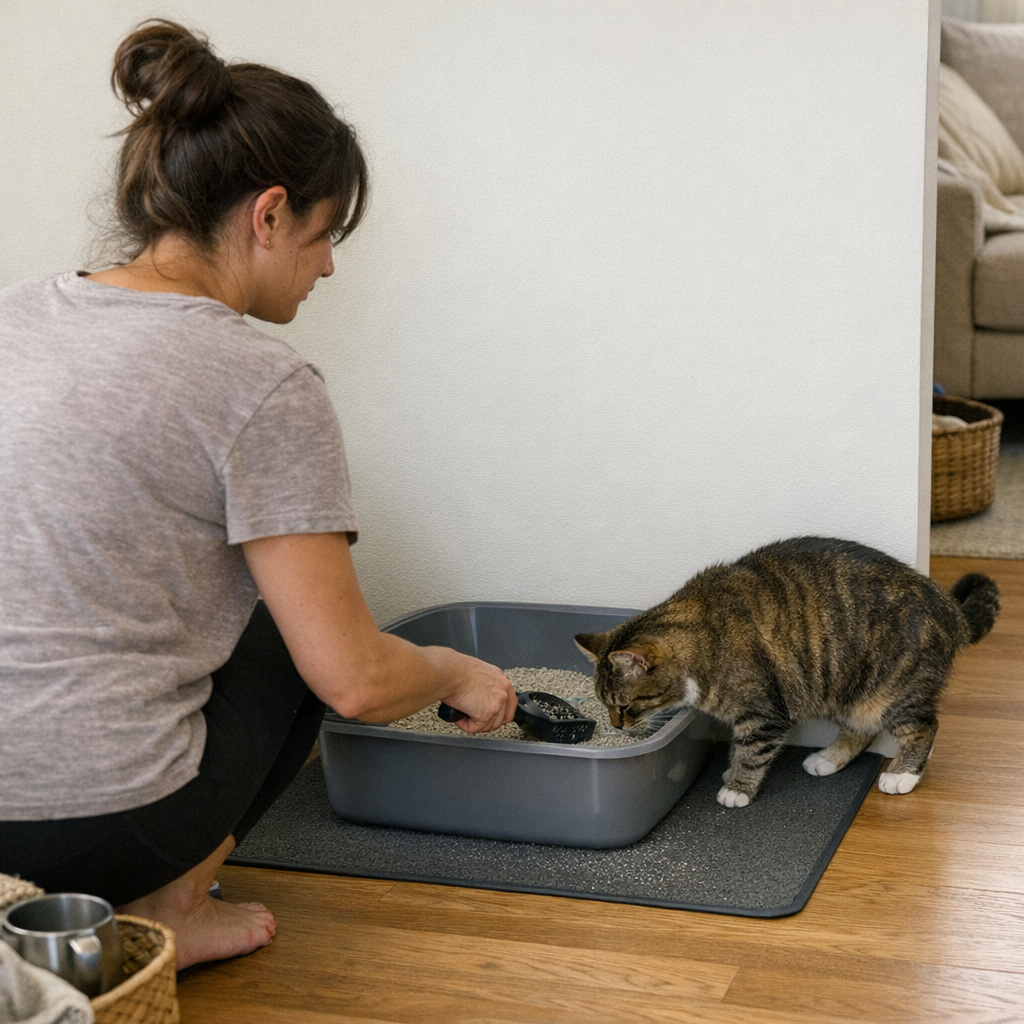
After a while, I moved the setup to a flat stretch of hard floor beside an open wall—no obstacles on either side. I used a simple mat, flush to the baseboard. There was less invisible scattering. Everything was easier to see, to reach, and to reset.
You don’t notice how much energy you spend on workarounds until they’re gone. Now cleanup slips smoothly into the routine—two minutes, not twelve—with nothing ground into seams or hiding under furniture. The real upgrade isn’t in how tidy it looks but in how steadily maintenance shrinks from a project down to habit.
Living with an indoor cat trains you in small efficiencies. Real comfort becomes less about aesthetics and more about whether everyday tasks invite less friction and more ease over time.
If you’re still circling your own setup, the details here might help: http://www.stillwhisker.myshopify.com