Finding Peace in Your Cat’s Favorite Resting Place
The choice of cat sleeping spot affects maintenance; a mat boundary in open areas helps contain mess and ease cleanup.
Sometimes you don’t realize how often you circle back to the same patch of floor until you live with an indoor cat for a while. At first, everything looks contained: the bedding holds a proper edge, the bowls sit right where you put them, and the blanket feels tidy. But as the days go by, small disruptions start repeating. The blanket ends up half out of its corner again. Fur rolls into the path you just vacuumed. The space seems to shift quietly, marked by routines you repeat without noticing.
The Ways Mess Moves
You only notice after a few resets. Open spaces—the kind that look neat and easy at the start—show every stray thread and crumb. Fur drifts beyond feeding mats, and toys find hidden edges you didn’t catch. Each small shift causes another ripple: scattered debris grows and demands another round of wiping or another attempt at straightening what won’t stay put. It looked fine at first, but didn’t hold up.
Tucked-away corners behave differently. Mess there doesn’t disappear so easily—it gets compacted into creases, presses under mats, and ends up trapped in spots your vacuum can’t reach. Pulling out the bedding means bumping into chair legs, or finding dust you thought you contained has settled deeper elsewhere. This lingering residue keeps coming back and slows down the reset process.
Anchoring, Not Bottling Up
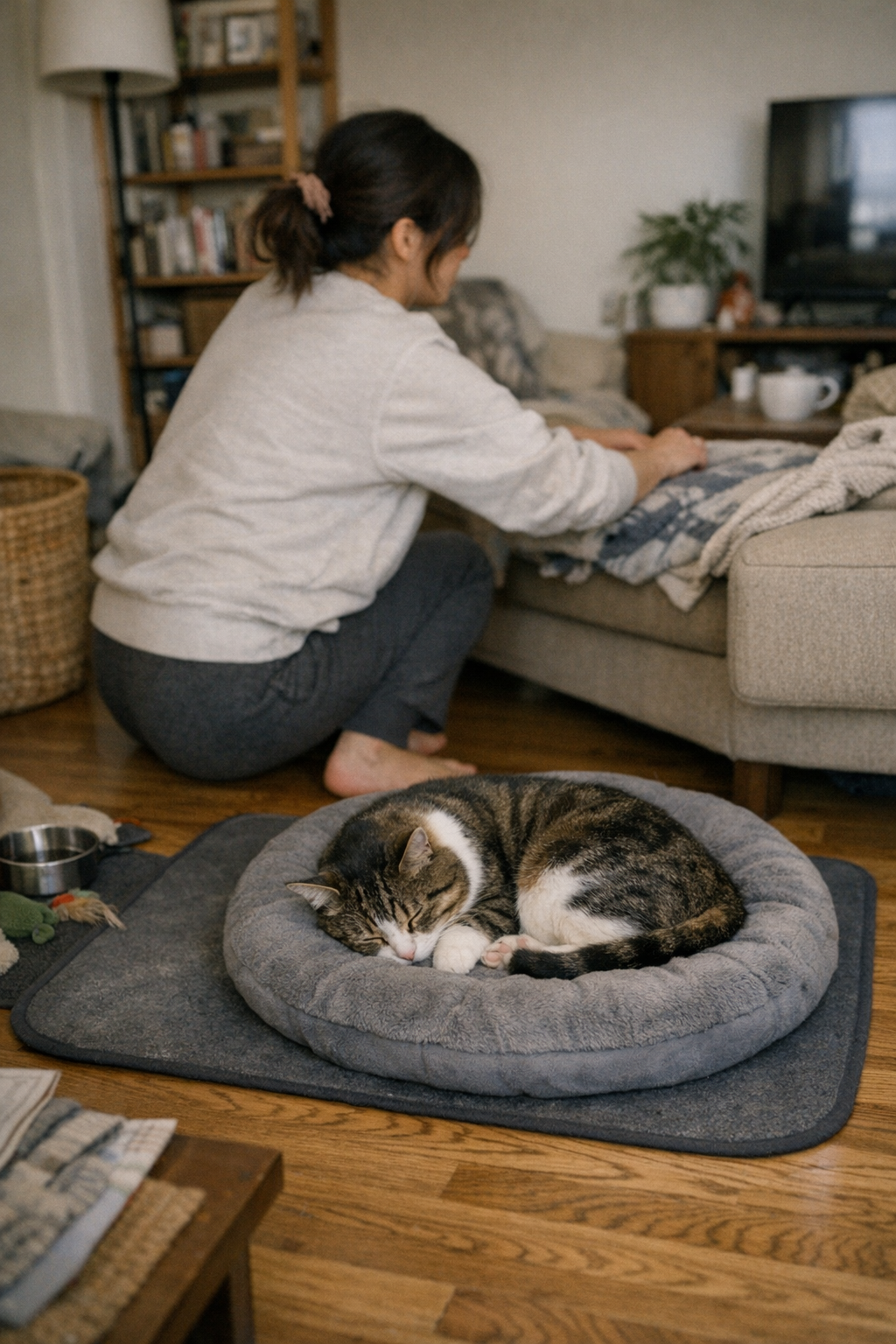
The better way wasn’t choosing just one setup style. What helped was sliding a mat just outside the bedding boundary—not tucked deep in a corner, but not spread across the walkway either. This created a clear, tactile line where both the cat and the mess would stay—marking where movement began and ended, and where debris gathered.
Cleanup shifted too. Fewer deep dives to excavate lost toys or dustballs, fewer crouches under furniture. Resetting meant one smooth motion: lift the mat, shake it out, place it back. Less of the day was spent chasing mess into unseen corners. And while fur still made its rounds or toys left scattered trails, the routines stayed manageable instead of piling up.
The Real Shape of Comfort
Cats shape their territory no matter how neat the start. A shared indoor space only works if you can keep up: refilling water, finding the favorite nap spot, or rescuing toys quietly hiding out all need to be easy. A lightly textured mat, just a little larger than the bed, did more than expected. It caught fur, slowed crumbs from spreading, and gave both of us a place to return to—an unspoken agreement about what stays inside the border and what belongs outside.
In the end, comfort looks less like a blank slate and more like a space you can reset quickly. The right setup doesn’t stop mess, but it keeps everyday rhythms from getting stuck. Even after the fifth round of fur or a new trail leading to the food bowl, that steady reset made the home feel calmer, not just cleaner.
For those wanting to explore simple mats and setups designed for real indoor cat life and repeated use, StillWhisker offers a few thoughtfully arranged options. You can find them quietly waiting over here: http://www.stillwhisker.myshopify.com