Finding Quiet Focus in a Well-Lit Home Office
Ceiling lighting alone causes glare and shadows; adding task lighting reduces strain and interruptions, improving long-term comfort and visibility.
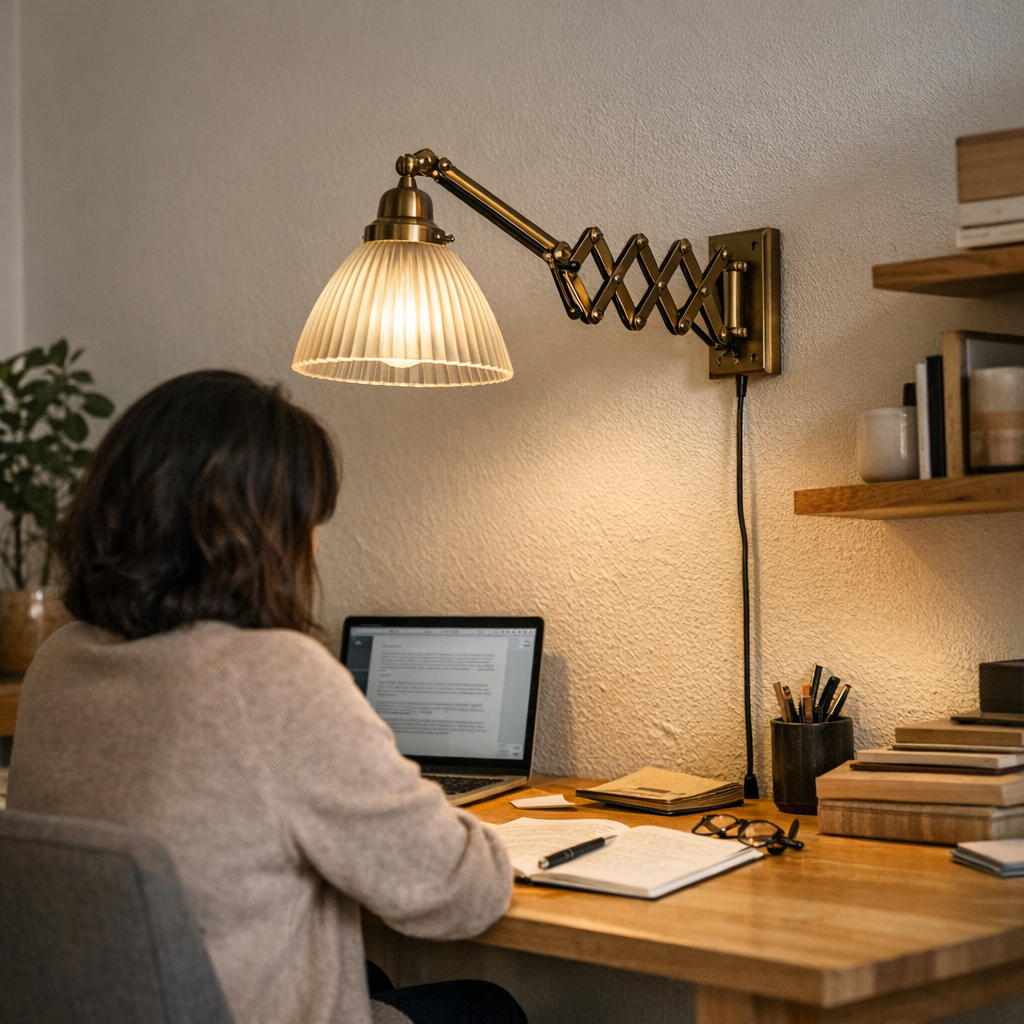
You notice it first in a subtle way—a day that feels longer than usual, a gathering haze behind your eyes as the afternoon stretches on. The overhead light above your workspace is bright, technically speaking, but it never quite settles in. Even simple actions—shuffling papers or glancing toward the monitor—bring persistent glare or awkward shadows. Adjusting becomes part of the routine. It’s easy to forget how much time gets lost to the small struggle for visibility in typical indoor lighting setups.
Where Overhead Light Falls Short
Flush mount ceiling lights, semi-flush fixtures, linear and panel ceiling lights—all common solutions—offer a certain promise: a bright, even wash filling the space. At first, this seems to work well. You might not immediately notice any issues with visibility or shadows.
But by halfway through the week, habits start changing without much thought. You find yourself tilting screens to dodge reflections, moving closer to cooler or dimmer corners of a desk, or shifting files away from shadows that grow along the back wall. The room is technically lit, but crucial task areas and work surfaces remain unevenly illuminated. Glare and dark edges persist in ways that undermine sustained visibility during repeated use.
This disparity—between a space that looks lit and one that feels truly usable hour after hour—is central when working with fixed overhead lighting like flush mount or panel fixtures. These fixtures create a ceiling-to-floor brightness that often glances off the top layer but rarely reaches beneath low shelves, the curve of an elbow, or the far edges of a work surface.
The Subtle Power of Direction
The situation improved noticeably when I added a wall-mounted task light near the edge of the desk, positioning it to cast a soft beam across the work surface without hitting the monitor. This fixed task lighting didn’t flood the room with more intensity or demand attention; instead, it erased the worst of the shadows and restored clear depth on both sides of the desk.
Even papers that usually disappeared into the corners became easy to read. Shadows lifted from the keyboard, and I no longer needed to rearrange items just for better clarity. The visual strain faded nearly unnoticed, making the work area feel more deliberate and adapted to daily use.
The key realization: it isn’t about adding more light overall, but about controlling where the light lands. Overhead fixtures alone—whether flush, semi-flush, linear panels, or entryway lighting—are limited by their position and often fail to reach critical zones during repeated, focused tasks.
Small Shifts, Quieter Days
Over time, the quiet relief from improved lighting became more noticeable than any single aesthetic change. A room stops feeling adversarial when the lighting matches the routine, not just fills the room. That hallway always dark at the turn, the bathroom mirror lighting that only ever brightens half your face, the laundry counter half-lit by a single fixture—these patterns are common and repeatable in real use.
It’s never about chasing perfect illumination but about removing just enough friction so using the space feels natural, day after day. Whether in stairway lighting, cabinet runs with under-cabinet fixtures, or bathroom-rated lights designed for damp conditions, the right directional or task lighting quietly supports repeated visibility and comfort.
When lighting works with your space’s unique conditions—low ceilings, narrow corridors, uneven ceiling heights, or multiple shadow zones—you may stop consciously thinking about it altogether. That calm, unnoticed clarity is the real goal.
For anyone curious where these thoughts took me, this page quietly gathers more: http://www.lighthelper.myshopify.com