Finding Quiet Moments at the Door with Your Dog
Recognizing and holding the front door as a pause point transforms chaotic returns into smoother, less stressful routines with your dog.
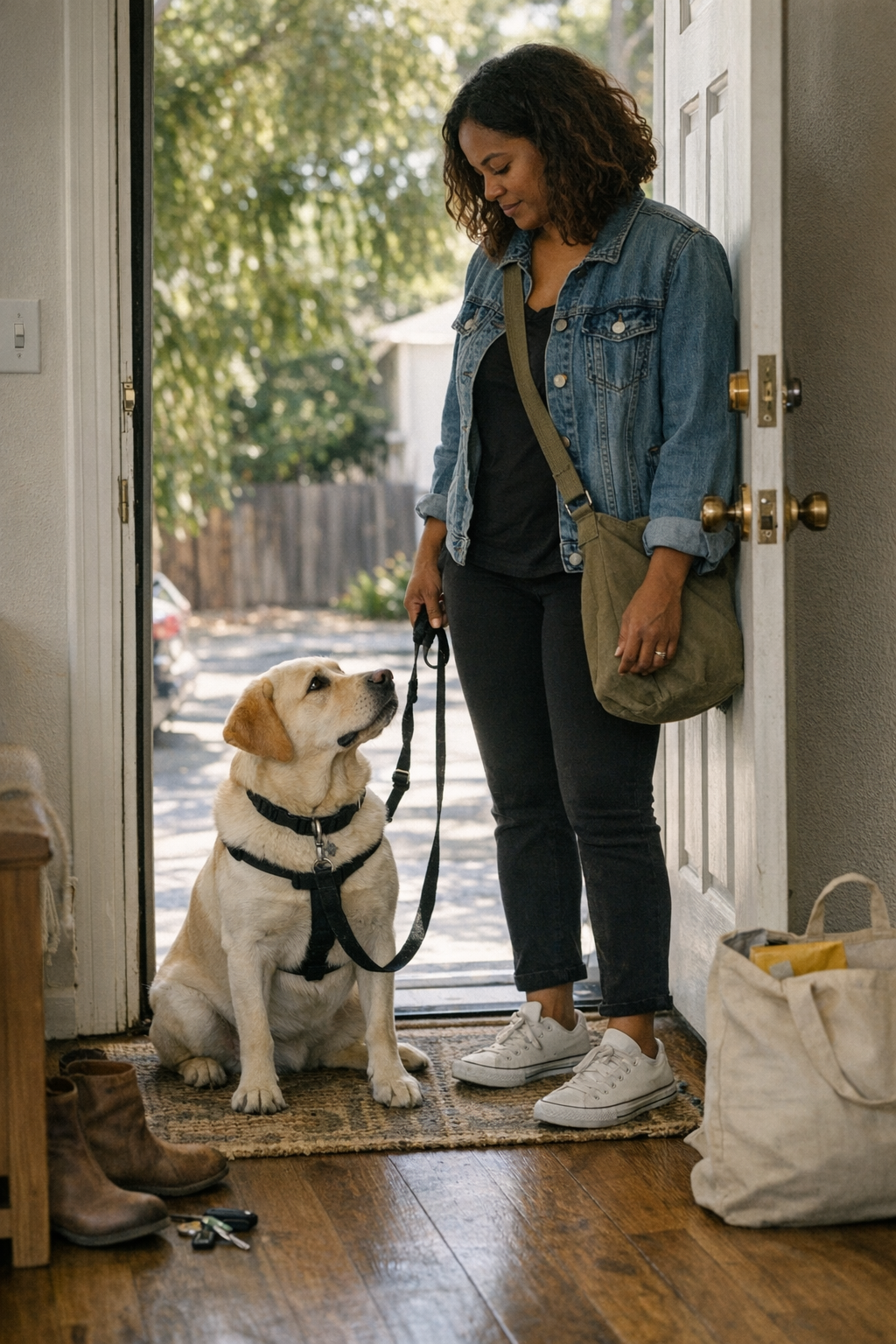
It didn’t stand out right away—just a low-grade inconvenience, not irritation yet. Every weekday morning, the routine would hiccup near the water bowl or just inside the door with a tangle of leash and keys. When you have a dog, these little pauses multiply before you realize they’re a pattern. By the end of most walks, the hallway felt like traffic: shoes off, dog circling, towels still damp from yesterday, and water sloshed out of a bowl inching closer to the middle of the floor.
Sometimes it’s not a big moment that signals a routine isn’t working. It’s the repetition. You expect to walk in, drop the leash, and the rest—meals, towels, quiet at home—will fall into place. But there’s a drift: placing bowls where they sway out of reach during clumsy mornings, or picking up a toy for the fifth time before 8 a.m. because it blocks the kitchen step. The space looks tidy. It just doesn’t feel easy to use.
You notice it after a few mornings. The difference is subtle at first: you aren’t frustrated so much as wondering why a small thing keeps delaying the rest of your day.
The Way Small Repeats Build Up
Many times, it’s quiet. You set a bowl down—maybe a little too far under the counter, maybe not. It looks organized but means bending at a bad angle every pour. Or the towel stash is just a step off from where you actually need it—always in arm’s reach three seconds too late when muddy paws are already darting onto the rug.
It’s nothing dramatic, and it isn’t always visible. In a rush, you grab the leash from the nearest hook, only to find it looped awkwardly around a bag that shouldn’t be in the way. The dog waits, half-patient, half-wound up, watching as you manage the same puzzle daily.
That’s the part that kept returning. Not mess. Not chaos. Just a rhythm with one beat off, stretching out the necessary into something heavier than it needed to be.
Where the Pause Actually Matters
You start to know the real sticking points by weight of repetition. I kept shifting the water bowl, thinking I’d found a better spot—out of the walkway, but close enough to fill when I came back in. But over days, the bowl crept back into the path, following a trail of small spills and tracked-in debris. Reaching for it in a hurry meant sidestepping toys or nearly tripping over a damp towel left mid-reset.
The thing is, neither the tidy nor the cluttered version made the routine smoother. Different friction. Same pause. When the dog’s nose appeared under my arm mid-bend, or a stray ball blocked the usual pivot from door to kitchen, these weren’t special moments—just a daily rematch with the layout I’d set for myself.
You catch yourself thinking the solution is to be neater or just move faster. But the real shift came when I started leaving the bowl exactly where the pour finished, rather than tucking it away to look nice. The quicker reach meant cleanup was faster, not perfect, and the next activity started sooner—morning after morning.
When Patterns Start to Ease
There’s an odd relief in noticing that ease doesn’t always look polished. You can keep resetting the towel pile to its supposed shelf or wedge the toy box into a neat line along the wall. The routine flows better, though, when arm’s reach actually means arm’s reach. The practicality seems too simple at first glance.
I found that if the towel hung across the doorknob, close enough to snatch with one hand, muddy paws never quite made it to the carpet. If the leash, bowl, and food all had open, repeatable spots on the same side of the counter, cleanup fell into line—a rhythm you didn’t have to pause to think about.
The difference showed up in smaller ways than I expected. Less scattered morning starts. No more re-stepping over the same toy blocking the kitchen. The ritual of returning home felt less like a scramble and more like something gently, stubbornly smoother.
You keep adjusting out of self-interest, mostly. It’s never quite perfect, but the routine eventually shapes itself around what’s easiest, not what’s prettiest. Some days, that’s enough.
If any of this sounds familiar, you’ll probably see more of it here: http://www.dogpile.myshopify.com