How Small Changes Keep Our Entryway Quiet and Clear
Non-marking glides protect floors from wear by absorbing friction during furniture moves, reducing damage and clutter drift in busy spaces.
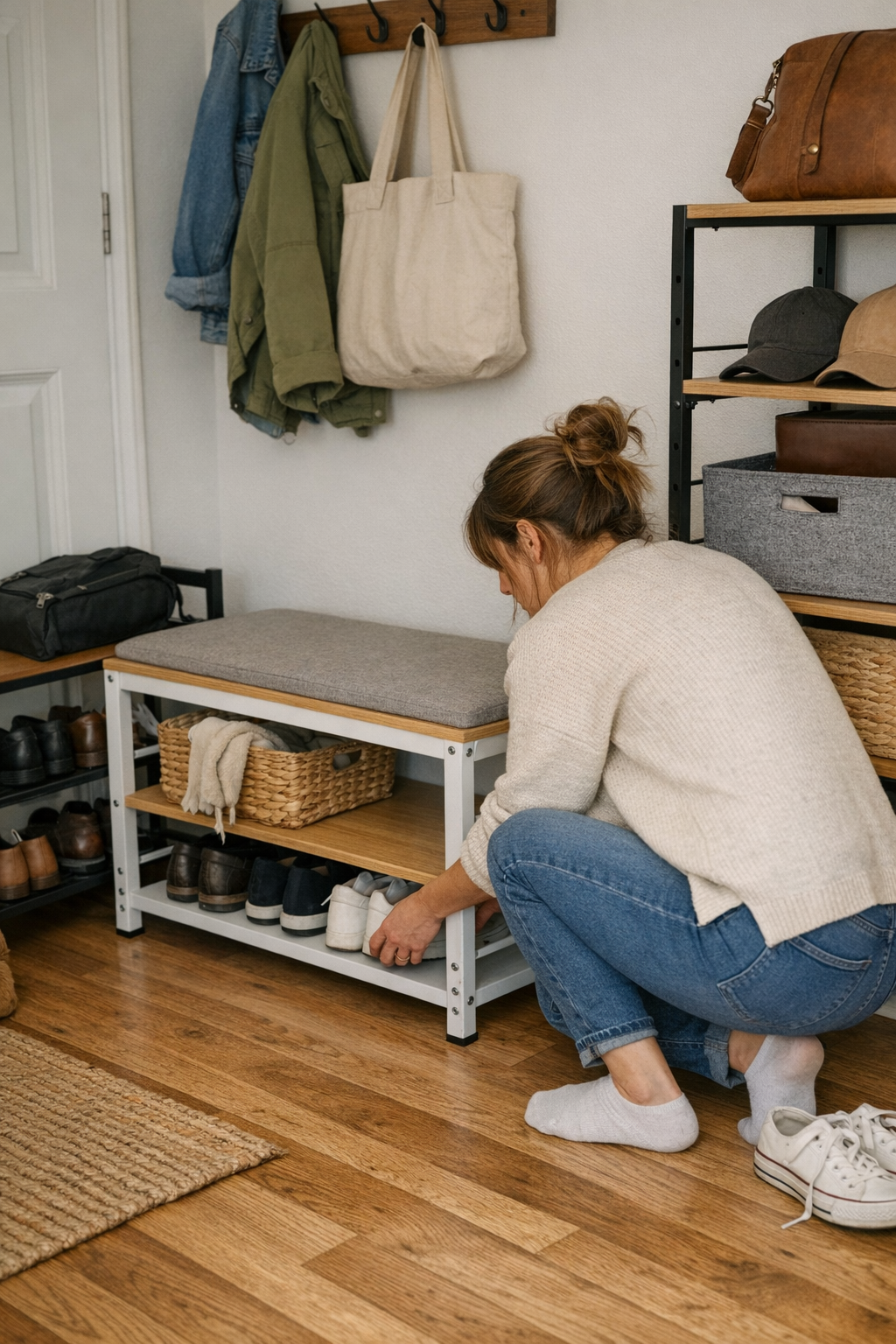
There’s a particular relief when the house finally goes quiet after a rush—the soft click of the door closing, the echo of emptied shoes, the worn pattern where a bench once stood slightly askew in the entryway. I started noticing scratches accumulating around that bench, fine lines in the finish that cleaning never quite erased. One small adjustment—swapping in non-marking glides—made a change that was felt more than seen. And like most tweaks to this kind of transition space, the effect revealed itself only with time.
How Movement Tells on the Floor
At first, it all seems stable. Benches stay near the wall, utility cabinets line up, shoes stack neatly beneath. But these spots don’t behave like quiet corners of the house. They are held in constant readiness—pulled forward, nudged aside, repositioned for a quick mop, shifted to clear a narrow pass-through. Hard plastic feet leave their trace with every move—each short scrape, especially after a dusty day, scoring a faint path into the floor.
This buildup isn’t obvious on day one or even after the first month. It happens quietly in the background until one evening, when the light catches a web of lines that won’t wipe away. That was the signal I kept returning to—a subtle mark of how lived-in these zones become through repeated arrivals, bag drops, and quick resets.
Ease Brings Its Own Drift
Replacing the original feet with soft, low-profile glides made every shift nearly silent. There was no resistance—just the light friction of a bench sliding back for cleaning, without leaving marks behind. The action felt smoother, less of a production. It changed the rhythm of resets: after a weekend of arrivals and backpacks dumped in a hurry, realigning furniture was easier than fussing over scuffs and gouges.
But smoothness brought its own trade-off. With less grip, the bench now nudged half an inch off its mark by midweek, especially after a pile of backpacks landed on its edge. The room looked tidier, yet if I waited too long, storage baskets tiptoed into the walking path and the old problem of blocked passage returned. Not a fault—just the balancing act of utility in a space built for constant transition.
Holding Space Together Without the Fight
There’s a small satisfaction in the ordinary ritual: brushing grit from under a cabinet, shifting a rack out for sweeping, then letting everything settle back with a gentle push. The non-marking glides didn’t freeze furniture in place or eliminate resets. Instead, they traded one kind of maintenance for another—the quieter kind. Fewer scratches, but more awareness of where things naturally drift.
The practical gain showed itself on a busy morning when there was just enough time to restore order before the hallway filled up again. A clear path without needing to muscle heavy pieces out of stubborn grooves meant less resistance, less wear, and a reset that took moments instead of minutes.
Sometimes the smallest changes to what’s underfoot decide whether a transition zone can flow or just look like it does. For anyone managing a tight entryway with repeated arrivals and departures, that difference eventually becomes unmistakable.