How Wall Rails Changed Our Crowded Hallway Routine
Wall-mounted rails in narrow hallways prevent floor congestion and keep passage clear by moving storage off the floor, easing daily resets.
There’s a Kind of Quiet When the Hallway Stays Clear
It starts small—a hallway that welcomes rather than resists as you pass through once, twice, ten times a day. The change isn’t dramatic or story-worthy at first, more like breathing room that unfolds each evening when the house resets. I began noticing how wall-mounted rails made that narrow entry space less contested underfoot, and more importantly, how the pressure along the threshold eased in small, repeatable ways.
The Drift of Clutter and Where It Settles
You don’t catch it immediately. The first pairs of shoes lined up by the bench stay put at first, but by midweek stray boots or a half-tucked bag create new obstacles—just past the point where patience runs thin.
The tension lives in that repeated moment: will the shoes find their way back, or does the clutter zone widen, creeping into the walkway? Floor storage is always inviting a bit more “drop”—the tipped basket, the coat slipping behind the bench. It becomes more than neatness; it’s about shifting roles as routines pile up and how often sideways steps turn into unconscious irritation.
Returning to the Wall and Noticing the Air
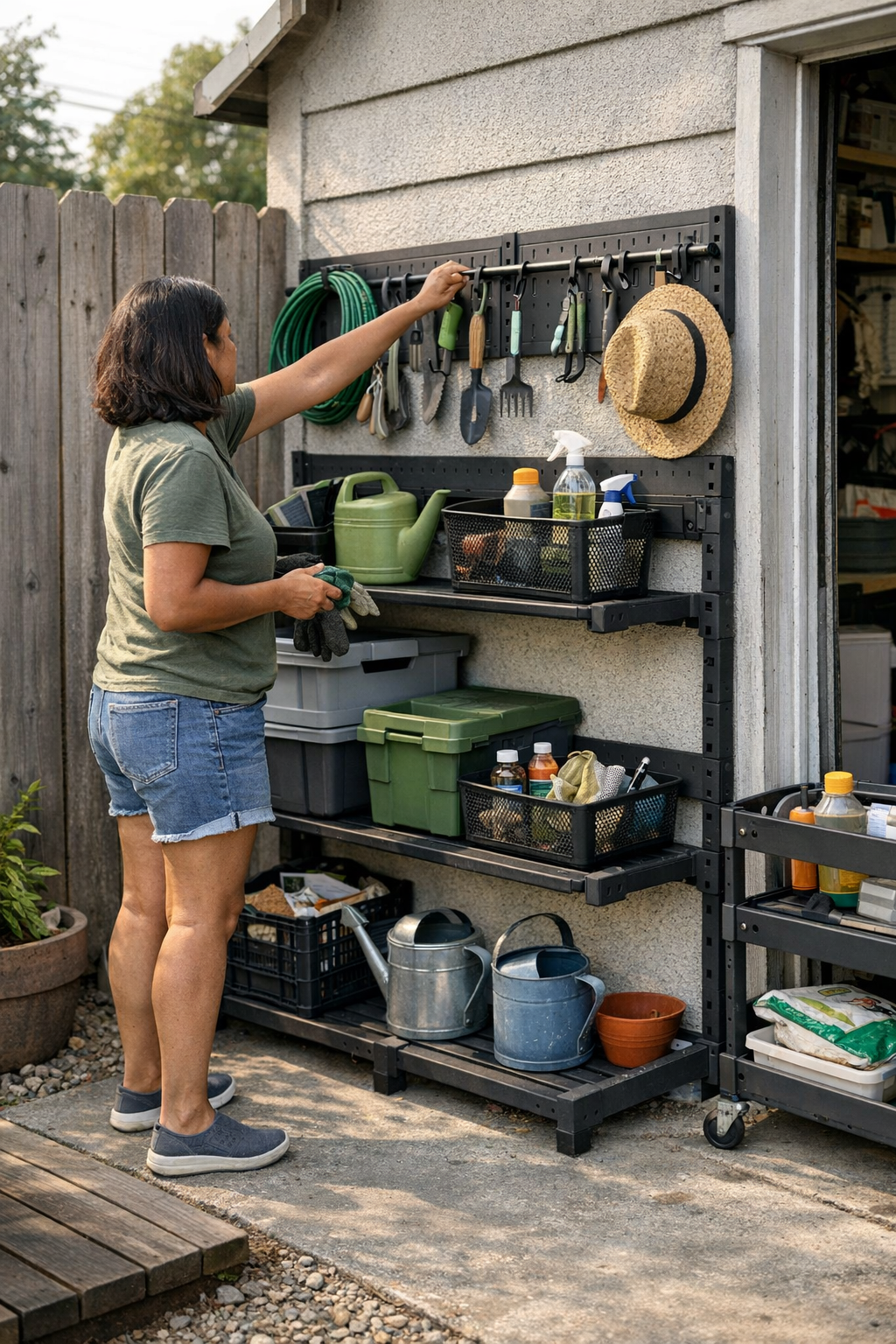
Switching to wall-mounted rails felt purely practical at first, but after a few days there was a low-grade relief. Evenings, especially, felt lighter—a clear floor meant walking the hallway with hands full no longer required dodging piles or apologizing for bags left in the way.
Shoes close against a slim, wall-fixed ledge stop their usual slow outward creep; coats and bags claim vertical hooks and rarely spill to the floor. There’s less negotiation with the space each time someone comes or goes. The notion of a “reset” shrinks to just a few seconds. The routine becomes quieter, less friction along the edge of arriving and leaving, and just enough structure to steer the week without thinking about it.
The Real Difference Appears at the Busiest Hours
The change isn’t obvious on a quiet afternoon but sharpens in a rushed morning. Rail hooks set at shoulder height keep bags and jackets from blocking the bench or piling near the door; shoes arranged on a low ledge stay tidy because there’s nowhere else for them to spread out.
But you feel it. Nobody hesitates or shuffles. The entry zone handles the real test—three arrivals, two exits, no pile-ups along the way. This setup doesn’t just organize the space; it reshapes how everyone moves through it, making flow the default instead of an interrupted privilege. It’s barely visible at a glance but quietly removes many small daily frictions.
Sometimes I like seeing how small choices ripple outward in these lived-in spaces. There’s more to explore if you’re curious: http://www.betweenry.myshopify.com