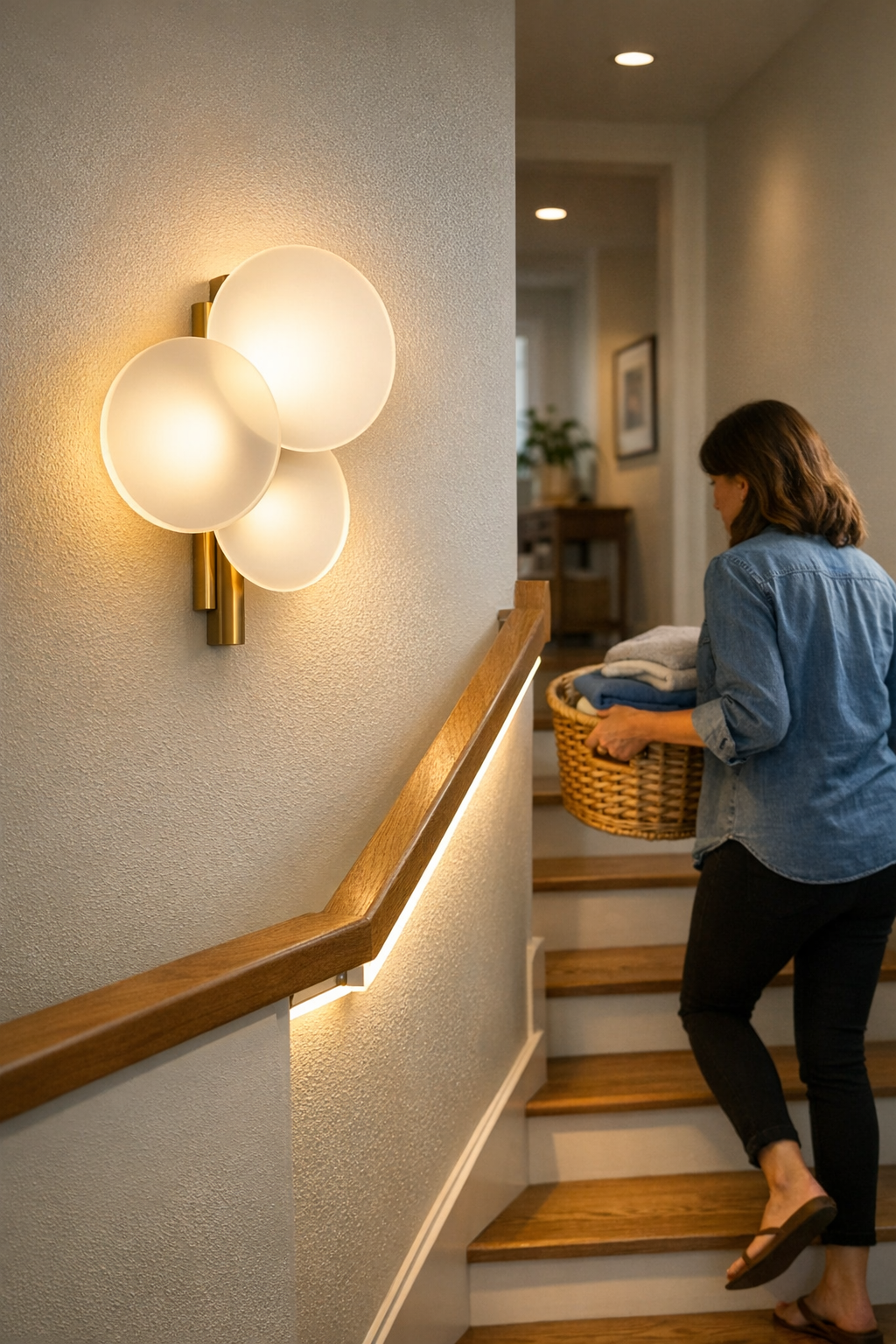
How Warm Light Changes the Feel of Our Entryway
Entryway lighting with warm color temperature (2700K–3000K) reduces glare and harsh shadows, making the space more comfortable daily.
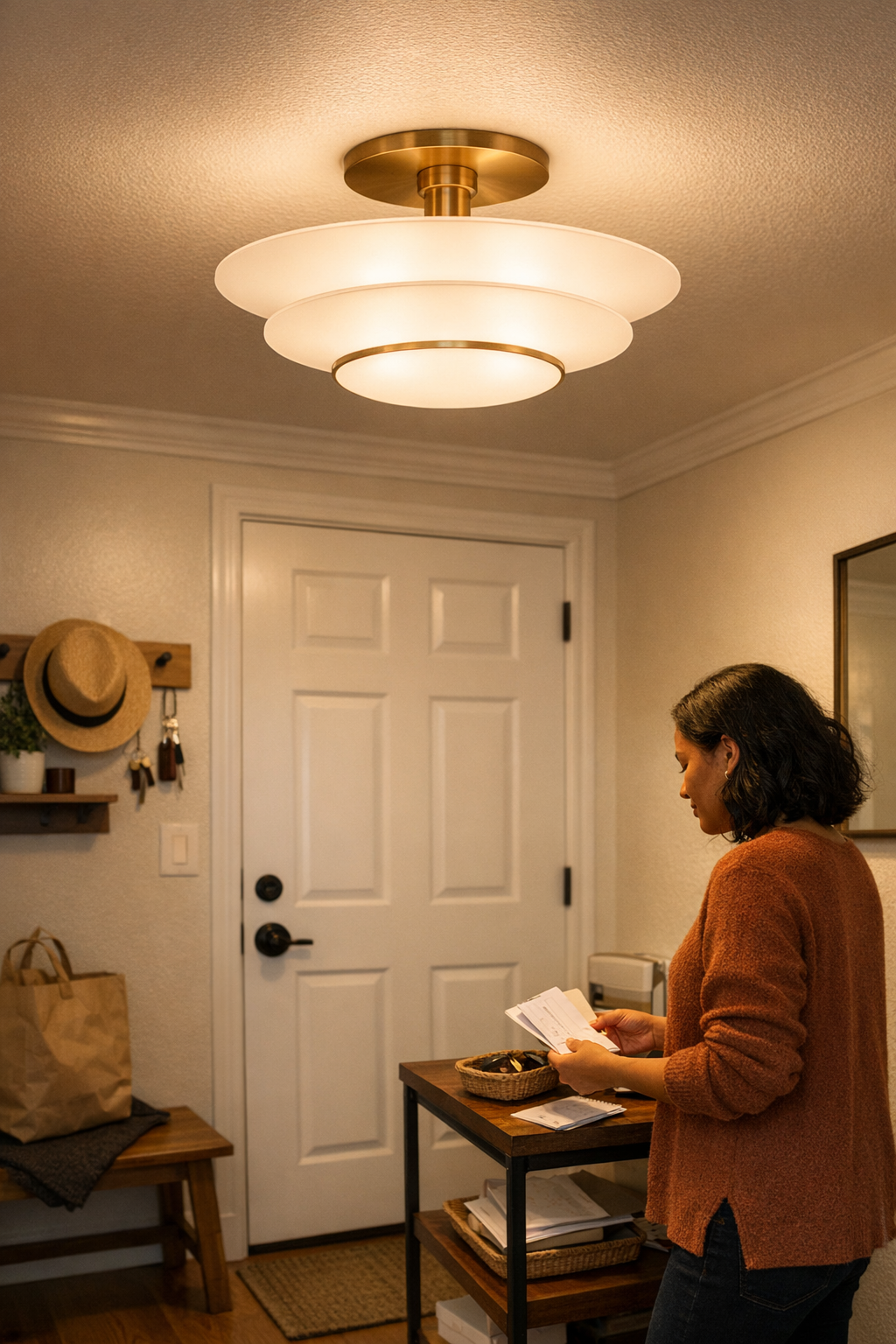
The Entryway Never Quite Settled—Until the Light Did
It’s strange how a space can look finished but never quite feel that way. I kept catching myself lingering at the threshold, distracted by something I couldn’t name. Most days, the entryway did its job: bright, tidy, everything in its place. But it always landed cold—literally and figuratively. The routine moments stacked up: a fleeting glance at glare off the metal bracket, softened edges never arriving, shadows too crisp against the wall, cables leaving sharper marks on my vision than before. It should have been a small detail. Instead, it quietly set the whole tone for coming home.
Minimal Isn’t Always Calmer
At first, the lighting seemed just right. Overhead LED panel, neutral bright, all cables tucked and mounting lines hidden. The surface was as minimal as I could get it, which usually brings a certain comfort. But cool light in a practical space is a peculiar companion. You don’t notice it immediately. But you feel it. The smooth white never settled at night—every shelf edge and glossy surface threw back more glare, seemingly highlighting all the support points meant to stay invisible. Short stops—checking for keys, reading mail—felt brisk, like staying too long under a scanner.
Where Edges Blur, Routines Feel Easier
A gentle shift happened after swapping in a warm 2700K bulb—almost an afterthought, pulled from another lamp on a tired night. Suddenly, the hard shadows loosened; cables against the plaster blurred into the margin. Colors held steady. I noticed it most while pausing to untangle a charging cord or grabbing envelopes off the shelf—the visual noise dropped out, replaced by something closer to soft focus. There was no spotlight, no drama, just a place that quietly matched the ritual of coming and going. That was the part I kept coming back to.
How the Everyday Changes Quietly
You don’t realize how much your eyes adapt just to step through the door. Once the light softened, glance and gesture lined up again—no more dodging glare, no more mistaking scuff marks for dirt, and the threshold finally faded into the background where it belonged. The whole setup didn’t look much different at a glance, but it worked better in a way I didn’t anticipate. Sometimes, the switch is just one calm change—just enough to settle a space for real use, not just for the picture when it’s new.
More thoughts like this sometimes land here: lightsupport.myshopify.com