Living with Damp Gear and the Quiet Power of Airflow
Vented entryway storage lets airflow cut moisture and mildew after wet arrivals, easing maintenance and keeping spaces fresh and usable.
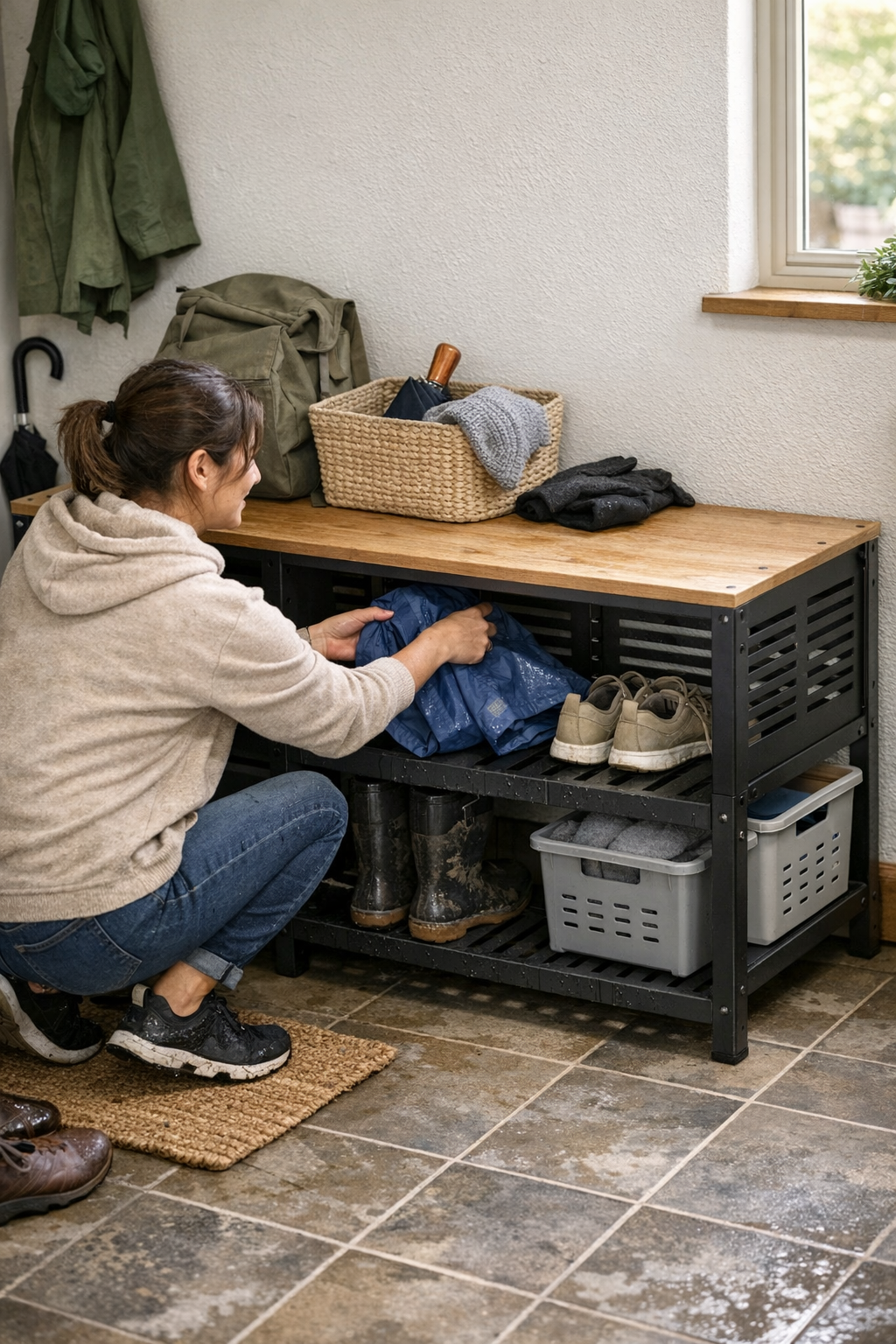
It was a decision I didn’t expect to notice much—whether a cabinet door had gaps or if a bench let air roll underneath. At first, everything about our entryway drop zone was focused on containing the overflow: lining up shoes neatly, keeping jackets behind closed doors, trying not to let the outside weather spill inside. Yet after weeks of coming and going, the mood of that space shifted in ways I hadn’t predicted. Choosing vented over closed storage didn’t just shape the room—it subtly reshaped our daily routines between thresholds.
How Clutter Gathers and Lingers
The effect wasn’t immediate. It often began after a week of rain, with boots crossing the threshold and left on the floor. Closed cabinets hid the mess but quietly absorbed dampness, creating a subtle, lingering tightness in the air you’d notice at the end of the day.
Though sealed storage promised order, after a season of comings and goings, the space started to slow me down. Finding shoes meant digging through a musty stillness—a reminder that what we hide doesn’t always disappear. Often, it just waits, gathering a different kind of clutter behind closed doors.
What Airflow Quietly Fixes
The change was small—a row of vented shelves, louvered openings beneath the bench—but it was one I kept returning to. Shoes left out to dry shed the aftereffects of rain or snow faster. The drop zone smelled less closed-in, and jackets tossed on the utility bench dried before the next rush out the door.
You don’t always see the difference at first, but entering felt lighter, less forced. There was less hesitation inspecting damp shoes and fewer weekend cleanup sessions. These quiet improvements from vented storage worked slowly but persistently to lighten the daily maintenance load.
Not Always About Looks
Most weeks, the bench gathered its share of edge clutter—socks, stray hats, a mitt sliding to the floor. It rarely looks tidy like a catalog, but lately I’ve come to value the space for how well it works with the flow rather than how it looks. The rhythm of arrivals and departures feels less tense when gear can breathe between uses. Even weather-resistant pieces seem to last longer when moisture has an escape route.
Much shifts simply by letting air move through the main drop zone. The practical insight was straightforward: what looks contained isn’t always easier to live with. Letting airflow through the entry space meant the daily routines—bags left too long, jackets forgotten overnight, the usual rush—felt less like a pressure point and more like something the space could handle.
Sometimes, a storage solution isn’t about strict control, but about understanding where clutter and buildup really hide.
If you’re circling these ideas or want a sense of what else can carry them forward, there’s a quiet selection over at http://www.betweenry.myshopify.com