Living with Light and Shadows on Slippery Surfaces
Slick floors show that lighting placement and glare control matter more than brightness for safe, confident movement and daily routine ease.
There’s a quiet discomfort in any space where the light seems generous, yet you find yourself watching each step. At first, the room feels finished—tile shining, laundry folded, hallway clear—but something about moving through it stays hesitant.
Maybe it’s the slickness of the bathroom floor, the echo of your own footsteps on the stairs, or just a lingering sense of calculation every time you cross from bright ceiling glare into the next uncertain shadow. It took me a while to realize that lighting shapes these moments in ways that go beyond how a room looks when still.
Where Glare and Shadows Actually Collect
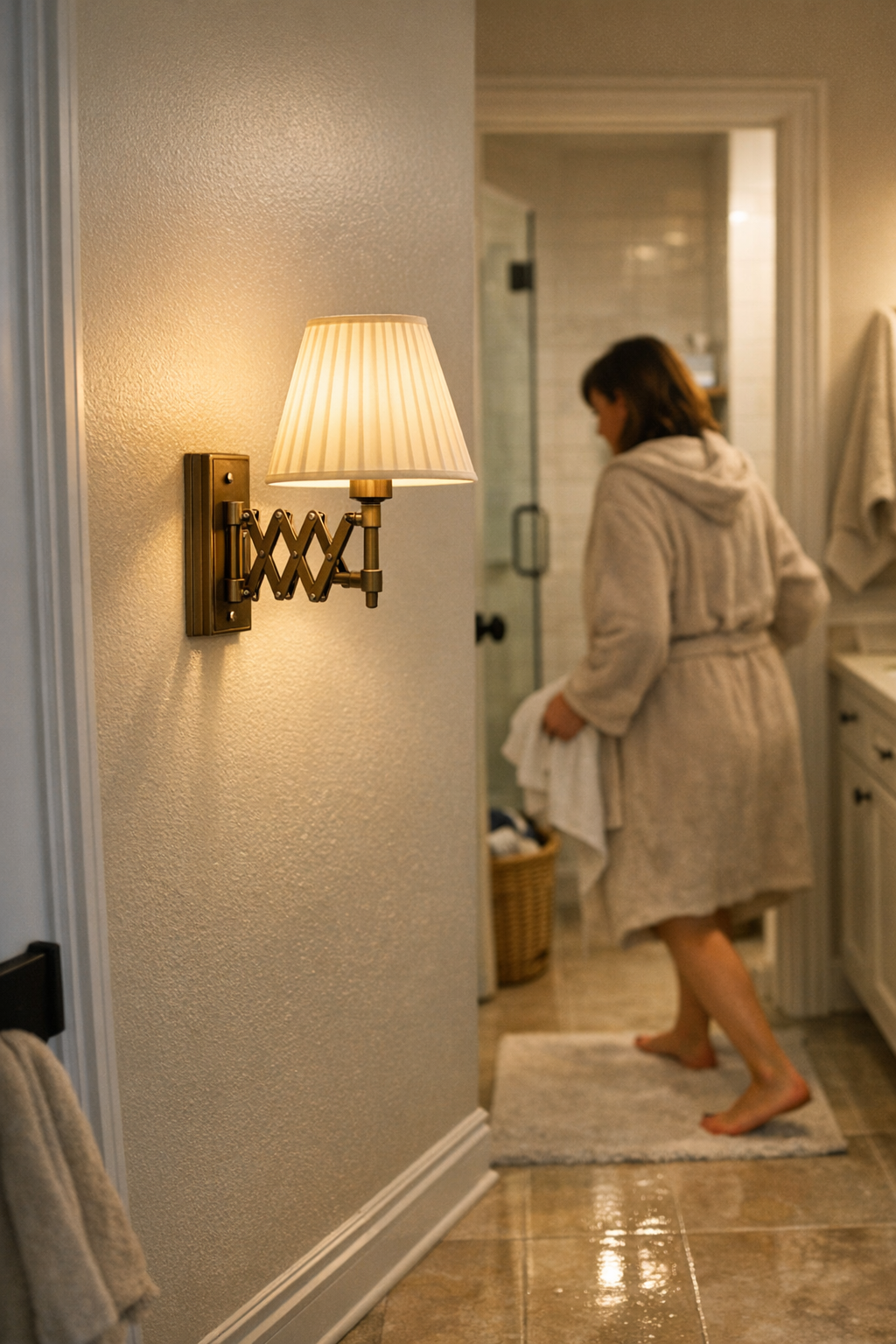
I started seeing patterns after a few weeks of routine use. Stepping out of the shower onto glossy tiles. Carrying laundry past the same corner, again and again. Even with a fresh flush mount ceiling fixture—one I’d been sure was bright enough—there were familiar dead zones near baseboards, harsh reflections near doorways, and a kind of visual whiteout across the shiniest floor areas.
You don’t notice it immediately. But you feel it.
The slick spots became less about slipperiness and more about where the light hesitated, faded, or bounced too sharply. That was the part I kept coming back to—not the wattage of the bulb, but how light pooled, skipped, or left dark edges exactly where I walked.
How the Room Behaves, Not Just How It Looks
The hallway, tiled and narrow, should have been simple. Yet with only one overhead semi-flush mount light, shadows stretched along the sides no matter how bright the bulb. At night, any water on the floor caught stray glare, making each step a cautious pause.
Even the laundry area—where the focus tends to be efficiency over ambiance—carried its own risks: tiles reflecting harsh lines, the space beneath cabinets fading into gray patches, movement slowing slightly when reaching for detergent or stepping away from the sink.
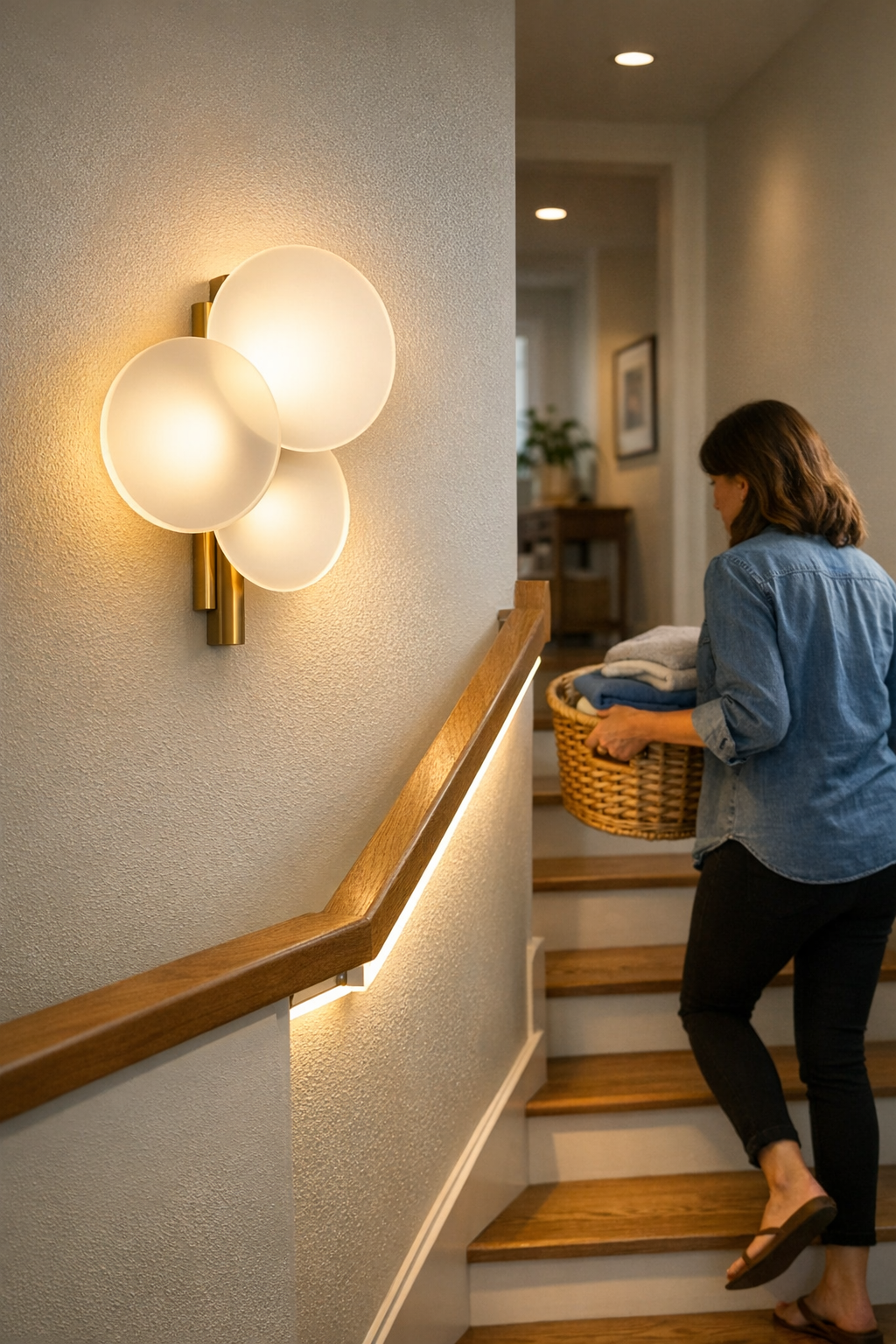
The change didn’t come from a stronger bulb or a different fixture style. It came from adding a soft, low wall sconce along the hallway, placed at about elbow height where the path curves past the stairs. The corner softened, shadows at the edges broke up, and I found myself walking through without scanning for slick spots or hidden grout lines. The room felt less like a puzzle to solve and more like a place you just move through.
Less Calculation, More Trust in Familiar Spaces
It’s striking how quickly small hesitations disappear when lighting lands low and even, instead of just overhead. Nothing dramatic—just a steadier sense of footing in the bathroom, a more predictable line underfoot at the laundry table, glimpses of the stair landing quietly lit at night.
I noticed my hand no longer reached out to the wall so often. Laundry trips through the corridor became a smooth loop, neither rushed nor slowed by second thoughts about glare or dark patches. These changes came almost by accident when the light met the exact places where daily routines unfold.
The tricky part isn’t always that a room is too dark or too bright—the real issue is where lighting supports everyday movement or quietly gets in its way.
Sometimes, it’s worth returning to these unnoticed corners and asking where the light actually helps. Some of my favorite quiet solutions—and a few gentle surprises—live here: www.lighthelper.myshopify.com