Living with Light That Misses the Mark
Stretching wires to place a fixture causes shadows, glare, and discomfort; properly aligning fixtures improves safety and visibility daily.
Some things you only notice after living with them for a while. Light, for example—how it actually falls across your daily movements. I used to think that once a ceiling fixture was installed and glowing, the job was done. Then came evenings when the stairs remained half-lit, or the laundry area folded into awkward shadow. What seemed like a quick fix started to reveal its limits.
It’s not always about the fixture’s wattage or style. It’s where the light falls—and where it doesn’t—and how those patterns shape every routine. The difference surfaces slowly over time until you find yourself pausing at the same dim spot, night after night.
When Placement Follows the Wire
In rooms defined by sharp corners and long cabinet runs, it’s tempting to let wiring limitations dictate where a flush mount or wall sconce is placed. You might reach a little farther or tug the wire just enough to call the project “finished.” But each shortcut echoes back—one part of the hallway stays grayer, the countertop is forever interrupted by uneven shadows.
You don’t notice this immediately, but you feel it. The staircase is bright at the lower steps and uncertain at the landing, a mirror reflects more shadow than face, and a laundry surface visually recedes right when you need it most. Brighter bulbs didn’t help—instead, they made glare harsher, sharpening the intrusive shadows.
This was the problem I kept circling back to.
Shadows Remember Where You Were
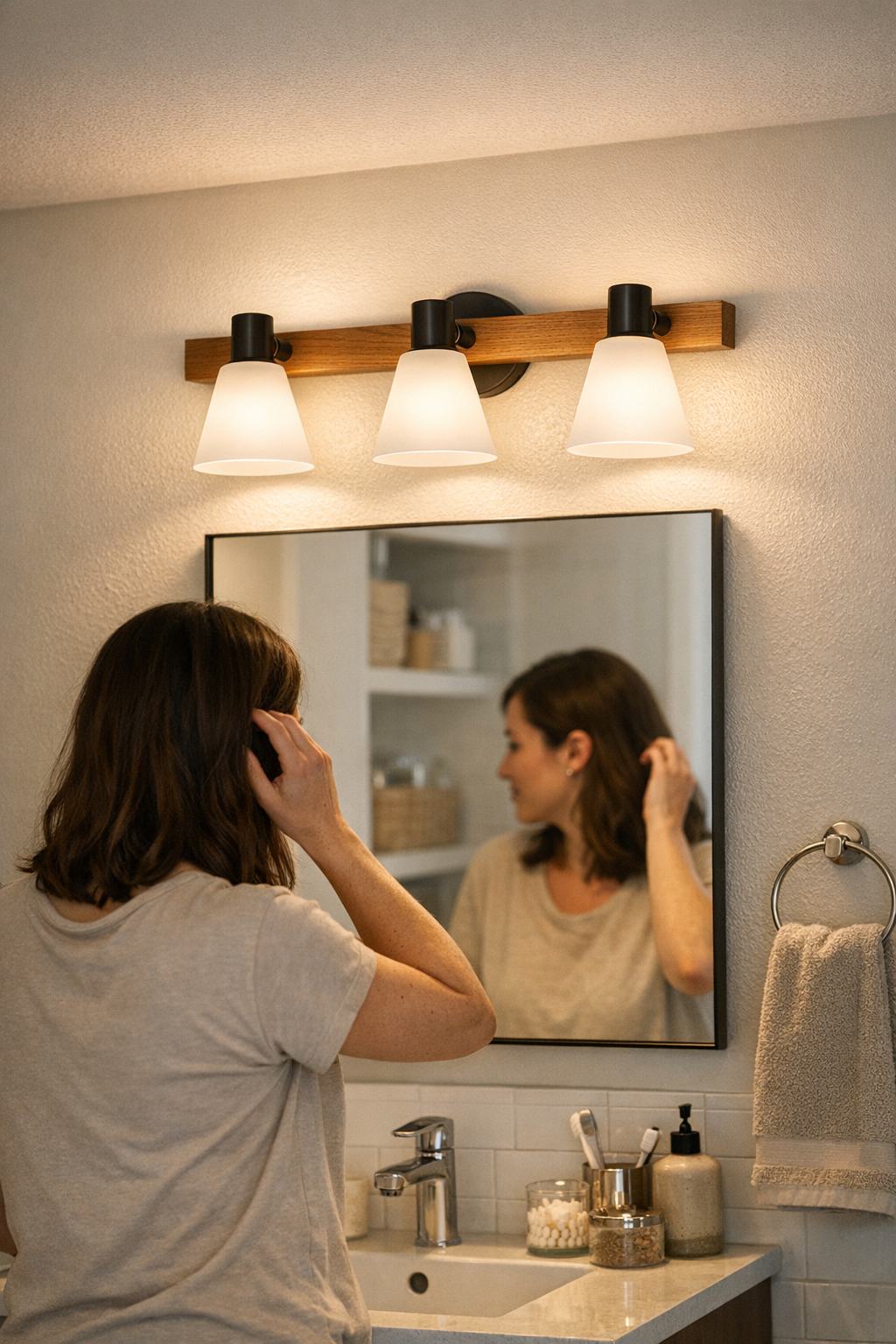
The discomfort isn’t dramatic, just persistent. It shows up in small habits: reaching cautiously for a handrail, glancing twice at washed clothes, hesitating around a dark bend. Over time, I found myself reshaping routines to fit the light’s shortcomings—walking slower on certain stairs, double-checking down corridors, even tilting my head at the bathroom mirror to dodge a stubborn shadow line.
One evening, after yet another tangle with socks and shadows under the laundry cabinet, I realized that every temporary “fix” had worn out. The light was always too far to one side—not because of design, but because the wire barely reached.
The Small Move That Changes Everything
It took a simple adjustment—nudging the fixture using a short piece of conduit to better fit the room’s actual lines. Shifting a ceiling panel by just a hand’s width, moving it where the hallway turns, softened the gloom and spread the light more evenly. Suddenly, the staircase felt like one continuous space, and the laundry area came into clear focus under a steady glow. There was less reaching, less guessing, and more light exactly where it was needed.
A practical shift, but one that changed the texture of daily living. Installing lights for the space—not for the wire—didn’t just brighten corners, it made movement easier, hesitation fewer, and glances in the mirror less fraught. The whole place felt a little less provisional.
Sometimes the smallest change is the one you come back to, night after night.