Living with Light That Soothes and Supports Daily Tasks
Wall sconces provide softer, indirect lighting that reduces glare, clutter, and shadow in work and relaxation spaces, improving comfort and visibility.
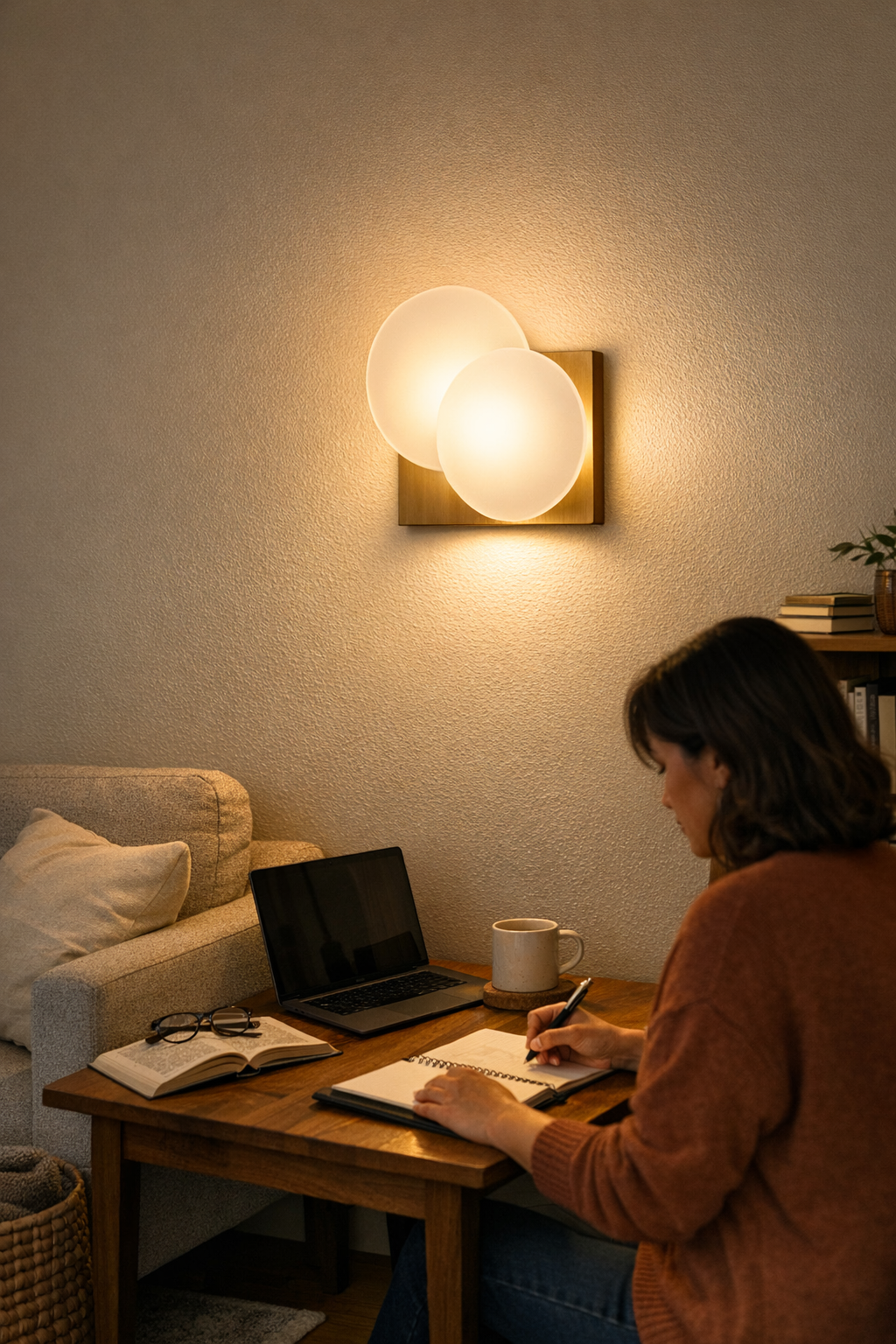
Sometimes a lighting choice feels right at first glance—a clean ceiling fixture, a bright room that seems settled. But subtle problems often emerge over time: harsh shadows sharpen where you need clarity, glare appears where you don’t want it, and cables twist awkwardly across desks and corners, undermining the calm you intended for your workspace. These small frictions don’t show immediately, but they always add up.
Where Overhead Lighting Begins to Falter
Ceiling lights have their appeal. Their clean lines and even wash create a composed look—at least when you first enter a room.
But daily use reveals their limitations. Sitting at a desk or settling into a living room chair, shadows sharpen along screen edges and creep across papers. Light pools unevenly, missing key work areas while catching distractingly on cluttered cables—cables that increase with every new lamp trying to fill the gaps left by overhead lighting.
You don’t notice the issues immediately, but by the end of the day, your eyes feel fatigued.
The Quiet Difference of a Wall Sconce
Introducing even a single wall sconce can change everything. Indirect light from the side softens shadows and eases the contrast between overly bright spots and dim, neglected edges.
After weeks of tolerating a recurring shadow across my workspace, I shifted the wall sconce just thirty centimeters toward the room’s centerline—no major redesign required. The stubborn shadow softened immediately. The table felt more functional and visually unified. Documents were clearer, the screen sharper, and there was noticeably less squinting. The cables no longer crowded the desk because the light came from an angle that worked with the space, not against it.
Wall mounting didn’t just clear the desk surface—it made the whole area easier to use repeatedly.
Routine, and the Shape of Calm
Over time, daily routines confirmed the difference. Sitting down to work or reading a book felt smoother—less need to reposition lamps, less cable navigation, and fewer jarring shifts between light zones. The room no longer just looked minimal; it functioned that way, supporting activity rather than interrupting it.
Corners that once stayed dim under broad ceiling panels now felt softly illuminated. The light sat comfortably at eye height, away from cables that no longer sprawled on the floor. Everything felt tidier, more organized.
This shift doesn’t announce itself loudly, but it stays with you. Now, the transition from work to evening happens naturally—without a second thought about the lights.
If you want to see what small adjustments in lighting can do for your space, there’s more to explore quietly at LightSupport.