Living with Light: When Bright Becomes Too Harsh at Home
Uncontrolled overhead lighting causes eye strain and glare. Using diffused, low-glare fixtures with layered lighting improves comfort and visibility.
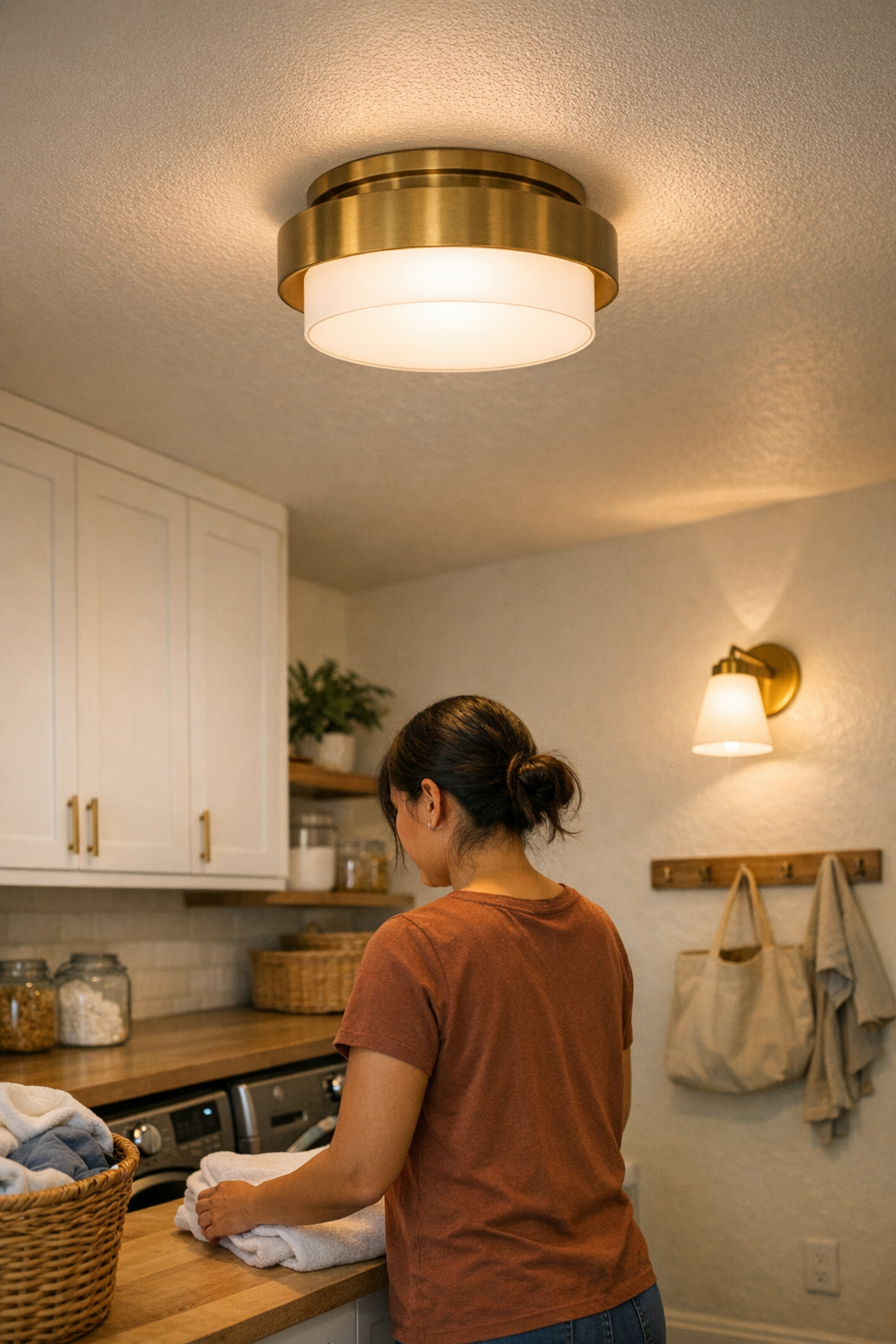
It’s surprising how a small change in your lighting routine can expose a flaw you’ve lived with without noticing. Flush mount ceiling lights, panel lights, or semi-flush fixtures in laundry rooms, utility spaces, or above bathroom mirrors often feel bright enough at first glance. The room looks well-lit, and nothing seems off. But after days or weeks of repeated use, subtle frustrations start to surface.
You might catch yourself turning your head to avoid a sharp glare from a washer, struggling to make out controls on an appliance that once felt easy to read, or noticing that a kitchen counter, while brightly lit, creates reflections that make detailed tasks harder. These are quiet signs: squinting, brief focus breaks, an unconscious urge to reposition yourself. The lighting works, but it’s also making routine use more difficult.
You don’t register it immediately.
But you feel it.
The Quiet Friction of Single-Source Light
It’s odd how a single bright flush mount or panel light can make a space both clear and awkward. On paper, the entire room is lit. In real life, you start shifting tasks—folding laundry at one end of the counter, sorting recipes near the faucet—to dodge shadowed spots or glaring hot zones.
Most of the time, this felt like normal life, so I didn’t pay much attention. Yet day by day, that low-level friction grew harder to ignore.
Raw brightness alone doesn’t define how well a room is lit. How light lands and spreads makes all the difference. Glossy surfaces, mirrors, and tiled walls amplify issues: harsh shadows behind stair rails, bright stripes cutting across countertops, floodlights hitting mirrors in a way that makes reflection details nearly unusable.
When Glare Changes the Way You Move
One moment stands out: late at night, putting away laundry while passing a stairwell lit by a single ceiling fixture. That handrail shimmered oddly under the harsh light, prompting a brief hesitation before my hand found the rail. It was a small pause, barely noticeable, but enough to feel like moving through the space required conscious effort rather than flowing naturally.
That subtle difficulty kept coming to mind. Over time, too-direct overhead lights feel less like ambient lighting and more like an arrangement you have to work around.
Replacing a glaring flush mount with a frosted panel fixture immediately softened the light. The harshness lifted, and I no longer adjusted my movements to avoid uncomfortable spots. Adding a simple wall sconce on the stair turn eliminated a persistent shadow line, making each nightly trip smoother and safer. These were modest changes, not drastic overhauls, but they let the room fade into the background and my routines flow without added strain.
Letting the Light Actually Help
I began noticing all the ways I’d bend or shift because of lighting—shielding eyes near the bathroom mirror, flipping paperwork to avoid a glare, waiting for a reflection on the counter to subside before continuing. Each hesitation was a reminder: bright overhead lighting isn’t always functional lighting.
The best improvements don’t necessarily mean adding more light. Instead, they come from layering—using wall sconces, vanity lights, under-cabinet fixtures, and carefully placed task lights to evenly fill shadowed corners and reduce glare. This balance creates clearer work surfaces and subtle illumination in stairways, hallways, bathrooms, and laundry corners where repeated tasks demand reliability without visual effort.
It’s less about the strongest light fixture and more about how multiple lighting sources, including damp-rated and bathroom-rated fixtures, work together to support real use. The goal is to minimize shadows, manage glare on mirrors or glossy tiles, and ensure crucial spots like stair turns, work areas, and cabinet runs receive gentle, steady light that supports your movements and vision.
If you want to explore a collection focused on lighting designed with real indoor routines in mind, you can visit http://www.lighthelper.myshopify.com.