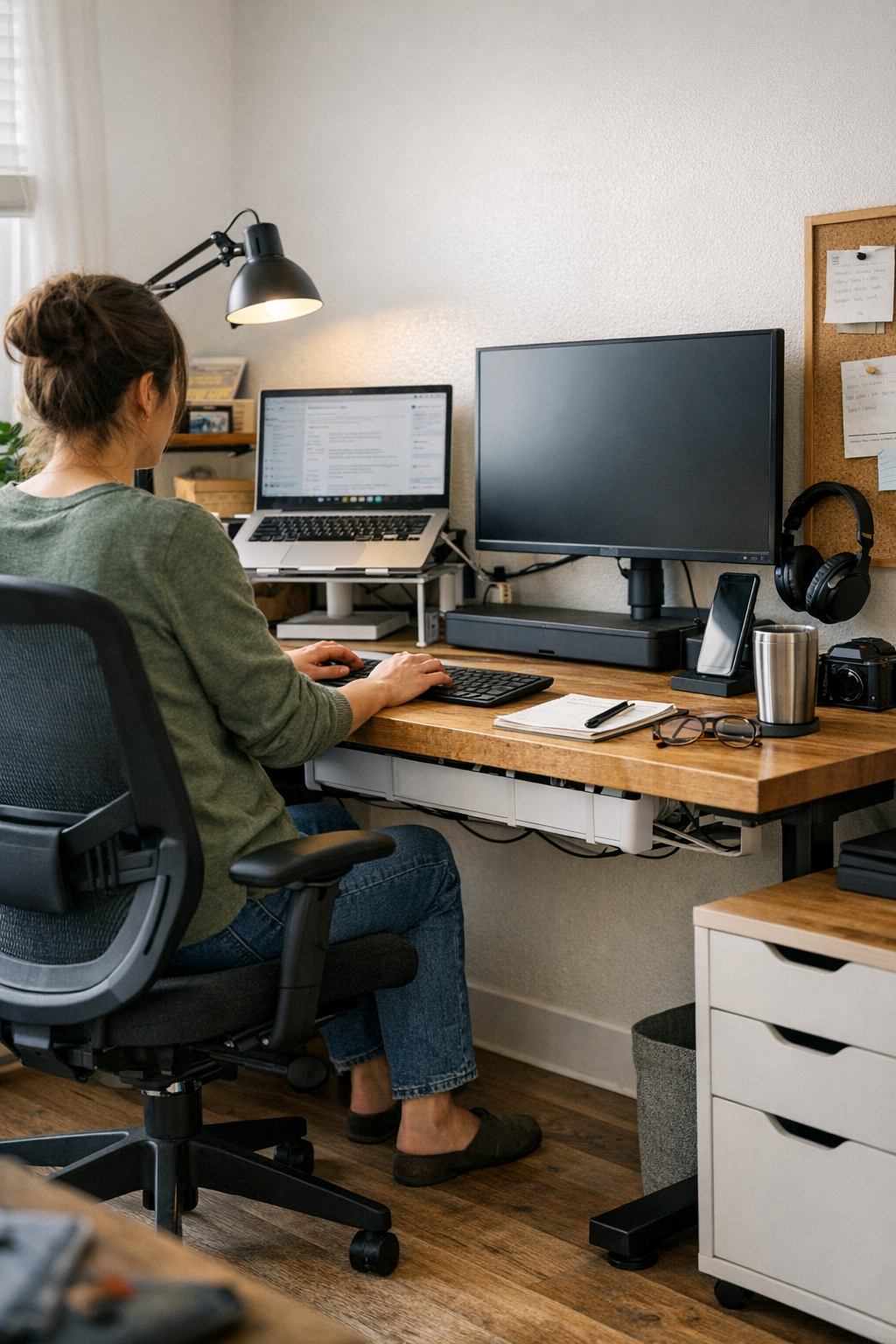
Living with Light: When Ceiling Fixtures Set the Mood
Ceiling lighting affects comfort and usability; managing glare, supporting task lights, and organizing cables reduce daily hassles for better living.
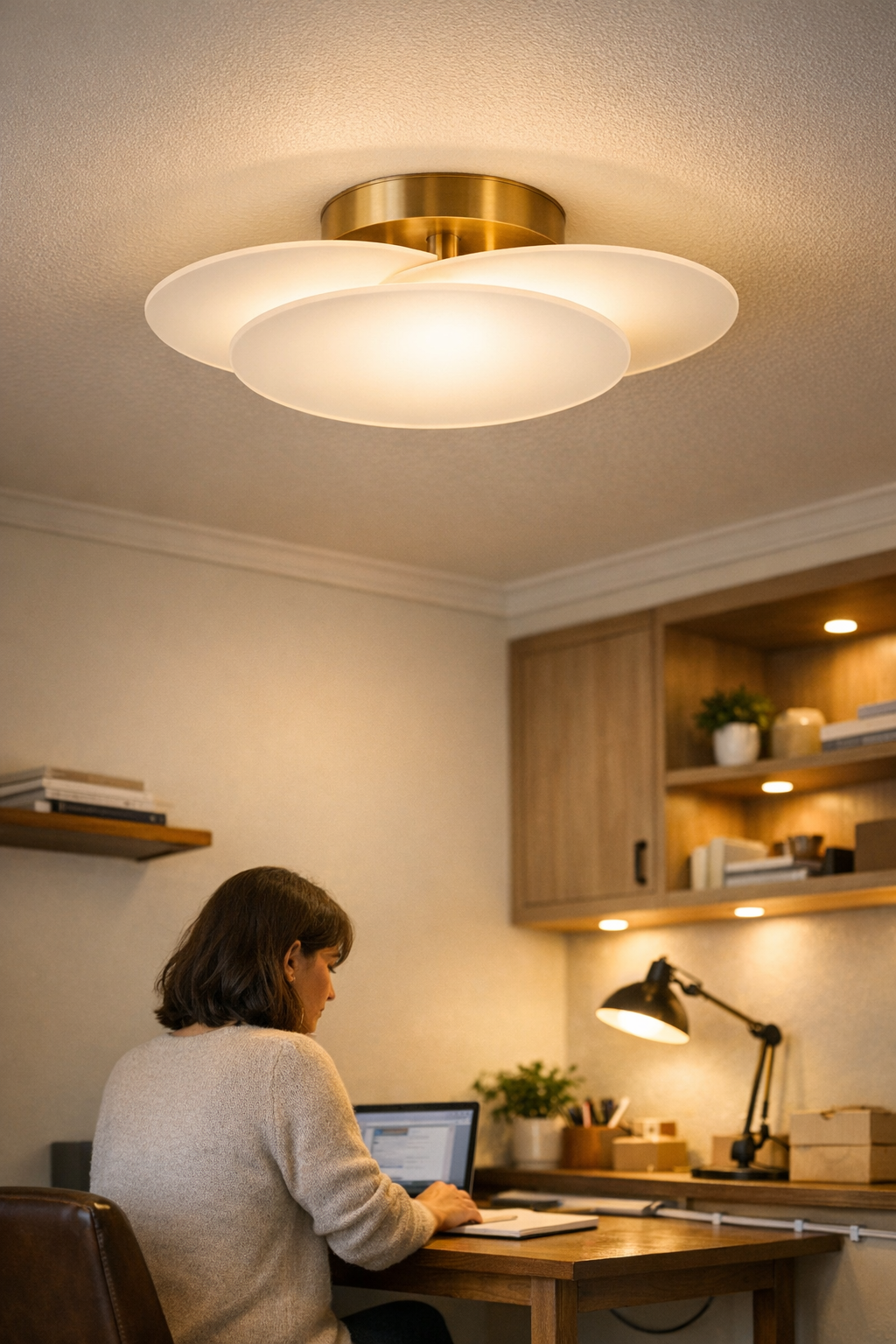
First days in a new workspace feel promising. You notice the generous wash of ceiling light, the clear surfaces, and how neatly a cable runs along a wall. But small inconveniences start to add up after a week or two—especially around the ceiling lighting. It’s subtle: stray glare at dusk, the edge of your desk falling into shadow, cables needing constant adjustment. The feeling isn't immediate, but over time, you sense it.
What’s hidden behind the look of minimal, tidy lighting often reveals itself only through the routines you settle into—not at first, and never all at once.
The Baseline Becomes the Mood
A ceiling fixture is meant to fade into the background with low profile, clean lines. But those design choices set the entire stage more than most realize.
Maybe the ceiling light seems bright, but you still find yourself shifting a desk lamp for paperwork, or the far shelf stays oddly dim by evening. When cables snake between outlets and task lights, or overlapping shadows make screen glare worse, the tidy setup starts to feel less comfortable.
You don’t notice it immediately.
But you feel it.
Glare Is the First Detail
One morning, a harsh streak of light crosses your path, always in the wrong place. Or when reaching under a shelf for files, that area somehow remains in shadow—even though it looked well lit at first. These awkward pockets of uneven lighting show how ceiling and shelf lighting meet real use.
I began expecting minor adjustments every evening—moving cables, grabbing a desk lamp to patch a newfound dark spot. Gradually, these workarounds became as much part of the room as the fixtures themselves. It’s quieter than frustration, but not restful. That feeling kept drawing my attention.
A Setup Matters in Use, Not Just on Paper
Eventually, switching to a dimmable ceiling fixture with directional control proved more practical than chasing more lamps. The light didn’t have to cover everywhere equally; just steady and supportive enough for late-night laptop work and mid-day list-making.
Running cables flush along the wall and anchoring them out of sight also helped: reducing both tripping hazards and the persistent low-level distraction of exposed, tugging cables.
When lighting supports how a room is really used—not just how it looks empty—the whole space becomes easier to return to and less tiring on the eyes.
Some of these realizations formed while trying to make a slim, slightly awkward workspace feel more my own. You can find more of that story here: http://www.lightsupport.myshopify.com