Living with Light: When Fixtures Disrupt Family Flow
Ceiling light placement affects safety; wall-mounted fixtures or repositioning reduce hazards and ease maintenance in kids' zones.
When Brightness Gets in the Way
It doesn’t happen right away. At first, the light in the hallway or stairwell feels almost invisible—just part of the background you rarely notice. Over time, though, the way a ceiling fixture sits overhead starts to show itself. The little routines around it build up: a bulb burns out, dust gathers, and you realize how much you rely on good light at the end of a long day.
I kept finding myself dragging out the ladder again and again, sometimes just as the kids were rushing through or someone was carrying too much laundry to see their own feet. It’s strange how a flush mount or semi-flush mount ceiling fixture that once seemed reliable can start to feel like something you’re always stepping around.
The Ladder Zone
There’s a particular kind of pause that comes with maintenance—setting a ladder directly in the main path where everyone wants to go.
Flush mount ceiling fixtures, semi-flush mounts, even long panels often sit right in the center of high-traffic areas like hallways and stairways. Every bulb change or cleaning feels like a disruption—not only for the person doing it, but for everyone whose daily routine crosses that exact spot. You don’t notice it immediately, but after a while, it becomes clear.
That pause—the child told to wait, footsteps halting in the hallway, the rush to finish—becomes a pattern. The good, steady light starts to carry a quiet cost: a bit of ease, a bit of trust in moving freely through the space.
Edge of the Path
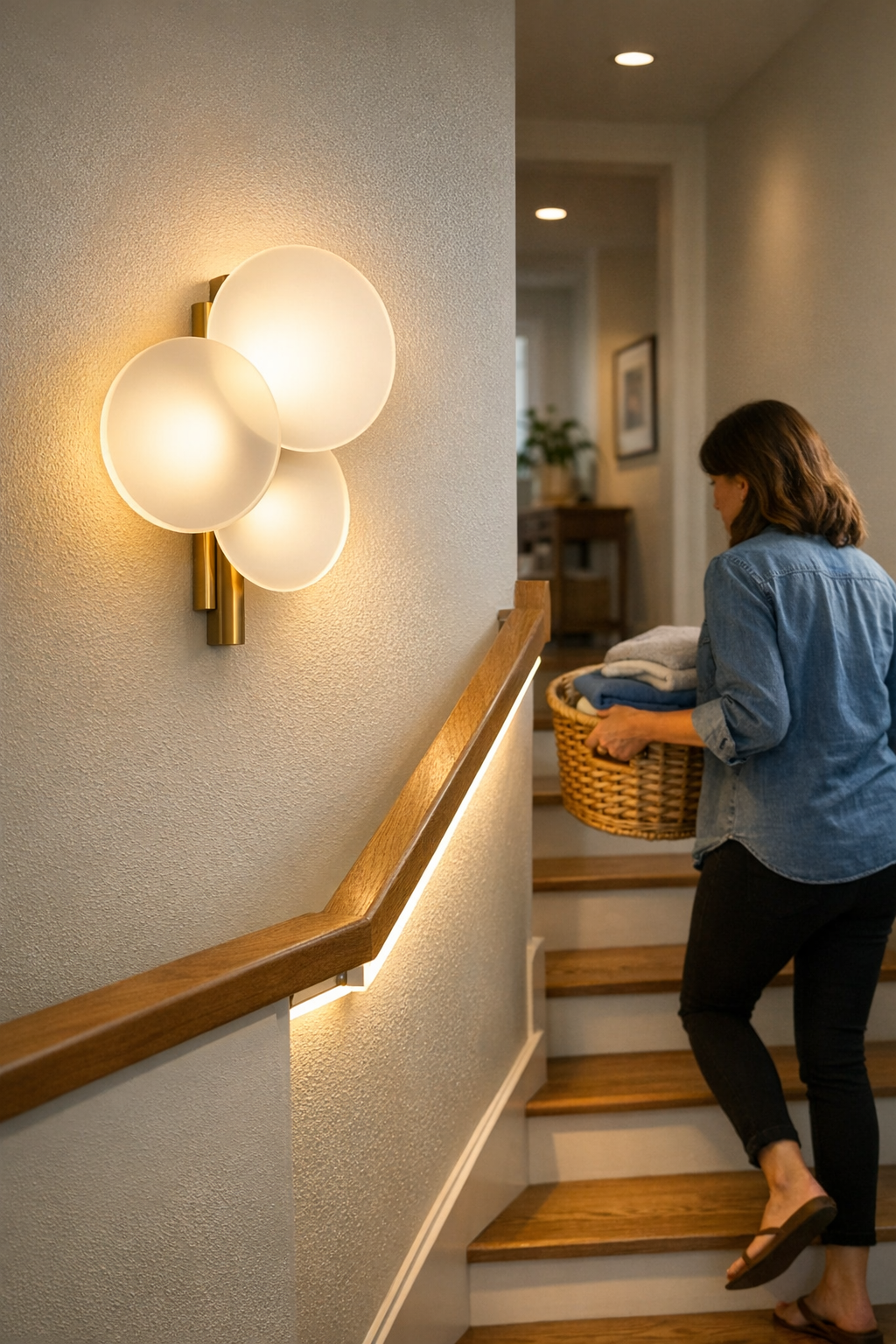
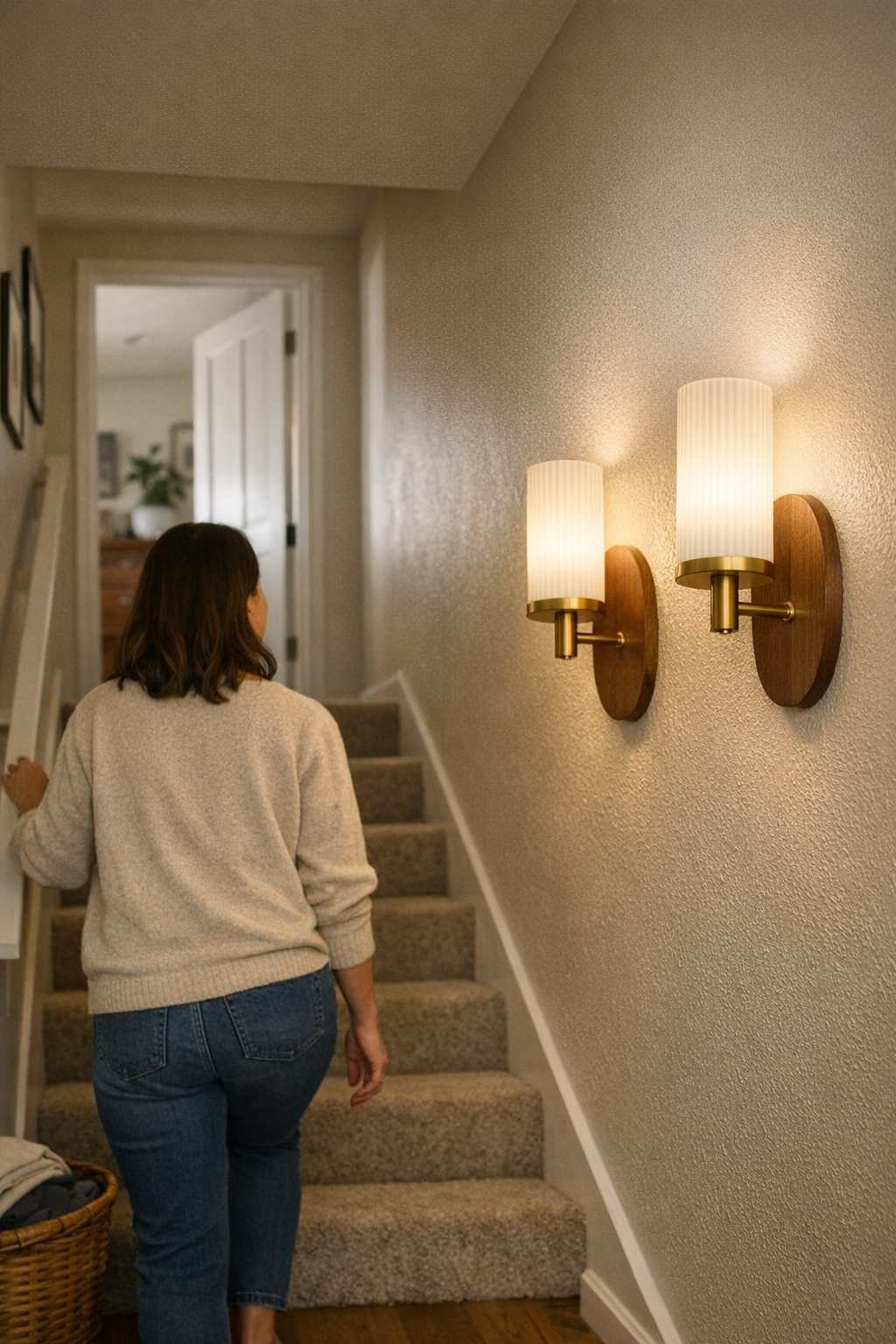
When the hassle kept repeating, I tried wall-mounted lights, placing them just high enough above the stair rail to never block the steps or require a ladder right in the main route.
The difference wasn’t dramatic, but it was consistent. The stairs stayed open, even during maintenance, and it became possible to change a bulb or wipe a shade without standing precisely where everyone walks. The daily flow—kids moving past, arms full of laundry, coming home late—could just keep going.
That mattered most to me. It didn’t solve everything—some corners still cast stray shadows—but the mood of the space shifted. A fixture on its own isn’t risky; it only becomes one when upkeep collides with daily living.
Sometimes, it’s worth quietly noticing where a simple change allows life to move around maintenance, rather than through it.
For anyone quietly wrestling with similar lighting interruptions, this is just one way it played out for me—with more thoughts collected here.