Living with Lighting Limits and Quiet Fixes
Short lighting wires cause glare, shadows, and uneven lighting; extending wiring improves balance, reduces strain, and eases routines.
The Places Light Won’t Reach
Some problems in a room seem small at first, until you realize how often you’re quietly working around them. For a long time, I barely noticed anything unusual about a hallway ceiling light that wasn’t quite right, or that shadow clinging to the edge of the bathroom mirror each morning. But little by little, these oddly dark corners or harsh spots shifted from background inconvenience into something I thought about every time I crossed the room.
The core of the issue was surprisingly simple—a fixture limited by a short wire, unable to be positioned even a foot or two where it would actually help the most.
Where the Wire Ends
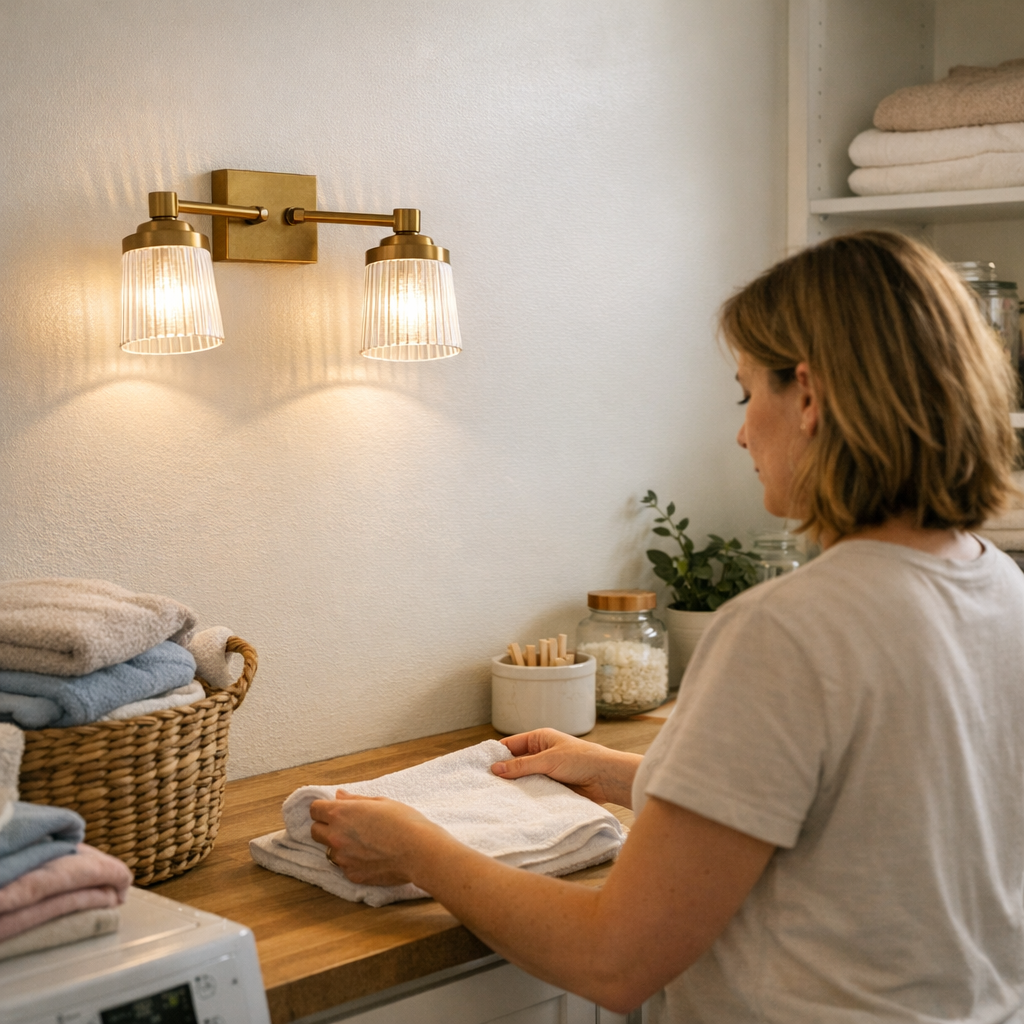
Most lighting solutions assume brightness alone solves everything. But when a flush mount or vanity light is tethered just beside its electrical feed, the spread rarely feels balanced. Hallways often end with bright entrances but dim turns by the stairs. Bathroom mirrors can be lit too close, or cast your own shadow as you lean in. Laundry and utility rooms show sharp slices of brightness on walls while the actual work surfaces remain in partial gloom.
At first, you don’t notice it consciously—but you feel it: how your daily routines adjust, stepping off-center to push shadows from your face or folding clothes in a half-lit patch. Each little workaround seems minor on its own, but they add up.
That stubborn misplacement of light kept pulling my attention — how it quietly shifted spaces from simply usable to quietly difficult.
The Quiet Fix
Eventually I realized these frustrations weren’t about the fixture or bulb itself. No upgrade could fix the problem of a wire too short to reach where light was truly needed. The real solution was letting the installation conform to the room, not forcing the light to fit its existing wiring location.
Moving a semi-flush ceiling light just two feet—by extending the wire and adding a compliant junction—changed more than the look of a laundry space. Suddenly, the illumination landed right where hands and eyes worked. Walking in no longer meant angling for better coverage. Temporary floor lamps disappeared, and there was no more squinting or leaning to avoid glare. That subtle shift felt surprisingly immediate and unmistakable, easing the constant strain.
Patterns of Use
Light reveals a home’s rhythms. Quiet nighttime hallway crossings. Daily trips to a bathroom mirror. Reaching for socks in laundry rooms. Ceiling mounted, wall sconce, and fixed task lighting either match these small, repeated patterns or fall behind.
This isn’t about grand architectural design or perfect fixtures, but whether the practical light spread serves the life unfolding beneath. When wires are too short, the gap between a room’s look and its function grows. What starts as a dark corner becomes a familiar pattern: glare at awkward angles, shadow lines along counter edges, uneven footing at stair turns.
Over time, I stopped thinking of lighting as a one-time choice and began noticing how placement quietly shapes every return to a room. At this point, lighting stops being something you work around and becomes reliable support.
Sometimes a small structural shift—an extended wire, a relocated fixture—is enough to tip the balance, making repeated use easier and more comfortable.
These insights surfaced slowly, in moments between routines. Sometimes I find myself returning here for more: http://www.lighthelper.myshopify.com