Living with Low Profile Lights in Everyday Spaces
Slim and low profile lighting declutters space if cable, angle, and beam placement are precise; poor setup causes usability issues.
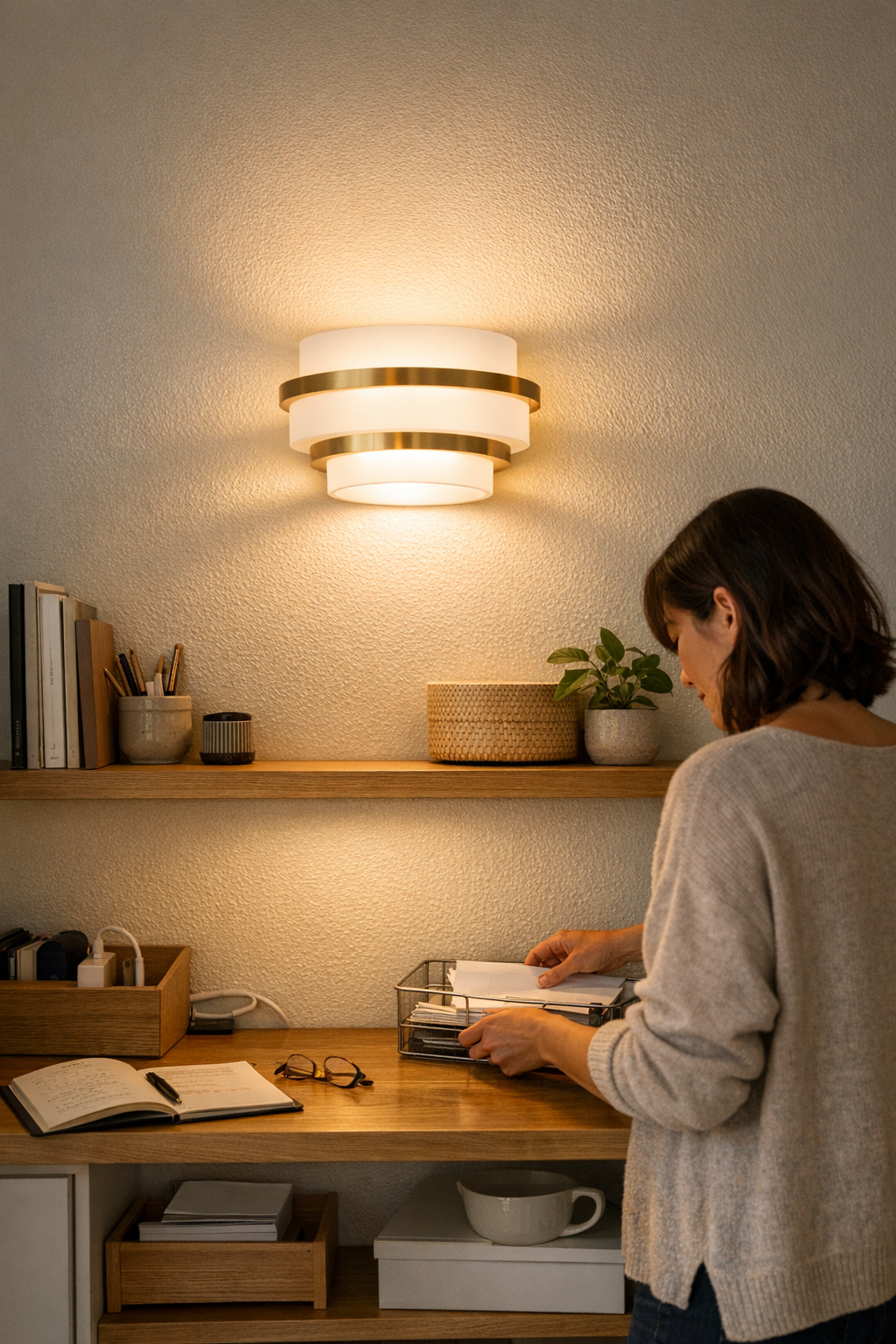
There’s a subtle shift when you replace a bulky lamp with something slimmer. The room feels lighter, clearer, almost as if space itself expanded while nothing actually moved. It’s an improvement you acknowledge in passing, assuming things will keep getting easier simply because the clutter shrank. But after a few days of living with the new lighting—sitting down with a stack of books, walking back and forth across the same worktable, reaching for a pen in the evening—you start to realize the difference goes beyond what you see at first glance.
Slim, low-profile lighting is everywhere now. I thought making a fixture disappear would finally make the rest of the room come together. The space did look less crowded. Cups and papers on my desk had room to breathe where they once fought for space with a lamp base. But there’s another side to this: without careful placement, light misses the edges, or arrives at a harsh slant that becomes more obvious the more you use the spot.
Surface Clarity Isn’t Everything
The first afternoon felt like a win—the desk was tidy, no looming lamp to bump. Everything sat cleanly in the open. Then, reaching for something pushed to the far corner, I noticed the light wasn’t quite getting there. A shadow crept into the paper, and a curl of cable became visible along the shelf.
You don’t notice issues like these immediately.
But you feel them.
Surface order is easy to achieve with the right fixture, but true clarity—the kind you notice when working late or sliding a finger along a shelf—needs different attention. It comes down to direction, angle, and sometimes even how a cable bracket runs along the trim.
Lighting Reveals Its Character Over Time
At first, you assume a lean fixture means the problem is solved. But routine tasks soon expose small frustrations: a cooking counter left with a dark patch by the toaster, a corner of the laundry station where socks blend into shadow. Even under-cabinet lights that seem perfect at night sometimes leave wiring exposed during the day, catching your eye in unexpected places.
That was the part I kept returning to.
One small adjustment—a bracket moved slightly, sliding the fixture so the beam widened by a few inches—made the difference between constantly nudging things into the light and just picking them up without hesitation. The solution wasn’t in finding the slimmest option, but in getting the reach and aiming right so routine stopped feeling interrupted.
Clutter Hides in the Details
It’s easy to assume slimmer means simpler, but fixtures only earn their minimalism after every edge is lit and cables remain tucked away over time, not just on install day. Low-profile lighting means more than absence; it becomes easy living only when nothing needs re-straightening and no corner grows dim as the sun falls.
Light doesn’t care about intention—only about where it lands.
Sometimes, a few minutes with a bracket or another run of an adhesive channel for a loose wire rewrites the whole balance. You realize that a clean look isn’t quite the same as a setup that doesn’t distract you. That was the distinction that finally made my small work area feel unbroken, even after long days at the same desk.
If you find yourself thinking more about the light itself than about what you’re doing beneath it, something’s off. I’ve come to believe that the best indoor lighting is the kind you only notice because suddenly everything under it is easy to find—and nothing gets in your way.