Living with Shadows: The Quiet Struggle of Home Lighting
Lighting upgrades only succeed when fixture type and placement fit real space demands, fixing shadows, glare, and coverage issues unseen at first.
There’s a certain moment, usually just a few days after installing new fixtures, when you realize something’s off. The room seems bright enough—maybe even better than before, with a new flush mount ceiling light, a hardwired wall sconce, or a mirror fixture that made sense on paper. It isn’t immediate. But as your daily routines unfold, you begin to notice which spots the light can’t quite reach: the shadow at the edge of the stairs, the glare thrown onto a corridor wall, the half-lit patch of mirror you tilt toward every morning.
That was the part I kept coming back to—not the design details, but how it actually felt to move through each space again and again. The difference between what a fixture promises and what you quietly notice once real use begins.
Corners, Turns, and All the In-Betweens
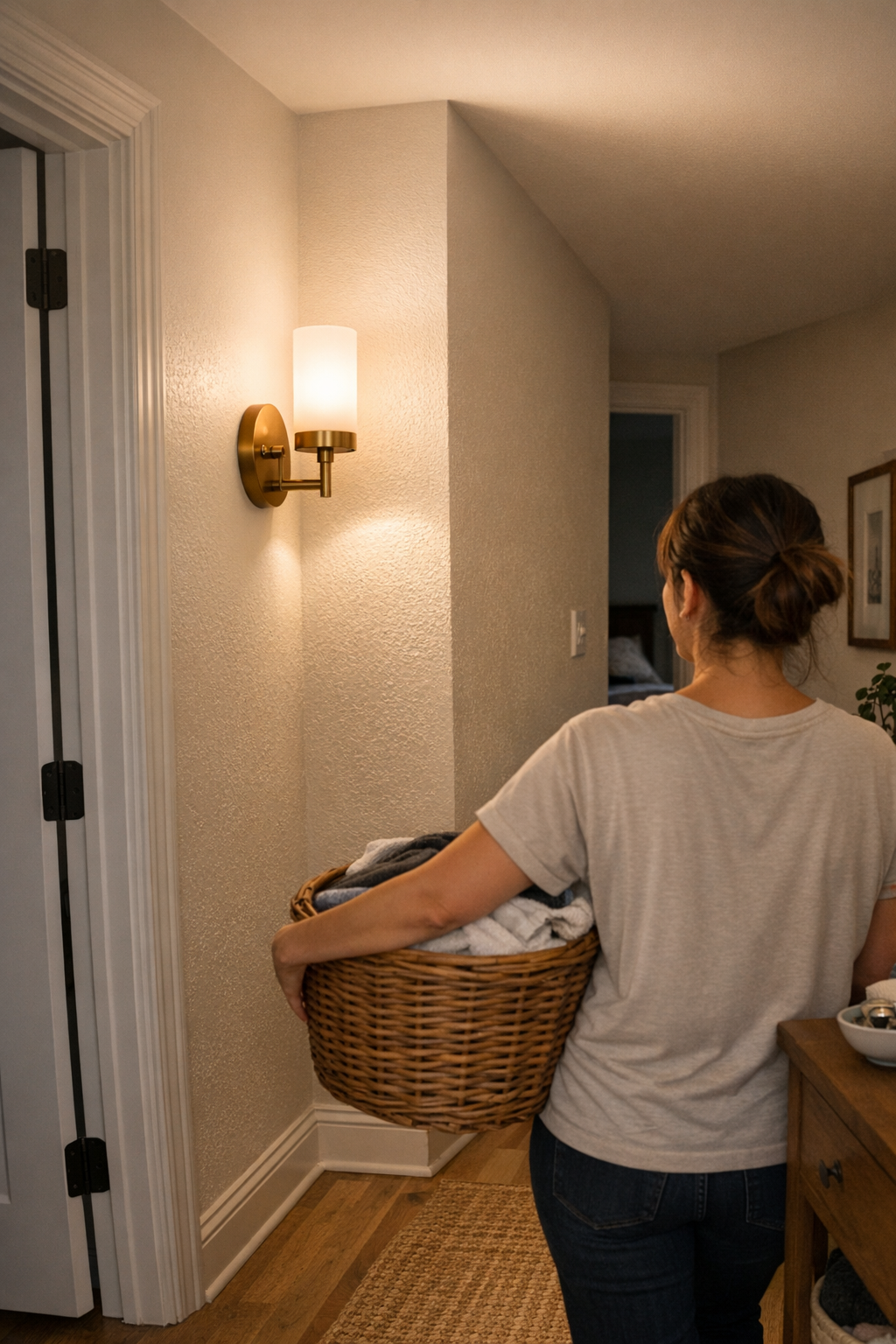
General lighting from above—flush or semi-flush mount ceiling lights, panel or linear ceiling fixtures—gives most rooms a flat sense of completion. They spread a soft, even wash of warm or blue-white light across entryways, hallways, and corridors. On a floor plan, it looks even and finished. But then night falls or you’re carrying a heavy box down the stairs, and some shadow you never noticed before catches your eye.
You don’t notice it immediately. The hallway turn from the bedrooms, the landing near the laundry corner—there’s always one quiet spot that stays dim. Reaching for the switch doesn’t fix how your vision slows down there, caught between the lit areas and the unfinished dark edge. Over time, the routines we repeat map out weak lighting zones much more honestly than any photo or draft plan does.
Glare and the Trouble With Solutions That Almost Work
Adding more light sometimes brings its own complications. I’ve fiddled with vanity and mirror wall lighting, using sconces or flush panels in the bathroom hoping to even out light for shaving or washing up.
For a few mornings, the brightness feels like an upgrade. But then the mirror throws half my face into shadow, and a new kind of visual strain creeps in. Light that’s too direct, or doesn’t spread far enough across the mirror, turns grooming into a dance with reflections and squinting. Glare becomes the new shadow, just relocated.
Hallways, too, are tricky. Swapping general ceiling lighting for fixed task lighting or shifting a ceiling fixture’s position forward can sometimes help. Often, though, it only moves the dark edge from one wall to another. The room is never fully comfortable or easy to navigate.
The Quiet Logic That Makes a Room Work
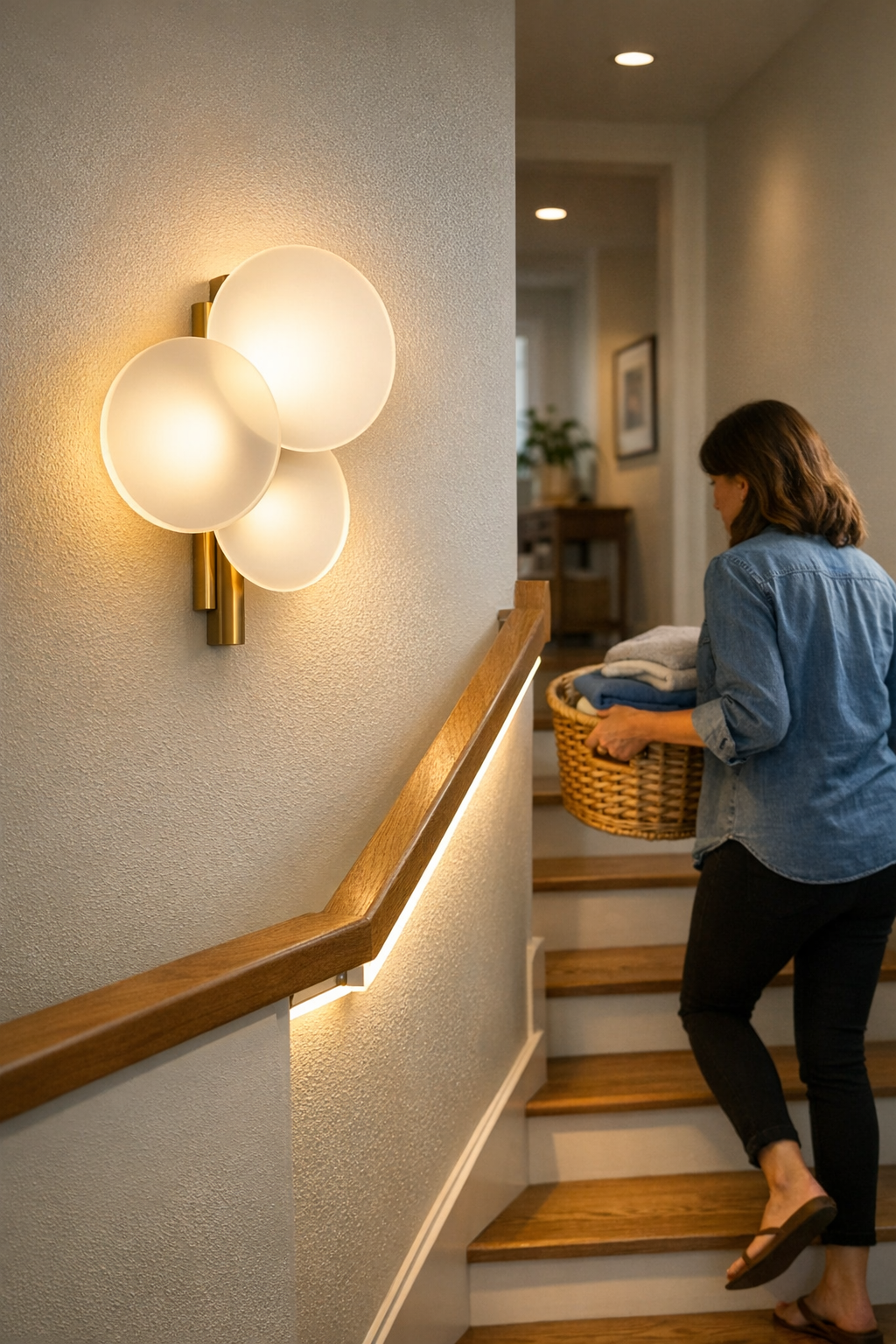
One night, after months of quick fixes, I installed a simple wall sconce at eye level on the curve of the stairway landing—the spot that always felt unfinished.
This time, the effect was gentle but unmistakable. No more hesitation at the turn, no awkward sidestepping with arms full of laundry. Nothing dramatic—just the comfort of seamless movement you don’t have to think about.
What stayed with me is how the right light, in the right spot, quietly transforms the daily rhythm. Not because it’s the brightest or newest fixture, but because it finally fits the room’s actual needs—its corners, its routines, the constant small negotiations between shadow and glare.
I think that’s why some rooms stay satisfying while others keep pulling at your attention, no matter how many fixtures you add. A change that seems minor on installation can end up feeling essential after weeks of living with it.
If you ever want to see the ways light quietly lifts or limits routine, I’ve collected a few honest examples here: http://www.lighthelper.myshopify.com