Living with Shadows: When One Light Isn’t Enough
A single indoor light often leaves shadows over time; adding or offsetting fixtures improves visibility and daily comfort.
Some frustrations start quietly, almost invisibly, then grow over time. Recently, I’ve been reflecting on how relying on just one ceiling or wall light fixture—often a flush mount or semi-flush mount ceiling light assumed to be “enough”—can slowly expose missed corners, unexpected shadows on stairs, and a subtle sense of uncertainty in everyday spaces. The issue doesn’t hit at first. But gradually, the convenience promised by a single fixture unravels, leaving a hallway, laundry nook, or stairwell feeling less functional after dusk.
It’s easy to overlook how different a well-placed fixture can feel indoors, and how light either settles evenly into space or skips over awkward patches. “Enough light” isn’t always enough, especially when you find yourself pausing at the edge of shadows or shifting your stance to identify a step in near-darkness.
Shadows Where You Don’t Expect Them
A central flush mount or panel ceiling light can create a strong initial impression of brightness. Standing right beneath it, you believe the whole corridor or work area is well lit.
But after living in the space for a week or two, small inconveniences emerge. There’s always a corner in a hallway where the floor fades just before a door. On stairways, the last few treads slip out of focus under that single ceiling fixture. Or a closet latch, glanced at from an angle, looks like a dark smudge instead of a clear detail.
You don’t notice this immediately. But you feel it.
The fixture is doing its job—just not where it’s needed most. Hallways can feel bright while still forcing you to slow down at their farthest bends. Work surfaces under a fixed task light might seem illuminated, but casting your hand creates shadows that turn small tasks more awkward than they should be.
The Difference Placement Makes
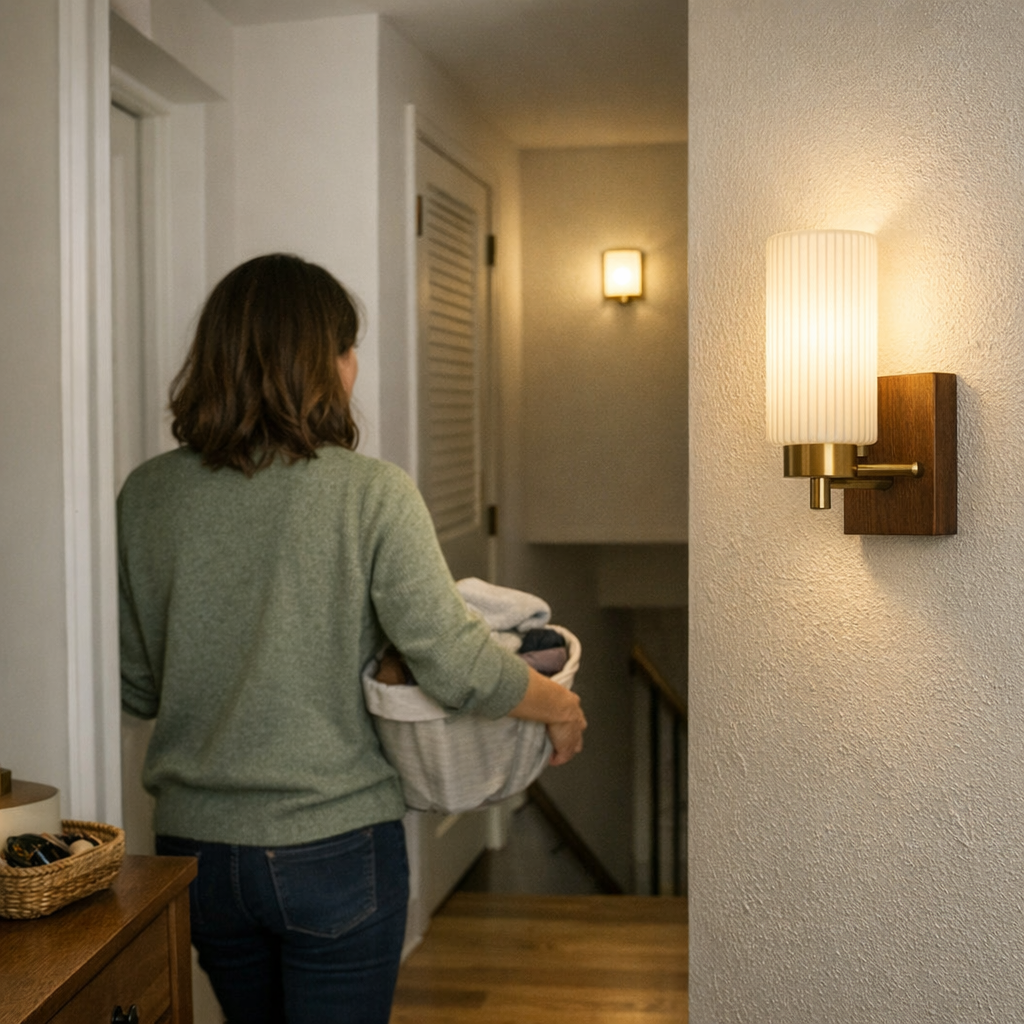
In a narrow corridor I cross every night carrying laundry or a phone, a semi-flush mount ceiling light felt bright enough at first. But midway, its coverage faded, and it was easy to misjudge a dropped sock or a raised floor edge.
That dimmer middle section kept drawing my attention. It wasn’t complete darkness—but unevenness I noticed consistently.
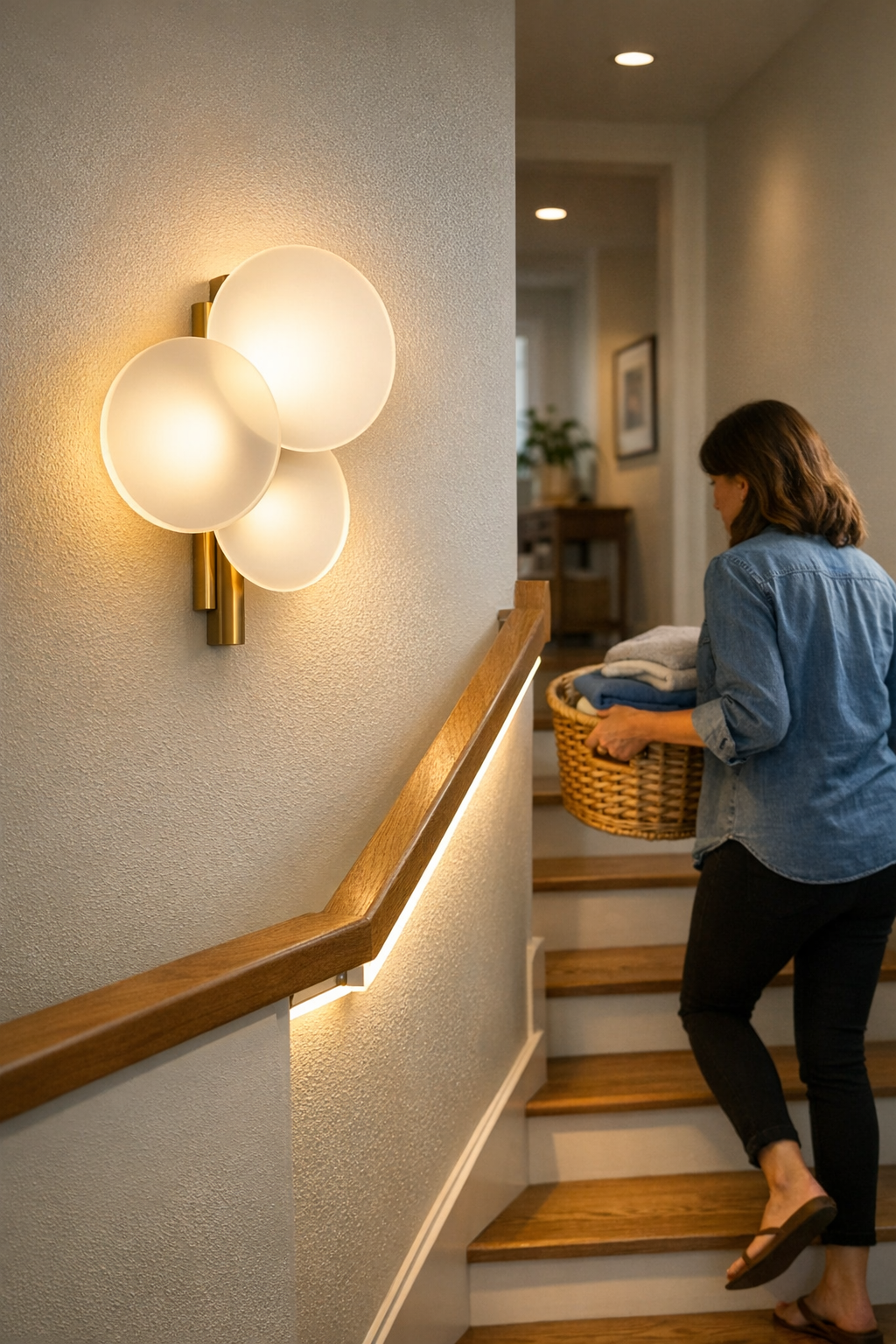
Changing the ceiling fixture didn’t solve the problem. What helped was adding a slim wall sconce near the tightest curve—just enough to fill the shallow shadow where the ceiling light never reached. The transformation was almost immediate. No more shifting pace or double-checking lost keys in dim spots. The hallway felt evenly lit along its length, no matter the hour.
This showed me something key: a small shift in fixture position can matter more than sheer brightness.
How Lighting Quietly Shapes Daily Movement
Only after living with lighting setups—running loads of laundry, brushing past vanity mirror fixtures, or heading up stairs in low light—do you start to realize which spots truly work and which don’t. The difference is in how comfortable and confident routine movement feels, not just how well a room photographs in full light.
One flush mount ceiling light might seem sufficient on day one, but the true test arrives in everyday moments: crossing entryways at night, squinting at reflections, or hesitating on stair turns. This is the subtle difference between lighting that looks good and lighting that supports uninterrupted movement without conscious thought.
That quiet realization stuck with me.
If you want to explore this topic further, here’s one resource that helped me think it through: http://www.lighthelper.myshopify.com