Quiet Battles Behind the Workshop Door
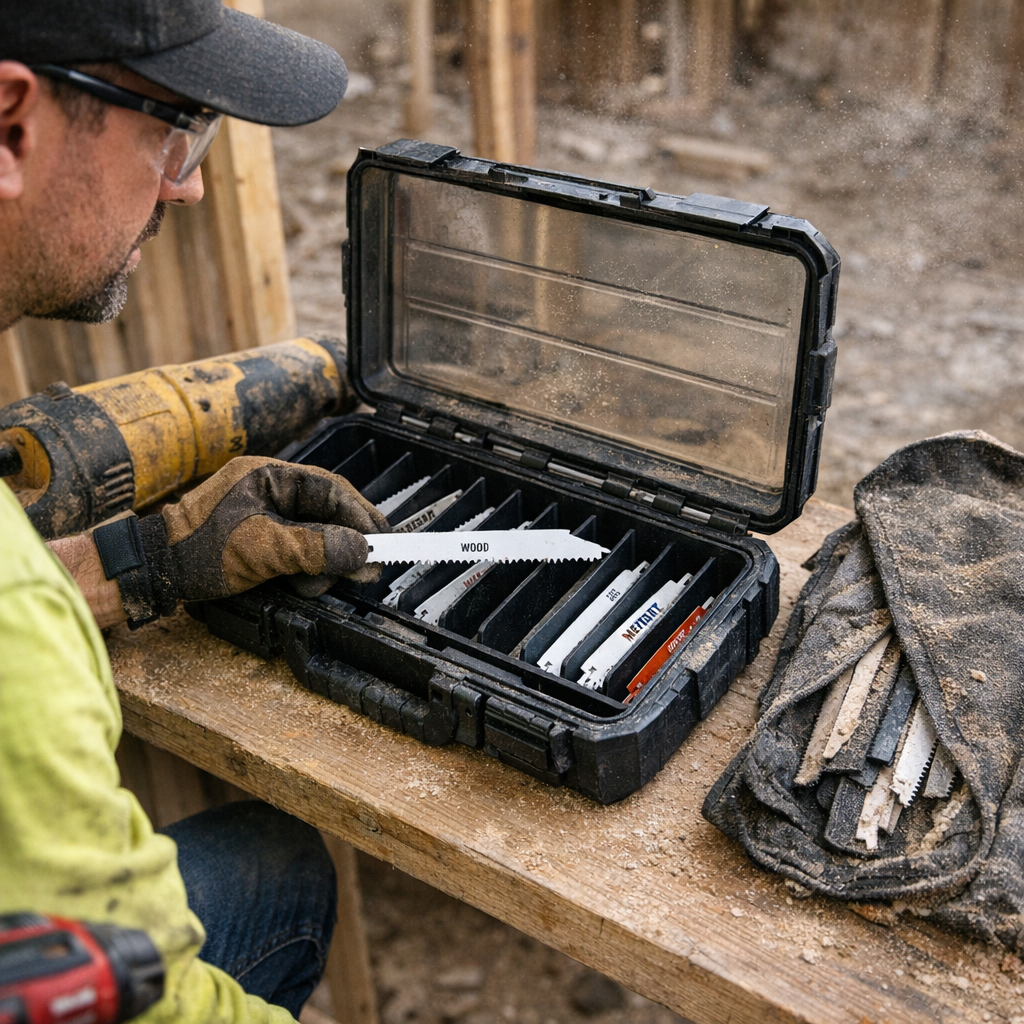
Storing reciprocating saw blades in rigid, slotted hard cases keeps them cleaner and sharper than soft sleeves, especially after multiple swaps.
You don’t set out expecting a dull reciprocating saw blade to nudge you off course. But sometimes, that’s how it happens—a slow drag, a burned seam, a quiet frustration you barely register at first. Storing saw blades seems trivial, something you think about only when you’re hunting for the right tooth count in a rush. Yet, it’s often these minor habits, like where you slip that blade between jobs, that shape your work in ways you don’t notice until much later.
The Mess Hides in the Margins
Most of us have stuffed a handful of blades into a soft sleeve, zipping it up with a satisfied finality. It feels efficient—a place for everything, no teeth poking out. You don’t notice it immediately.
But you feel it.
After a few swaps in dust-heavy air, little flecks of grit find their way into seams and lining. The blades that once felt sharp and ready start to drag. Sometimes, a smear of resin or dust clings to your fingers, and the start of every cut grows stubborn. You keep working, but somewhere along the way, cut lines wander, and edges demand more sanding.
The Difference Is Subtle Until It Isn’t
I watched a coworker recently, both of us tackling studs in a renovation. He opened a rigid plastic case, every blade resting in its own slot like surgical tools. Each one felt almost new—clean, precise, never sticky. My blades came from a familiar fabric roll. After a few days, my cuts grew rougher, and I noticed the familiar tremor of chatter in the saw, a reminder that I was working against invisible friction.
The practical side is less about the brand or style of storage, more about separation. Hard cases keep blades from rubbing shoulders, keep jobsite dust at bay, and make it easier to tell which are fresh and which are spent. The blades last longer. The cuts feel smoother. It’s one of those small shifts that quietly changes everything.
Seeing the Little Things for the First Time
I used to think it didn’t matter what held the blades, so long as the teeth were covered. But swapping sleeves for a compartmented box opened up an odd clarity. Each slot tells you what you’ve got left. Each clean blade feels like a small luxury.
And that’s the refresh moment—you realize how the smallest storage tweak makes a day less frustrating, a line straighter, a finish cleaner. On days when your hands are tired and the air is thick with sawdust, that gentle improvement is enough.
There’s never a perfect system, of course. But sometimes, the best results come from what happens behind the scenes—what settles quietly in the background until it matters.
I kept turning this over while working on yet another dusty afternoon, my blades lined up in a plastic case beside the job.