Quiet Corners Make All the Difference at Home
Placing your cat’s essentials away from household noise quickly reduces hesitation and mess, improving routine use and cleanup.
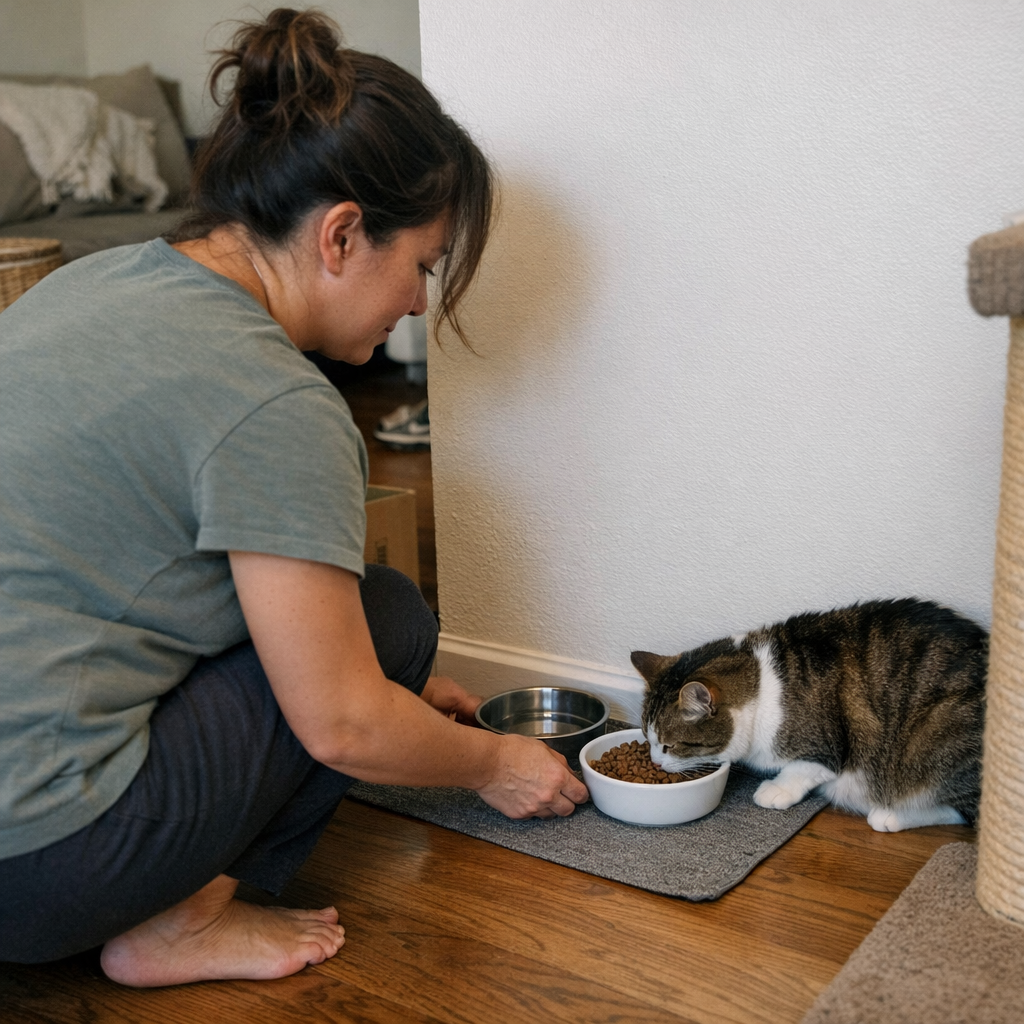
Sometimes, you think you’ve found the right spot for your cat’s corner. The food bowls line up neatly beside the fridge, the litter box tucks into its corner, and toys are stashed (at least for now) alongside the wall. It looks organized—almost peaceful—after a good morning reset. But a week later, you’re still picking up dry kibbles scattered across the doorway, noticing water marks under the mat, or wondering why the cat seems to skim past the bowl without pausing. Small things; they hardly register until you find yourself dealing with them more often than you’d like.
The setup itself doesn’t wear out first. It’s the echo of daily life—appliance hums, interrupted footsteps, the slam of the dishwasher door—that wears on the corner’s order. I only realized how much this mattered halfway through another slow clean-up, noticing most food mess appeared right after the fridge cycled. Not all mess originates from the cat. After several resets, it became clear: a corner that looks settled in the calm of morning quickly unravels once the house fills with noise again.
The Silent Pushback
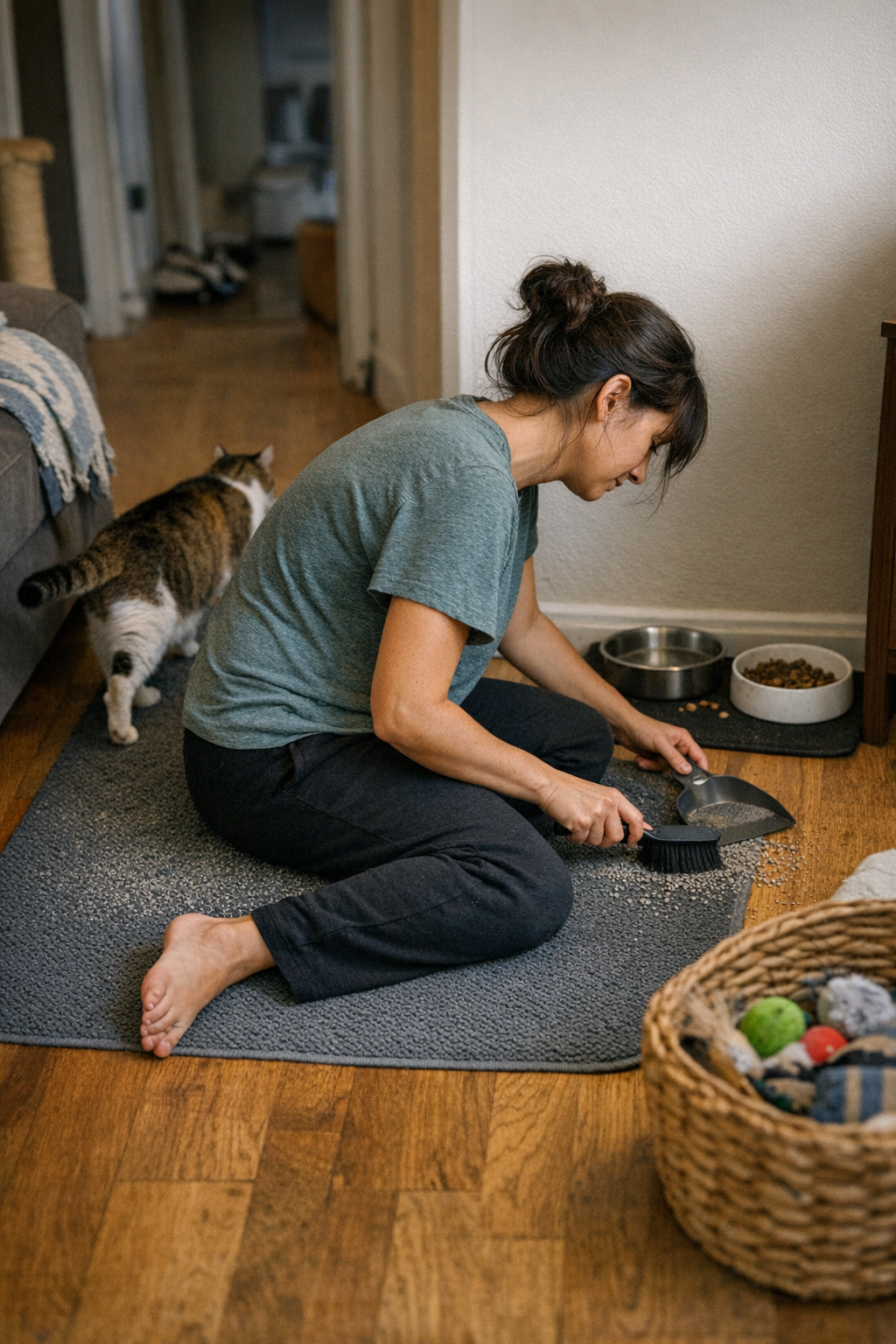
My kitchen corner made sense at the start. Bowls near the fridge, the litter box just off the laundry room—everything clustered for easier cleanup. It looked fine at first. But every day, the mess crept wider: kibble tumbled beyond the mat’s edges, the water bowl edged closer to the hallway, and litter tracked further each time the washer kicked in.
That was the recurring pattern—the unnoticed force of vibration and sound pushing the setup slightly off each day. Over time, the “tidy” corner started leaking effort into the rest of the house. A toy rolled further each night, always toward the next quiet spot, slowly shifting that delicate balance of the cat’s indoor space.
Patterns That Don’t Show at First
One afternoon, I moved the feeding station just a couple of steps away from the fridge’s usual hum and clatter. Nothing decorative—just a less shaky spot under the bowl and fewer feet passing through mid-meal. Visually, it was barely different. But the change was steady. Within days, I noticed I scrubbed less around the mat's corners. Leftover scraps became rare. The cat paused at meals more, settling in longer.
Sometimes, the only real test is how many mornings pass without being called back to the same lingering crumb or slow spill. I hadn’t planned for the setup or room rhythm to swap places, but the difference kept showing itself in the slow wear of daily use.
The Quiet Relief of Less
That’s the simple insight that stuck: less noise, less constant pressure between cat space and house space, less reason for things to unravel overnight. Routines stop feeling uneven. When the setup stops getting pushed around, you notice both of you have a bit more patience to spare—even if toys still drift and mats still shift before dinner.
If you want to see what I mean, here’s a bit more of that indoor-cat world: StillWhisker Collection