Quiet Evenings: How Dimmed Lights Calm Restless Cats
Dimming lights earlier in the evening reduces cats' late-night pacing if food, water, and cleanup routines align, easing household disruptions.
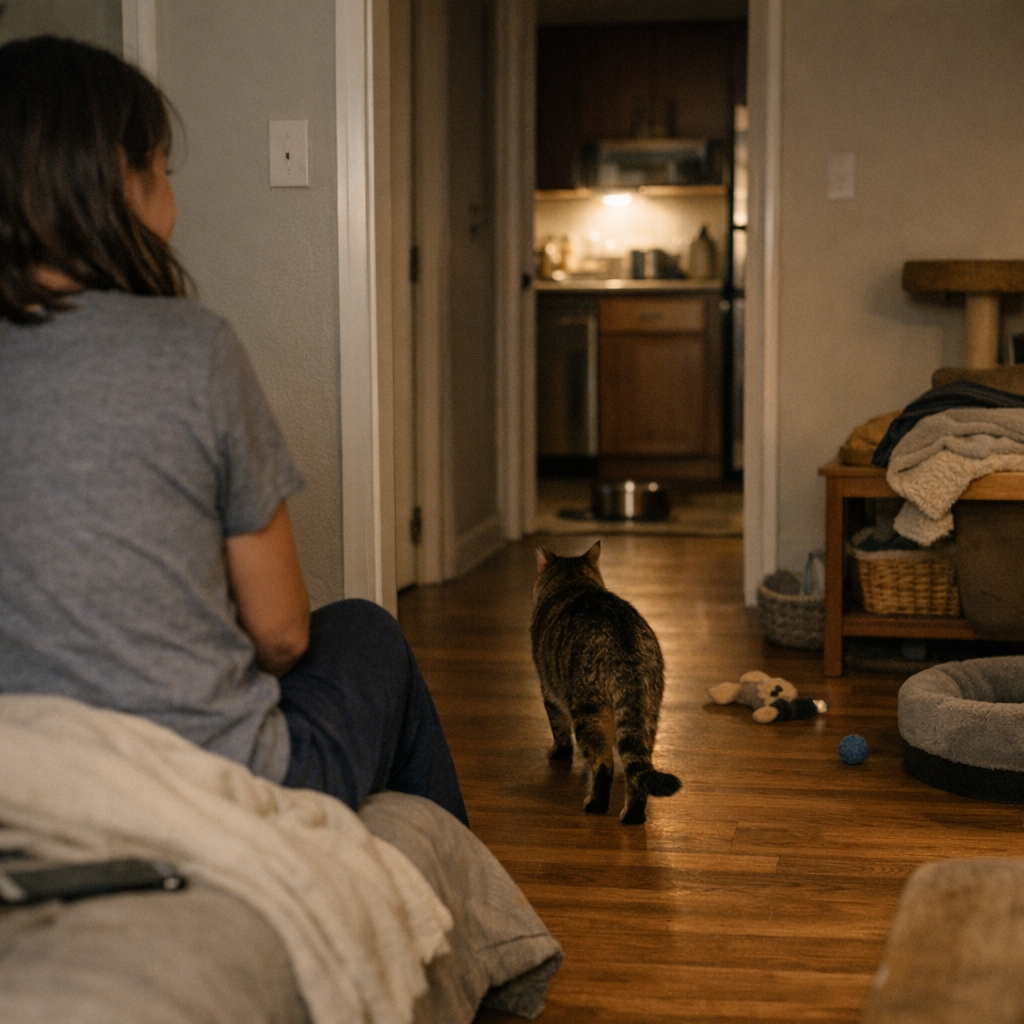
There’s a point, after you’ve refilled the water bowl for the third time in a week, when the room’s quiet starts to feel like background static—until it isn’t. Living with an indoor cat, the smallest nighttime routines become surprisingly charged and revealing. At first, a cat drifting through half-lit hallways or stepping softly near a rest corner hardly seems like a pattern. But as the nights repeat, these little disruptions settle into a rhythm that shapes the whole evening.
You don’t really notice the pattern until you’ve adjusted the setup multiple times—maybe after spotting water puddles by the fridge again, or waking to a blanket crumpled beside the night spot. The cat’s late-night wandering feels like a silent contest: you straighten the feeding area, refill water bowls, dim lights on schedule, yet somehow, each reset unravels by morning. The sense of order is there, but the edges don’t hold up through repeated use.
It looked fine at first. Bowls neatly lined up, lights dimmed low, every toy placed in its corner. But as the week drags on, hidden messes find their way out. A stray toy tucked under the door, water trails across the tiles, pawprints you’re sure you wiped away. Each small change—the blanket pulled off its usual spot, the food bowl checked twice—signals the routine breaking down. These details reveal where the setup’s signals aren’t lining up well for either of you.
There is a small comfort, though, when the shift finally clicks into place. Dimming the lights a bit earlier than usual, before the cat begins prowling, brings something steadying. After a few resets, you notice less pacing, fewer late sprints, and more time spent curled up in that first folded rest spot. It’s not dramatic, just less undoing and redoing. The difference shows up in quieter nights and floors that stay cleaner until morning.
Somehow, the repeating cleanups and persistent out-of-place corners make it clear: what matters isn’t how neat the space looks at first glance, but how well the setup holds up after several everyday nights. A routine that feels finished in the evening proves its worth when you find less to fix later. That realization settles quietly, even as you wipe under the water bowl again—this time just a little later than you planned.
Sometimes the smallest adjustments make the setup easier to share and keep. If you want to see how others shape their indoor cat spaces, you can find a few ideas here: http://www.stillwhisker.myshopify.com