Quiet Moments After Naps Make Grooming Less Stressful
Brushing indoor cats after naps in their favorite resting spots reduces fur spread and lowers maintenance friction consistently.
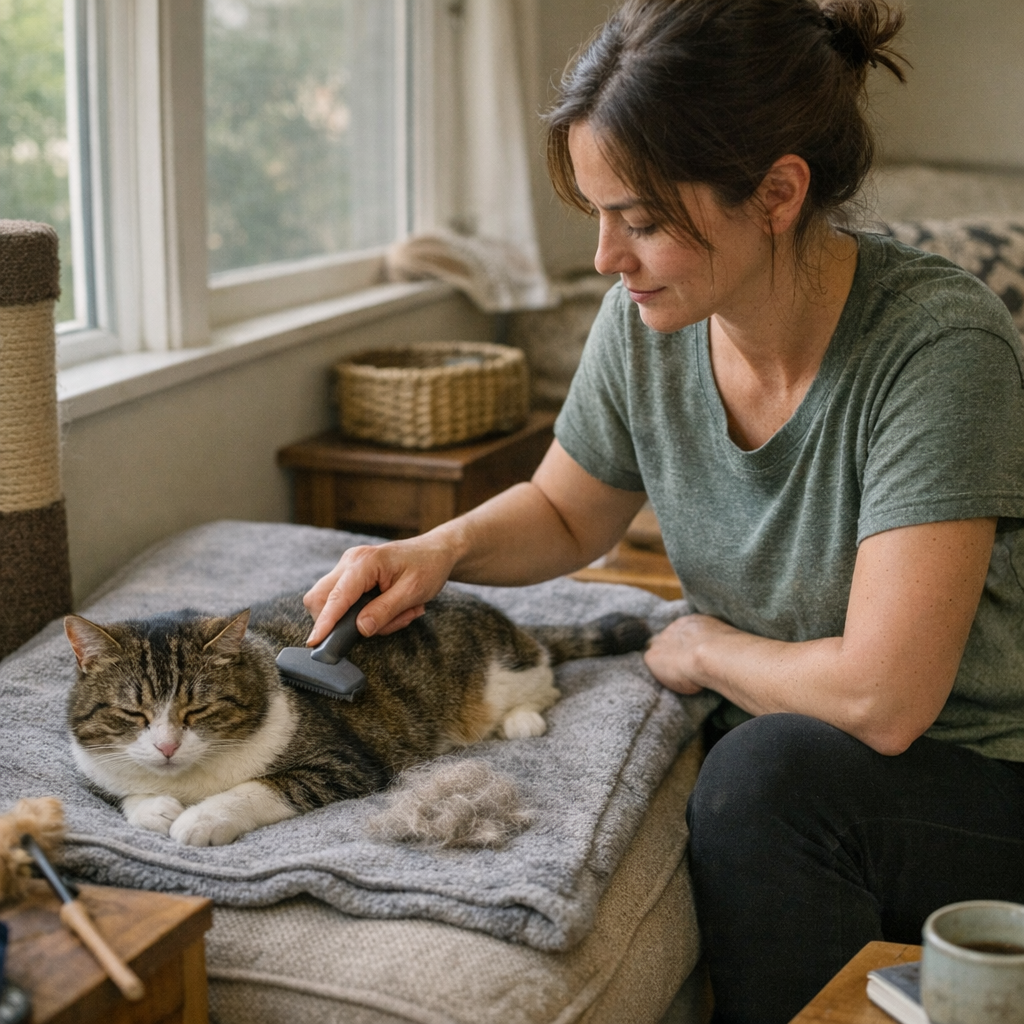
There’s a certain relief when life with an indoor cat settles into a routine—when you know exactly which blanket she’ll curl into, where the brush stays, or how the feeding and water stations line up. Still, it’s the small, unnoticed timing missteps that slowly pile up. After several weeks, I noticed fur consistently appearing on surfaces I’d just cleaned, even though my grooming routine seemed solid.
At first, it seemed fine—brushing whenever there was a quiet moment, usually right before dinner or right after a play session. But the more I tried to slide grooming into any available gap, the less tidy the space remained. Even after brushing, a faint trail of fur lingered, and the brush often ended up scattered across the apartment, tangled among toys or under furniture. That repeated brush misplacement was a consistent source of frustration.
Where Fur Actually Settles
It took a few daily resets to see the pattern. The laundry pile would creep up slightly, and blankets I hoped to just shake out regularly instead needed full washing more often. My cat predictably napped in the sunlit rest corner or on her favorite chair, while the only consistently fur-free spots were the ones I overlooked brushing altogether.
After many evenings spent wiping edges and corners, it became clear: brushing just after her naps was the key to keeping fur under control. Post-nap grooming meant loose fur settled mostly in one place, making cleanup simpler. The small tasks—grabbing the brush, folding the mat beneath, scanning the floor—felt lighter and almost automatic.
By contrast, the more active grooming sessions scattered fur farther. Toys slid under the sofa, sometimes with the brush left behind them. A small trail of hair near the water bowl became a usual sign that the timing was off, signaling harder resets and slower recovery.
The Quiet Switch
Practically, the shift was simple: keep the brush within reach near her main nap zone and wait for her to wake, still warm and half-drowsy. The brush stayed put, cleanup was confined mostly to the washable blanket beneath her, and I no longer had to chase loose fur or reset the whole grooming setup repeatedly.
Each session became calmer for both of us. Fur scattering slowed noticeably. With the brush always nearby, post-nap grooming required less effort than the spontaneous, anytime sessions I used to squeeze in. Less stray hair traveled beyond the blanket’s edge, and I could almost always shake out the setup before her next meal—making the feeding and water area cleaner, too.
Living With the Pattern
Over time, this small change shaped how I managed the rest of her spaces. It felt quieter—a brush waiting by her rest corner, a blanket laid out and ready for the next shake. These little routines started steering every cleanup and reset, creating a clear difference between surfaces that stayed mostly clear and those that demanded constant attention.
The brush’s stable spot eased grooming-adjacent storage frustrations, while the tidy blanket helped trap loose fur instead of letting it drift toward shared spaces or feeding areas. Feeding resets and water refills went smoother without a backdrop of loose hair or scattered toys blocking access. The litter-adjacent floor needed less extra sweeping, as fur patterns stayed more contained.
I keep wondering if such an ordinary timing change can really make an indoor cat’s daily care noticeably easier—but for me, it keeps proving itself, one hair at a time.
There’s a little more about how these details play out at StillWhisker.