Quiet Moments Between Stops and the Calm They Bring
Repeated stops reveal friction in pet travel setups causing tension. Separating quick-access essentials from stored items keeps travel flow smooth.
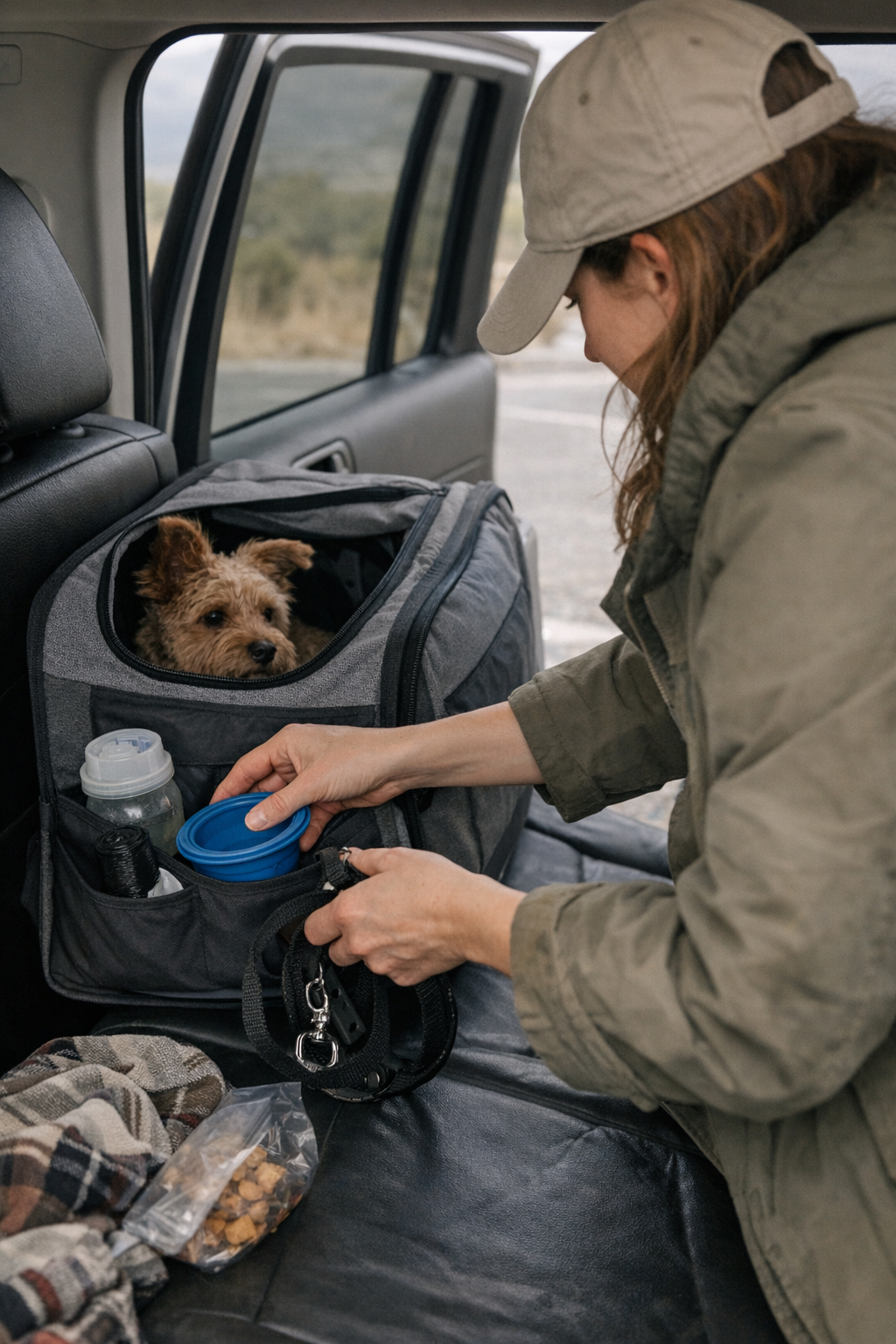
You only notice it after a few trips—the way a pet travel setup that looked so prepared at home quietly falls apart the moment you start moving. It’s not about forgetting something big or picking the wrong carrier. It’s the small, stubborn friction that sneaks in after a couple of stops: digging past tangled leashes, nudging a bottle that blocks the wipes pouch, feeling your pet tense in your arms as pause after pause piles up. Everything seems organized until you try to grab something quickly, and nothing comes out the way you pictured. Somehow, inside those familiar bags and pockets, the routine keeps stalling.
The Gaps That Appear Mid-Movement
Sitting by the car door, ten minutes out from home, the details show up. The wipes buried at the bottom of the carrier. A collapsed travel bowl jammed under the extra blanket. You try not to fumble, but your pet is already reading your cues—ears tight, waiting for the next delay. The breaks in movement stack up. What felt smooth at first becomes all elbows and awkward pauses.
That was the part that kept coming back. Not the product, not the extra comfort mats or lined-up water bottles. It was how hands fumbled instead of found, how a “neat” setup increased the struggle when stops weren’t planned. If something blocks the thing you actually reach for, the whole trip shifts.
When Calm Is in the Access, Not the Appearance
The usual tendency is to fill every pocket. It looks efficient—everything packed and zipped. But the real impact surfaces on the third or fourth reach—when a leash tangles under a flap, or waste bags require a mini unpack every time. The setup that felt smart at home slows you down in the parking lot. Your pet, tuned in to every move, drifts from relaxed anticipation to barely disguised frustration.
It looked fine at first. Only when I left one pocket—next to the main exit seat—half empty and quick to open did the tension finally ease. Essentials lived there: just the leash, one cleanup pouch, a single bowl. Everything else had to work around that open space. The rush, the bracing, the subtle stress from both sides all faded on the next stop. The relief was visible, and the routine finally felt routine.
What Repeats, and What Stays Quiet
There’s a soft but clear lesson here: when you have to move things out of the way each time, the setup isn’t working with you. The signals show up—your wrist bracing before a grab, your pet pulling away or refusing to settle even as you reach for their gear. At some point, the effort isn’t in the drive; it’s in the structure you return to at every pause. One silent pocket, reserved for the movements that repeat most, can make the whole trip quieter.
After a while, carrying the bag again just means picking it up. Not sorting, not shuffling. Just routine, as expected. The clearest sign of a better pet travel setup isn’t an organized snapshot but a lack of irritation that lingers long after the first few pauses.
If you want to see how others shape their routines, this is where they collect their own versions: http://www.pawgotravel.myshopify.com