Quiet Moments Between Strokes Calm Fidgety Cats
Pausing between strokes reduces overstimulation and cleanup strain, making grooming less stressful and easier to manage for indoor cats.
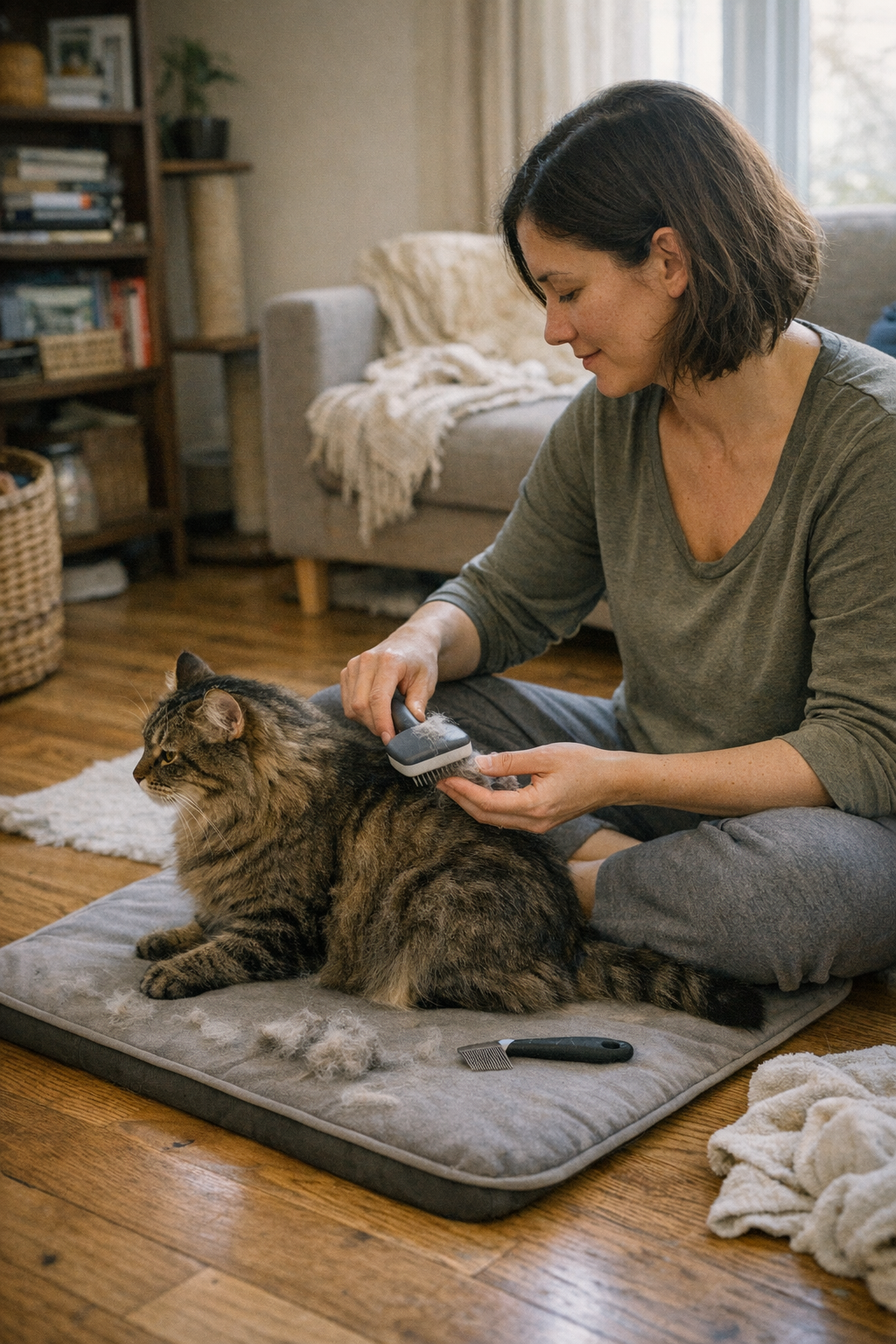
It wasn’t immediate—in fact, it took brushing my cat dozens of times to notice the difference between a session that felt routine and one that quietly left the room changed. Indoor-cat life demands a kind of patience that doesn’t always show itself right away. You find it when a grooming mat that seemed perfectly placed grows a halo of fur around the edges, or when the cat’s twitch signals you’ve crossed some invisible line between comfort and overstimulation.
You only notice it after several resets: the subtle ways a grooming routine shapes the space around it. At first, you follow the script—lay out the mat, grab the brush, coax your cat to settle. Sometimes there’s twitching, a quick retreat, and fur slipping out beyond the mat’s border into other corners of the room. The process works for a while—until it doesn’t. That pattern kept coming back: each session meant a little more cleaning, a bit more gentle resistance from the cat, and less confidence that the original setup was truly effective.
I started pausing more, almost accidentally—first to let my cat calm down, then just to clear the brush or swipe at the fur gathering in room corners near the grooming mat. The setup looked fine at first glance, but the difference kept growing. As the pace of brushing slowed, the twitching faded. The mat, for once, didn’t need immediate shaking out or vacuuming afterward. Cleanup shrank to a two-minute routine. The cat no longer dodged the spot after brushing, and new clumps of fur stopped slipping under door frames or settling in rest corners. There was less to clean, less to chase down later.
It surprised me how much the setup mattered, even after I thought I’d found something that worked. Space that initially felt settled could still quietly demand more effort—and a deliberate pause between brush strokes, or shifting the brushing to a more open, low spot in the shared indoor area, shifted almost everything. It’s one of those changes you barely notice until the routine smooths out and the shedding mess doesn’t creep back as often.
Every indoor-cat setup seems to require its own quiet balance. But it turns out that a pause—just a breath between strokes—clears more than the brush. It lets both of us calm down and leaves the room feeling steadier as the day resets again. This is especially true when grooming is closely linked to a resting corner, adjacent to the feeding and water areas where fur and dander can collect if left unchecked.
Sometimes I still see a few loose hairs tucked behind the throw or in corners near scratching zones. But it never feels as relentless as in those early days when cleanup dragged on and discomfort lingered. The rhythm has shifted just enough that grooming-adjacent storage doesn’t get overwhelmed, the cleanup setup stays manageable, and overall upkeep doesn’t interfere with comfort.
If you’re curious about how these details play out in a lived-in setup, you can see more here: http://www.stillwhisker.myshopify.com