Quiet Moments in Flight: Finding Ease in Small Movements
Carry-on structure shapes in-flight comfort; placing essentials in quick-access pockets reduces movement and frustration during long flights.
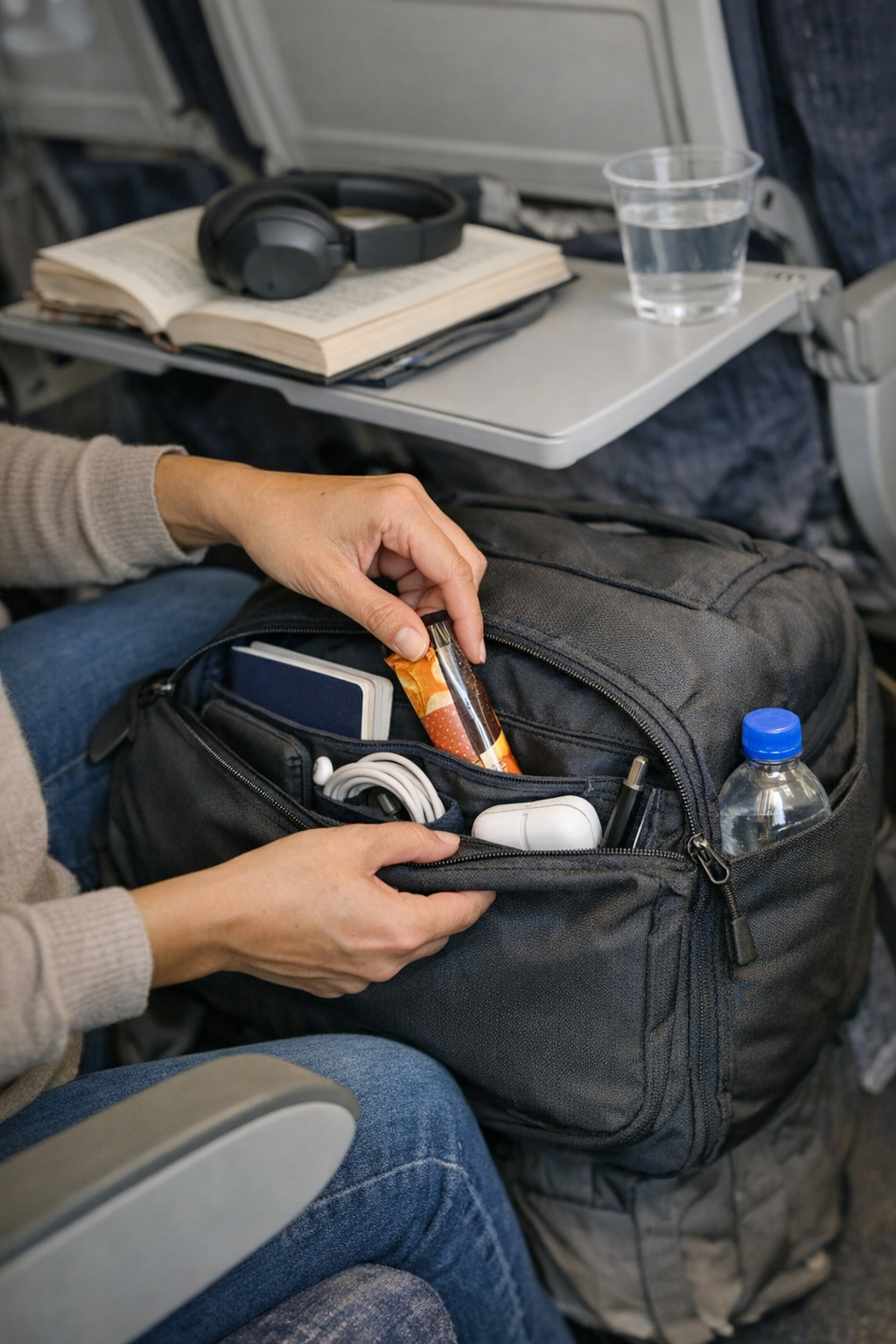
The first time I packed my carry-on for a long flight, I fussed over every pouch and zipper. Everything fit—stacked, packed, and zipped with a sort of pride. That satisfaction lasted all the way to my seat. Then reality shifted: sudden separations, awkward shuffling, and the quiet impatience that comes from needing something buried too deep, too soon. In that small space, it stopped being about how tidy the bag looked for boarding and started being about how possible it was to get through the flight without feeling tangled in my own setup.
You notice it after a few transitions. The difference between an organized carry-on and a usable one comes in small waves—when you’re twisting open a pocket halfway, hoping a snack didn’t shift underneath a book, or digging past a pouch for a cable that seemed easy to find earlier. Every retrieval is a test of where you actually placed things, not where you meant for them to be.
What Looks Settled, and What Stays Simple
There’s an appealing logic to the classic stack—packing cubes lined side by side, pouches layered like an architectural model. At first it looks calm, almost effortless. But the difference kept showing up. In flight, the vertical stack meant each reach became a small project: sliding a pouch out, nudging aside a toiletry kit, feeling around for headphones under a sweater. The bag’s shape held, but the process broke rhythm over and over.
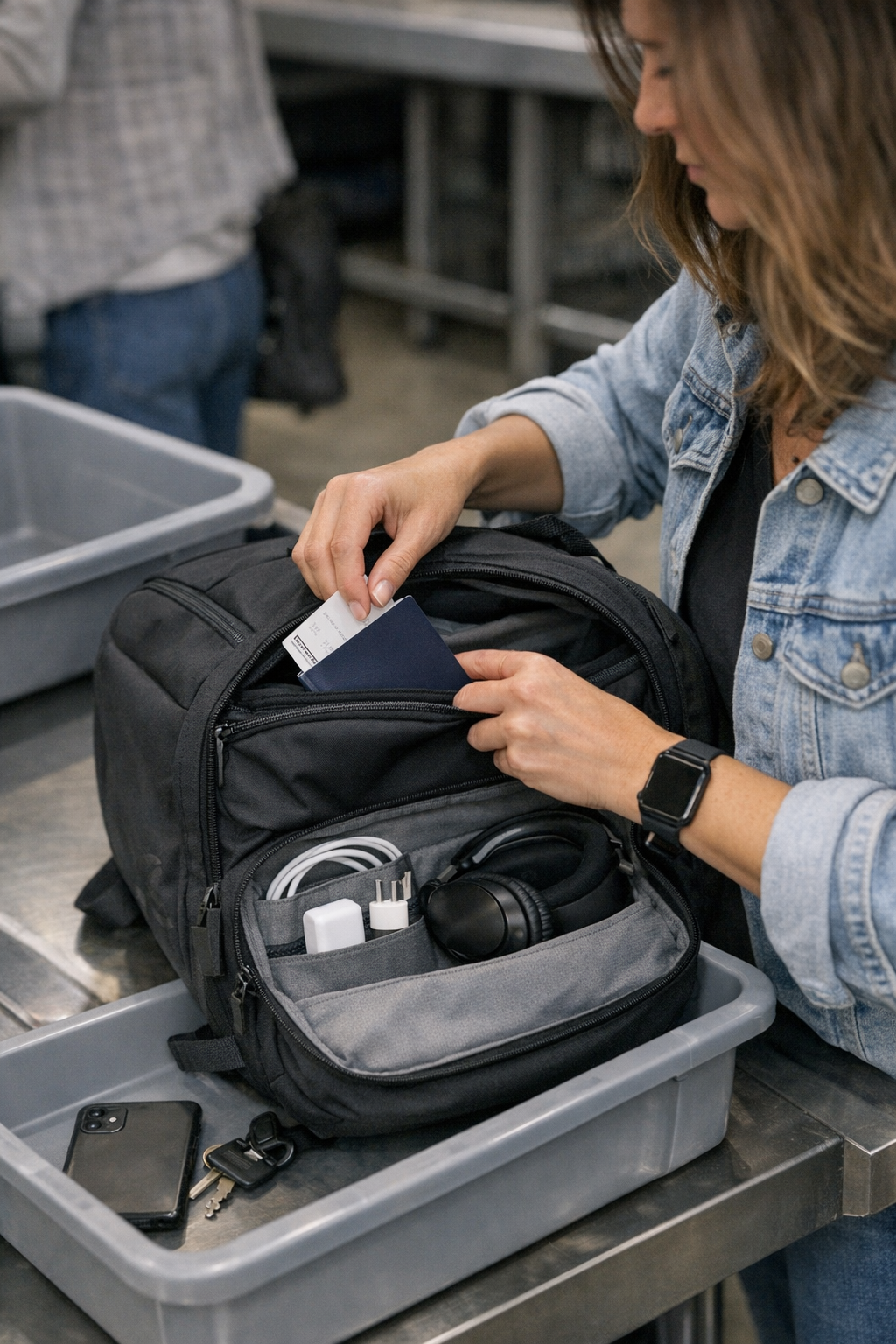
The simple flat pocket—at first a minor part of the bag—began pulling more weight. Headphones, snacks, even a ticket stub sat along the outer edge, within a hand’s reach. There was no dramatic reveal. It just meant I could move less, fumble less, and settle in quicker without thinking about the next moment I’d need to dig again.
The Difference in the Middle of the Flight
It’s not obvious on the first trip. It looked fine at first. You only understand once you try to grab something for the fourth or fifth time mid-flight, knees blocked by the tray, the aisle suddenly busy, and everything you need tucked inside the compartment you least want to open. That was the part that kept coming back. The cost of stacking for neatness often showed itself in the awkward seated reach—anything that forced me to lift the whole bag, or re-stack a set of pouches, drew attention to how little was actually within easy reach.
A small but real shift came from moving the frequently used things—passport, pen, snack bar—into a flatter, exterior pocket. It didn’t make the bag prettier. But that one change meant fewer interruptions: no half-unpacked bag in my lap or repeated squaring of the stack after just one item. Just a quieter, less stressful pattern.
Living with the Structure, Not Against It
It’s easy to believe an organized bag means less work, but I kept finding moments where order alone wasn’t enough. Comfort came from the way things stayed reachable, not just sorted—the outside pocket doing heavy lifting, the main section left alone until I actually needed a change of clothes. That shift, small as it is, reduces the friction that builds over hours: less shuffling, less tray-balancing, and fewer small repacking rituals. The little disruptions fade.
After enough flights, you start to feel which parts of a setup are working with you, and which ones you keep rearranging out of habit. It isn’t showy, and the change doesn’t happen all at once. But choosing pockets over stacking and living with what’s easier in the air ends up mattering most—not just at the start, but every time you reach over your knees for what you need.
Sometimes things get easier without looking any more organized. That’s what I kept coming back to, and for anyone curious, this is where I’ve been looking lately: http://www.carryonsupply.myshopify.com