Quiet Order Amid Renovation Dust and Daily Life
During renovations, sealed storage boxes reduce dust buildup and cleaning, keeping gear protected compared to open storage where debris accumulates.
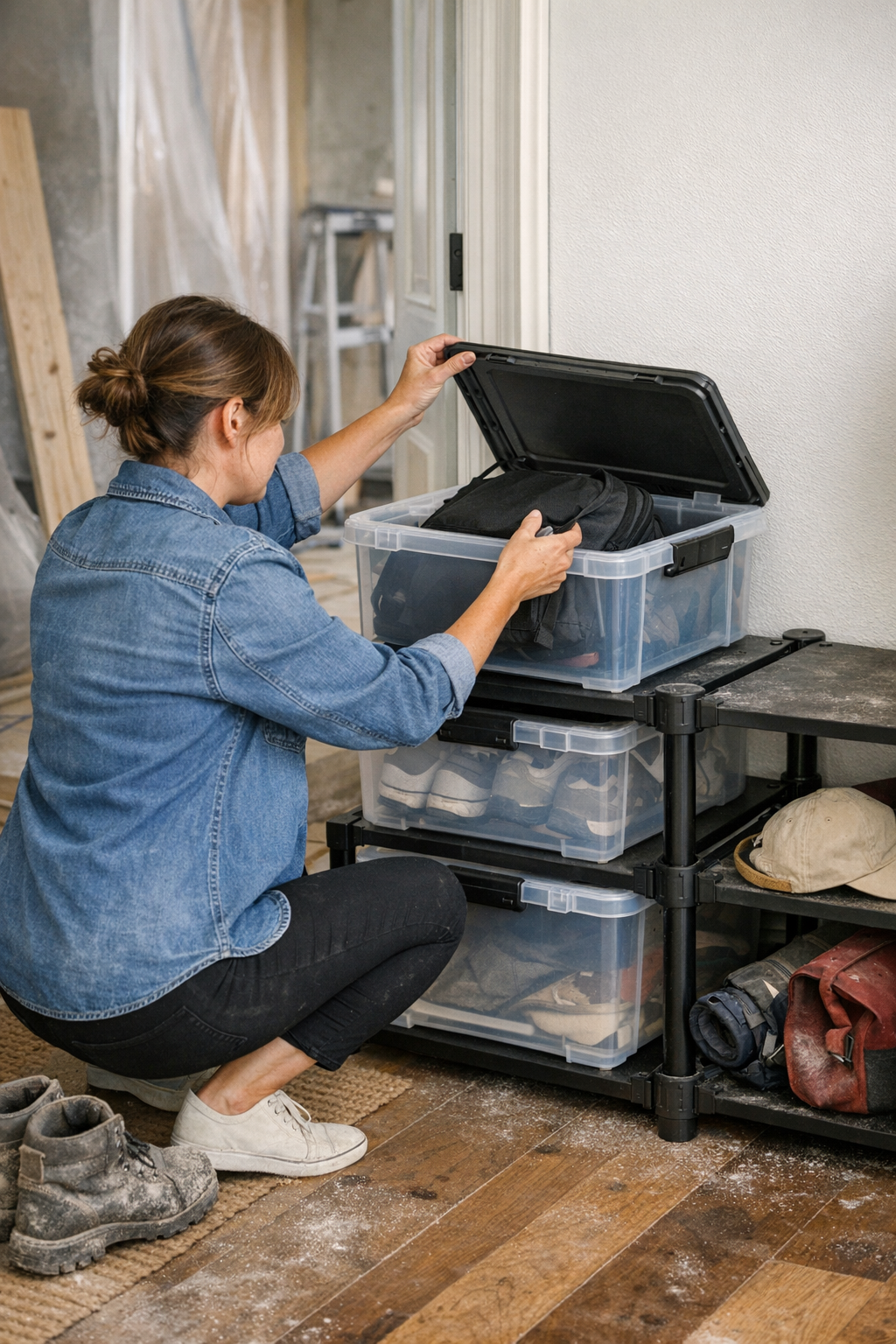
There’s a certain stubbornness to renovation dust—a way it seeps into the soft routines of coming and going, settling quietly in places meant for movement. The entry, usually just a brief passage between outside and inside, begins to catch every misstep. On days when the air feels heavy with fine grit, I notice how reliable routines fray: shoes once kept neatly in a row grow gray at the seams, a bench meant for quick pauses becomes a nightly chore to wipe down. What once felt like control over the entryway suddenly feels porous. This is when transition-space storage—the simple act of keeping a sealed box at the threshold—takes on a new role.
A Layer That Sneaks In
At first, the dust feels minor. It looks almost harmless—a film on shoe soles, a powder along the bench edge. But it accumulates quietly, slipping into open bins and onto anything left exposed. You don’t notice it immediately; you feel it. A slight grit against fingers when picking up a bag, a dry, unfamiliar texture when sliding shoes back on after a day out.
What stood out most was how routines unravel in tiny ways. Shoes that once stayed aligned through the week would shift, nudged closer to the edge to avoid stickier patches. Bags left out overnight needed a full shake before use. There’s a difference between normal clutter and this kind of intrusion—and this was the latter.
Open Holds, Closed Protects
The drop zone is built for quick moves: drop, grab, move on. Under normal flow, that rhythm works. But during renovation, open storage becomes a channel for disorder. Bags and shoes kept out for convenience collect more than dust; they collect a sense of chaos, multiplying the effort needed for every reset.
It’s surprising how a sealed container suddenly becomes the backbone of the entry space. I found myself reaching for a single lid more than any set of open baskets or shelves. The time saved by not having to shake grit from pockets or wipe down surfaces was the real gain. Routine tightened: lift, drop, close. No rush, but less slow frustration, no extra cleaning filling the gaps between arrivals.
Living With the Tradeoff
Sealed storage asks for a small pause—a moment to unclip, unstack, or lift a lid. In return, it gives back a threshold that stays clear, entry after entry, without a thin trail of dust creeping in.
The practical slowdown is outweighed by a quietly growing calm: fewer tasks at day’s end, less of the restless feeling that outdoor mess has slipped inside. The difference isn’t loud, but the ease builds. Protection becomes a subtle gain—felt most in a gentler routine at the door.
Betweenry offers a quiet range of transition-space solutions for days like these, designed for real entryways under real pressure. Their modular, weather-resistant, and space-conscious storage adapts to narrow passages, repeated arrivals, and messy threshold moments—helping keep clutter contained.