Quiet Signs of Power Fading in Everyday Cleaning
Consistent battery voltage monitoring prevents suction loss and extra cleanup, ensuring smoother, more effective dust control in tough jobs.
It’s strangely easy to ignore the state of a battery until the moment it pulls you out of your flow. You’re deep into a cleaning job, the kind that demands all your attention, and then something small shifts. The cleaner’s voice changes, barely, or the air feels heavier. Most days, it’s not even a conscious thought—just another part of the rhythm, a background detail. Yet in that unnoticed moment, battery voltage tells the whole story.
We rarely talk about how battery level shapes performance, especially with air-cleaning power tools. Yet with every drop of voltage, the work changes, sometimes softly, sometimes all at once.
The Fading Edge You Don’t Expect
You don’t notice it immediately. One pass feels strong, steady. But as the battery dips, something slips through the cracks. Suction quietly falters. Fine dust drifts in the air a bit longer, not quite as contained. Sometimes, the machine hums at a slightly harsher note—a change you sense before you hear it.
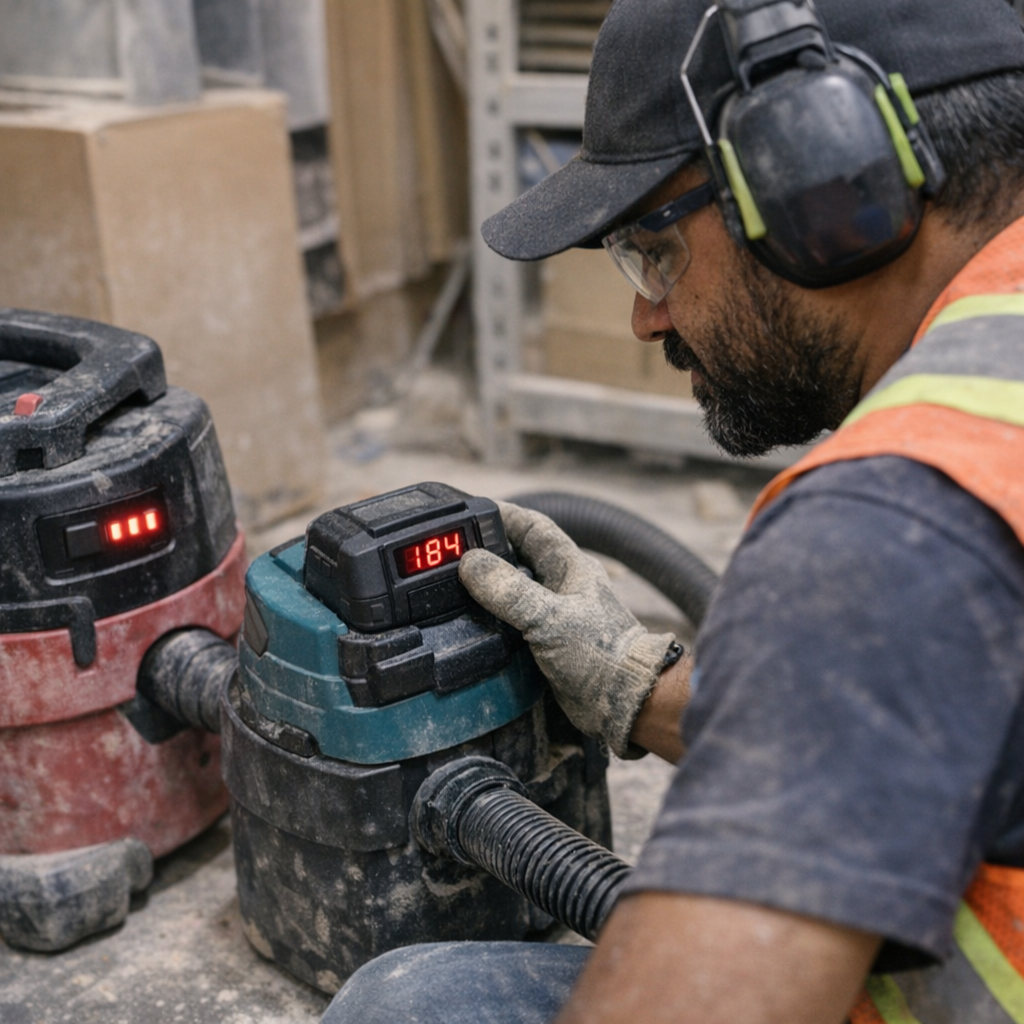
I’ve seen it play out in the middle of long cleaning days. Two nearly identical machines, running side by side. The one with just an LED light might suddenly cough or sputter as the charge gets low. The unit with a digital meter? It simply fades, leaving invisible pockets of dust behind. At a glance, it all looks clean. Under angled light or on sensitive surfaces, though, you find traces—even when you thought you were finished.
A Small Shift, a Noticeable Difference
There’s something grounding about pausing to check—actually check—what’s going on with your battery. Not in the way of glancing at a vague indicator, but seeing the small, precise changes as they happen. I started doing this after one too many late shifts in a cramped storeroom, wrestling with a cleaner whose strength had slipped out from under me.
You don’t always realize what’s missing, only that the work seems to take more passes, or the tool vibrates in your hand a little differently. When I started tracking actual voltage and swapping batteries before they plummeted, it was as if the air itself cleared up. Dust didn’t settle where I’d already gone. The job, for once, stayed done.
Check-ins became part of the rhythm, as natural as breathing. Sometimes that means noticing the motor’s tone goes flat or feeling the drop in your wrist. These are small signals—a kind of whisper from the tool itself.
Where Confidence Lives: In the Details
A reliable voltage meter doesn’t just protect the tool; it protects your time and patience. It’s tempting to trust the battery lights that come built-in, but they’re often rough estimates, easy to lose track of beneath the brightness of work lights and noise in the room. Steadier data sets a kinder pace. Looking for a number, a threshold, instead of waiting for a warning or a stall, brings an odd sense of calm.
Somewhere in all this, I found myself enjoying the predictability—that quiet assurance that the job will end as well as it started. No surprise dust lines in the morning. No anxious wondering about what the motor endured during the last stretch.
This isn’t about chasing perfection or efficiency for its own sake. It’s about letting work become more straightforward, less fraught with repetition and second guessing.
The thought came together slowly for me, usually during those quiet minutes spent watching numbers scroll up on a meter, waiting for the right moment to swap things out.
These thoughts came together while working on a small personal project.