Shadows Fade Away in the Heart of the Kitchen
Ceiling lighting alone leaves kitchen counters shadowed; under-cabinet lighting improves visibility, easing daily prep and cleaning tasks.
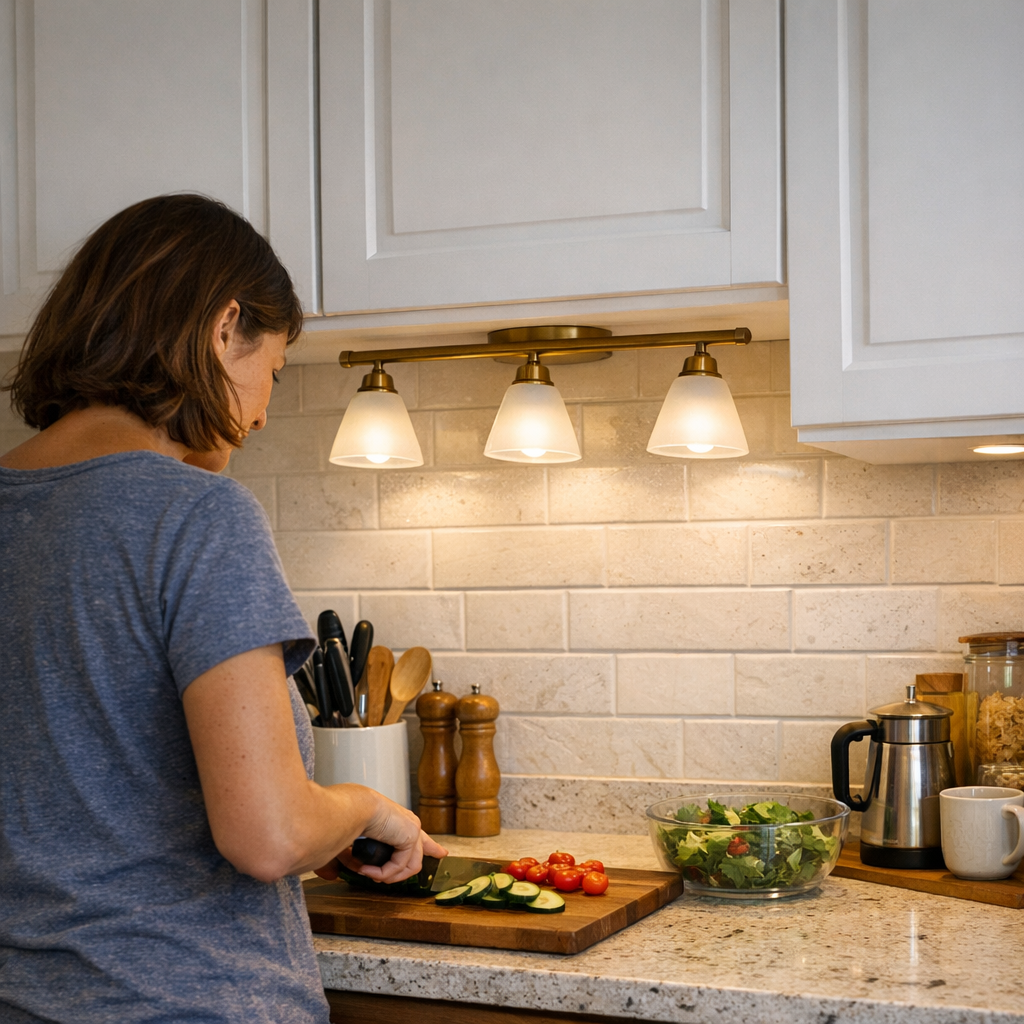
There’s a comfort to walking into a well-lit kitchen at dusk. At first glance, the room feels open and bright—the kind of backdrop that promises an easy night ahead. But once your hands start moving over the counters, a quieter reality sets in. Shadows stretch along the backsplash. The shape of your knife doubles in dimness. Edges fade, just out of reach. Beneath the overhead brightness, the work of seeing isn’t quite finished.
Where the Shadows Settle
Many kitchens rely on ceiling lights alone—flush mounts, semi-flush mounts, linear panels, or recessed fixtures—that beam light down from above. For a while, this is enough. But as you slide a plate across the counter or try to spot a fine dusting of crumbs near the wall, smaller shadows gather along the back edge. You lean in, and your own profile blocks the shine, doubling the guesswork.
This is the part I kept coming back to.
It’s quiet—the way overhead brightness skims the surface, never quite reaching the spaces where cleanup and prep take most of the time. Over time, little pockets of shadow hide the stickier parts of living: a spill, a seed, where the counter meets the backsplash. Tasks slow down, a second or two at a time, whenever you’re fumbling for a lost measure or wiping without being able to see what’s left behind.
A Different Kind of Certainty
One night, after missing a stubborn spot for the third time, the logic of under-cabinet lighting began to make sense—not as decoration, but as relief. The change was subtle at first, replacing a patchy glow with a slim, diffused light bar tucked under the cabinets. But when the light ran edge to edge along the countertop, I stopped working in shadows. No more knife shadows crossing themselves or corners lost behind ceiling beams.
That’s when the kitchen started to feel cooperative, less about adapting to what you can’t see and more about supporting the tasks you repeat every day.
This is practical, not fancy. The routine of slicing, scrubbing, or reaching for the right utensil just became easier, quieter, and more consistent. It’s surprising how steady, evenly spread task lighting lowers the daily friction in small ways. You don’t celebrate it, but you notice what’s missing: the strain, the guessing, the small inefficiencies that slow you down.
Watching Routine Become Ease
None of this feels urgent. There isn’t a dramatic reveal. Still, something shifts when light is placed not to impress, but to serve the most-used spots with softness that fills in cracks and controls glare. Every meal, every clean-up, the space starts to feel complete in a way that general ceiling lighting alone never quite accomplished. Shadows remain, but not where you need clarity.
Sometimes the smallest practical improvements—an outlet positioned for easy use, a staircase fully visible at night, a countertop uniformly lit—quietly add up to better movement and mood through the day.
If the difference in daily function is what stays with you, it might be worth visiting LightHelper and seeing it for yourself.