Small Changes That Ease Morning Chaos at the Door
Light door racks keep daily accessories visible and accessible, reducing clutter and delays, but need regular editing to stay effective.
There’s a certain pressure at the threshold that only appears in small, fleeting ways—shoes inching into the walkway, bags drifting toward the stairs, and accessories piling up until the routine feels stalled. I didn’t realize how much energy I was spending just keeping a clear path at the door, at least not until I changed how things landed each day. The moment came quietly: replacing a catch-all bench with a slim, wall-mounted rack made arrivals and departures smoother, and I felt the difference before I consciously noticed it. The shift felt small but lived large—especially on mornings when everyone left at once.
You Don’t See the Difference Until It’s Missing
It’s easy to overlook how much transition spaces really handle. The bench always looked tidy after a quick sort, but within minutes the top would vanish under mail, yesterday’s scarf, and a scatter of keys. Shoe pairs crept forward until they formed that slow, sideways blockade right by the door. You don’t notice it immediately.
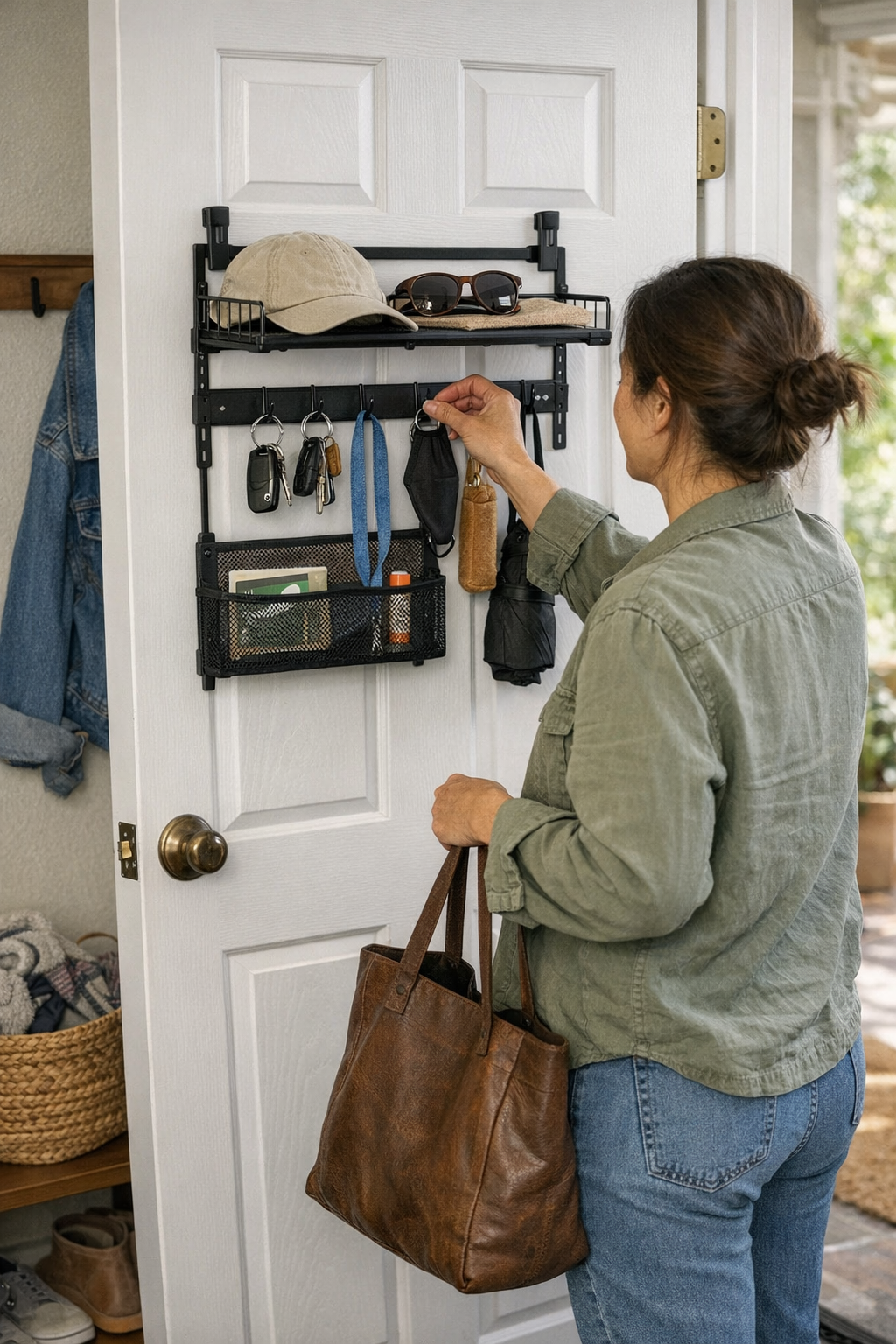
But you feel it—each overlap narrows the path, adds a pause, frays tempers. When the light rack went up, it didn’t look like much, but suddenly the small items had obvious landing spots. My hands stopped hovering; departures sped up, and reset time shrank. Over time, the quiet change was how even guests seemed to know exactly where to reach or drop things without being told.
Not All Storage Competes Equally With Chaos
I once believed any storage was better than none, but drop zones that flatten everything together only smooth out the mess for a moment. Baskets hide as much as they collect. Keys ended up buried beneath mail, sunglasses tangled in lanyards, and the quick grab for a badge often meant overturning the whole pile.
The vertical rack, on the other hand, doesn’t promise perfection—just clear separation. A single glance shows if something is missing or out of place. When the rack fills, it’s obvious; overload becomes visible before the room feels overwhelmed. The tension between form and function shrinks, and suddenly, managing the space doesn’t mean suppressing the real churn of daily life.
Something Subtle in the Everyday Loop
I kept thinking the best setup would be the one that disappears, but in transition zones, invisibility doesn’t always equal usefulness. The best part about the rack was how its presence nudged routines into order—hands reached for the right hook, shoes stayed just off the path instead of spilling open. It wasn’t about stylish neatness, but about daily friction receding bit by bit.
Sometimes, I pause before heading out, noticing how nothing blocks the way and nothing needs reshuffling. That was the part I kept returning to—how the smallest change became noticeable through what it prevented, not just what it organized.
If you find yourself circling the same threshold questions, the quiet world of transition storage is always open to explore: http://www.betweenry.myshopify.com