Small Changes That Keep Entryways Fresh and Tidy
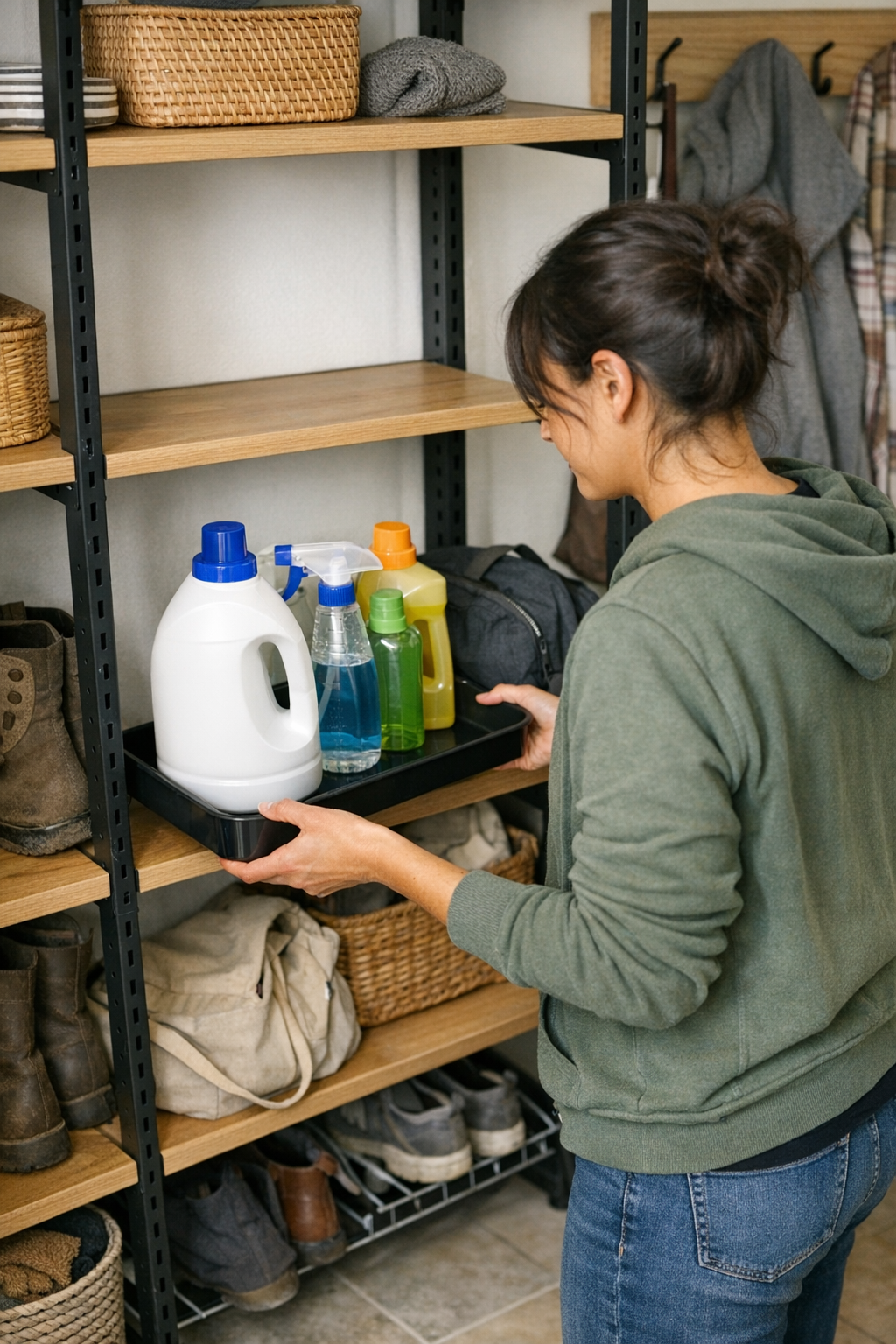
A drip tray under detergents prevents sticky stains by catching leaks early, making cleanup quicker and keeping entryways cleaner.
There’s a private kind of satisfaction in an entryway that feels truly under control—a place where important tasks aren’t delayed by cleanup or creeping messes. Even in transition spaces as functional as a utility cabinet or bench-side drop zone, that feeling can fray quickly, often starting with a line of sticky residue left behind by a bottle or wet boots. For several years I treated these slow leaks as mere irritations, not realizing how much they shape the tone of the whole threshold. It was only after repeated cycles of arrivals and departures that I understood how a drip tray under detergents quietly shifts the rhythm of this space.
Leaks Begin Before You Notice
Even in well-organized cabinets, leaks don’t announce themselves immediately.
Day after day, bottles get handled and set back down—a routine so automatic you won’t remember if something dripped. But then a thin film spreads across the surface, inching outward until shoelaces or a glove’s edge catch on sticky spots. It isn’t dramatic, but you feel it, especially on busy mornings.
The rows of shoes start to crowd the base, and bags slowly drift across the bench, all in small, ordinary overlaps. It’s in these unnoticed moments where residue silently spreads, making each reset just a little harder to face.
Small Boundary, Big Change
What surprised me most after adding a drip tray sized for the active zone was how containment transformed scraps of cleaning into something much lighter. The tray held the mess right at the source, shrinking cleanup to a simple lift, rinse, and quick return.
Suddenly, the threshold stayed dry for weeks—muddy boots and quick bottle grabs no longer turned the whole setup into a sticky project. You don’t see the difference immediately. But over the course of a month, shelves looked unchanged, whereas before there would have been rings along seams and finger-length trails beneath the bottle row.
It was this subtle shift I kept noticing: how one small raised edge eased the friction of daily passage. The difference wasn’t about perfection, but about preserving rhythm.
Living with Less Residue
As routines settled, I found myself spending less time negotiating clutter at the threshold. Mud and water still circulated, of course, but the drip tray quietly blocked their slow advance into everything else.
Cleaning stopped feeling like erasing evidence after the fact—one quick lift-out was enough, skipping scrubbing or chasing stubborn stains. The practical change was simple: less mess spread, less energy spent, and a transition space that no longer felt like a permanent project waiting to happen.
There’s an ease that gathers when small changes work with your habits instead of against them, making the return home quietly easier, again and again.
Sometimes the smallest boundaries make the greatest difference—there’s more to explore in spaces like these: http://www.betweenry.myshopify.com