Small Changes That Quietly Transform Your Entryway Routine
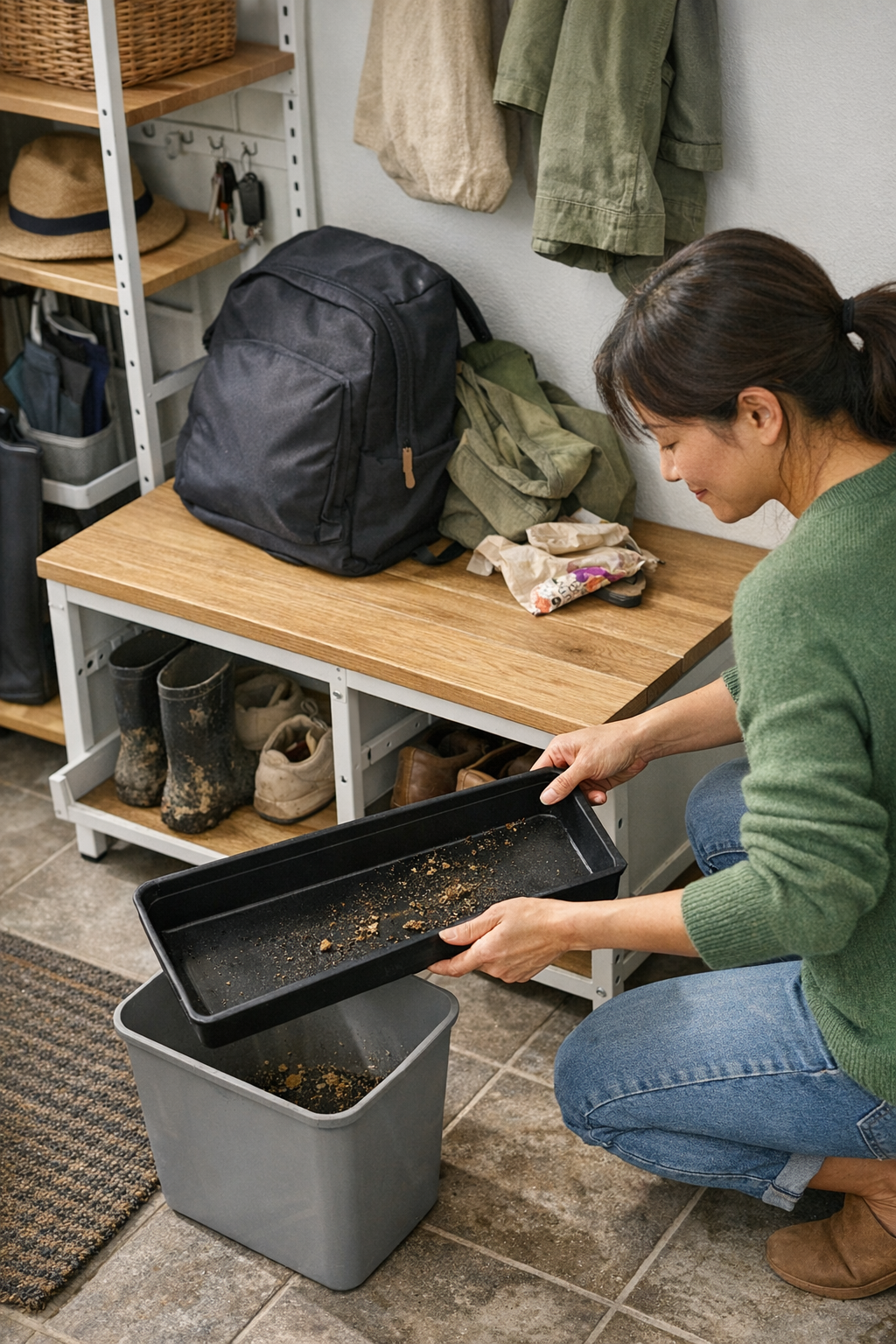
Removable liners in entryway storage encourage fast cleaning, preventing buildup and keeping the area clear, especially in busy, high-traffic spaces.
It’s odd how small things become the constant background noise of coming and going. In a transition zone—where indoor and outdoor lives meet—the line between controlled and unruly blurs quietly. At first, it’s just a few scuffs near the shoe bench, a damp liner accumulating a scatter of grit—nothing urgent, but not invisible either. The task of keeping these spaces cleared and passable seems straightforward, until it’s not. That’s how I started seeing removable liners differently—not just as handy cleanup tools, but as subtle levers for how freely the space breathes, resets, and resumes the rhythm of daily life.
Between Easy and Awkward
You don’t notice it right away. A freshly set-up utility bench or shoe rack with a fitted liner looks neat, and for a while it stays that way—until shoe rows begin to spread, bags edge up closer, and liners catch the unnamed crust of a lived-in threshold.
One morning, as I pinched the edge of a liner and swept out the day’s gravel in seconds, it hit me how much depended on that movement being easy. If the liner gets stuck or caught under a half-dozen shoes, grit lingers and invisibly settles into the week. When it lifts smoothly, the whole end-of-day routine barely breaks rhythm. There’s a difference between “this could get messy” and “it never really does.”
Rhythms Shaped by Convenience
Most resets don’t happen as grand events. The actual cues to clean are small—wet footprints, crumbs by the bench leg, or a patch of mud pooling in the liner corner. But if pulling out the liner means first shifting everything around, the task becomes too weighty for an impulse clean, and the clutter lingers.
That’s the part I kept coming back to. When a liner glides out without disturbing the rest, clearing debris becomes just another background habit, no more effortful than flicking off a light on the way out. Later, you notice the passage hasn’t jammed up: boots don’t spill stubbornly past the entry zone, bags don’t pile as high or drift into the narrow pass-through. Quiet, regular access lets the transition space operate in micro-resets—rarely tipping into chaos or needing dramatic intervention.
The Subtle Balance That Holds It All
It’s easy to underestimate the soft friction points in these spaces. Small details—like whether a liner edge sits flush but still lifts easily, or if there’s enough room around a tray to nudge it out one-handed—shape the ongoing balance between order and blockage.
Sometimes it’s just a matter of a shallow groove or a discreet finger pull at the boundary of the bench, something barely noticeable until you realize you keep using it. That fleeting gesture, part of a routine arrival or departure, is what lets a lived-in space stay ready for the next rush without heavy effort. The lesson was quieter than I expected—functional calm isn’t about first impressions, but how easy it is to reset after the hundred little disruptions marking the border between indoors and out.
If you ever find yourself wondering about that margin—between spaces that recover and those that quietly clog—it’s a thought worth sitting with for a while. View the full collection