Small Changes That Quietly Transform Your Workday Flow
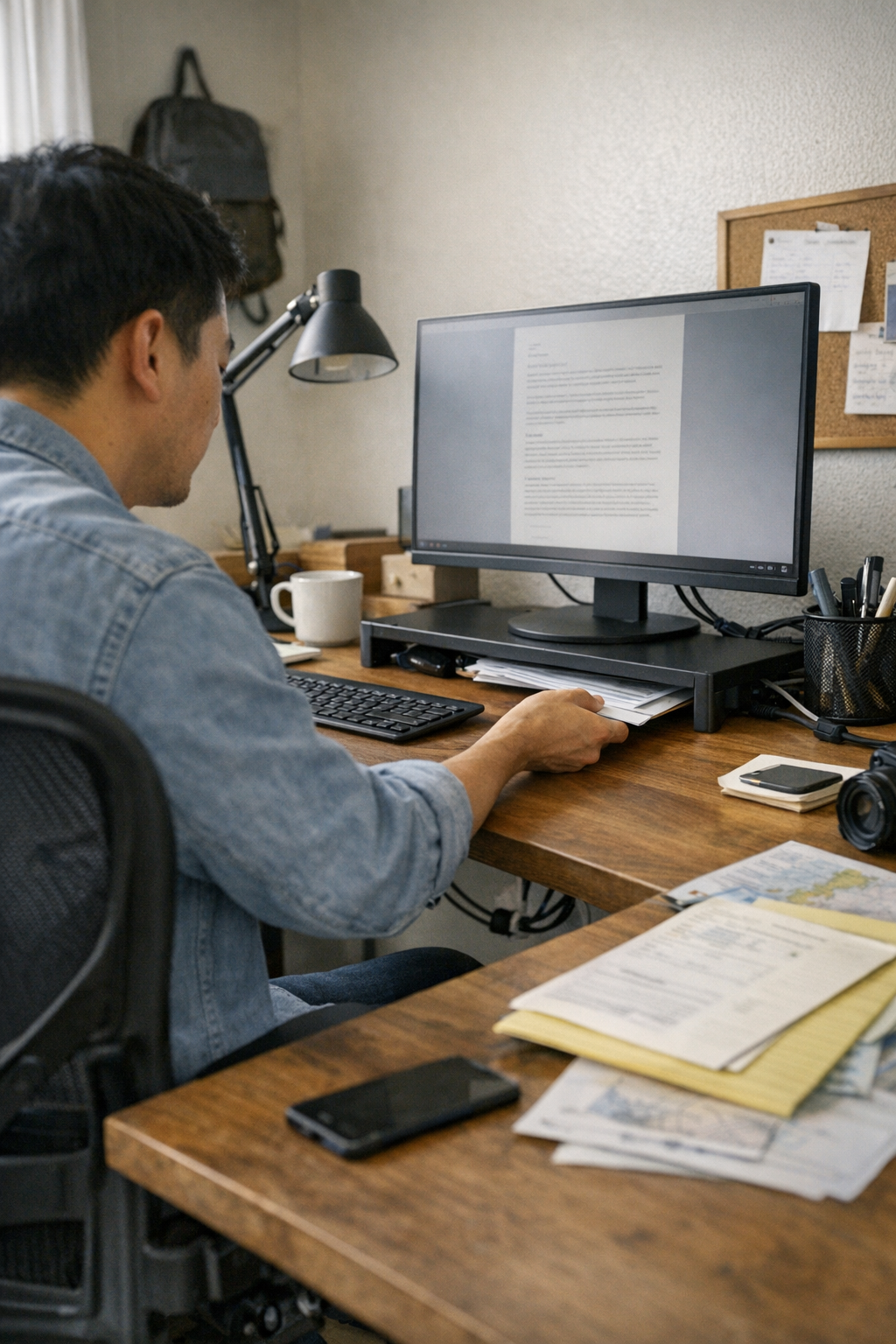
A slim monitor stand riser keeps paper stacks off your desk without raising screen height, reducing clutter and workflow interruptions.
Some changes slip in almost unnoticed—a slight shift in chair height, or the subtle swing of light across a desk late in the afternoon. For weeks, I worked with a tall monitor riser, convinced it brought order simply by clearing surface space. At first, it looked fine: cables tucked into corners, stacks of paper neatly hidden. But over time, small complications built up—reaching for documents, tilting my neck, pausing to recalibrate my posture after every second page. It wasn’t chaos, just slow, steady friction.
You start to feel it with repeated use. Every time a document moved across the desktop, I’d break my rhythm—pulling it out from beneath a riser that was just a bit too tall. The result was a workspace that looked organized but didn’t quite flow. I’d catch myself shifting in my ergonomic chair for a better view or glancing upward, slightly out of alignment with the screen. The monitor stand meant to help actually forced small, repeated adjustments throughout the day.
When I swapped the bulky riser for a thinner one—a simple slab of wood, low enough for a couple of papers but not much more—the desk shifted in a subtle, practical way. Now, a letter-sized file could slide effortlessly beneath the monitor without bumping cable clips or bending strained wires. Paper moved in and out freely, and the monitor sat at the right height: high enough to clear clutter, yet low enough to avoid that awkward upward tilt of the neck common after hours of work. Most importantly, I rarely had to reset my seating posture just to reach a note or shift a cable. The effect was almost invisible at first, but at the end of the day, the desk felt quieter and work felt smoother.
What stayed with me was how a small gap—half an inch, maybe one—found a middle ground between order and reach. Full trays or bulky risers looked intentional but actually slowed the hand-to-paper movement that happens dozens of times before lunch. The thin riser made the space under the monitor truly useful: not crowded, not awkward. The right “clearance” isn’t about storing more—it’s about reducing those repeated invisible pauses between tasks.
Cable management played its part, too. A low riser risks crimping cords or squeezing them into tight corners, which can interrupt smooth cable flow and add friction to plugging and unplugging devices. Planning cable runs during setup—using simple clips along the desk edge—kept everything reliable and minimized these interruptions. It wasn’t a dramatic fix, but it made the difference stick throughout the day.
The change wasn’t flashy, but it was enough. The space under the monitor finally matched how the work really moved—papers sliding, glances shifting, cables staying put. Work felt easier in a way that was hard to name but easy to sustain.
If you find yourself adjusting your desk one small bit at a time, this is where I found a little more ease: http://www.workbasic.myshopify.com